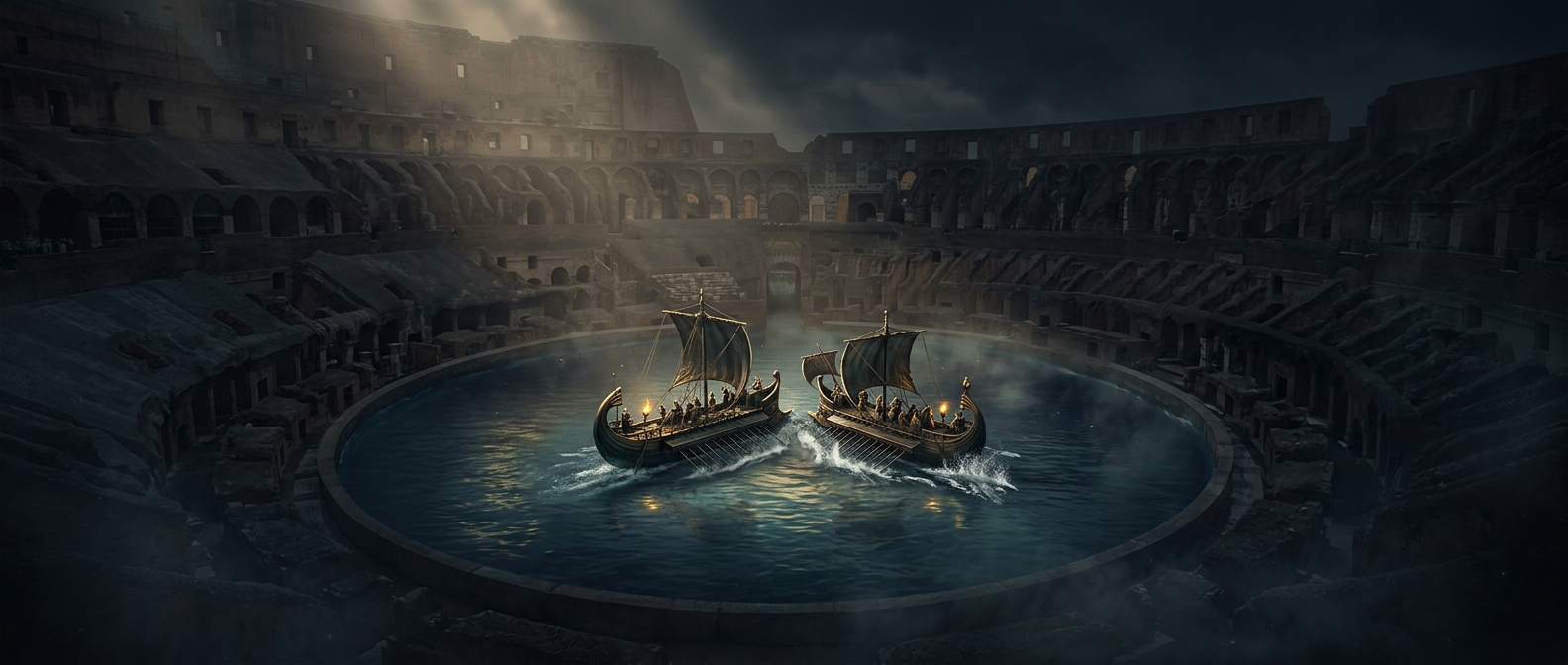
How the Colosseum Became a Temporary Basin
A naval spectacle required more than floating props. The arena floor had to hold water, the ships had to fit inside it, and the performance had to be coordinated in a space normally used for combat on dry ground. Roman accounts describe water spectacles at the Colosseum in its early years, when its central floor could be prepared differently from the elaborate stage familiar from later shows.
The exact method is not fully known. The building stood within a city supplied by aqueducts, and Roman engineers were skilled at moving water, but surviving evidence does not settle precisely how the arena was filled or drained for these events. The important point is that the basin was temporary: the arena could be adapted for a special performance, then returned to its usual purpose.
A Change of Stage—and of Engineering
The ships and staged fighting turned a familiar venue into a miniature naval theater. The spectacle depended on the contrast: spectators who came to watch arena combat instead saw vessels maneuver and clash across water. It was a costly, labor-intensive transformation, not simply a new act added to the regular program.
As the Colosseum’s underground service areas became more elaborate, the space beneath the arena was filled with machinery, corridors, and holding areas used to move people and animals into view. That infrastructure suited complex land-based spectacles but made flooding the floor much less practical. The water shows therefore belonged to an early phase of the building’s use—a reminder that the Colosseum’s stage was not always the fixed, dry platform later generations imagine.