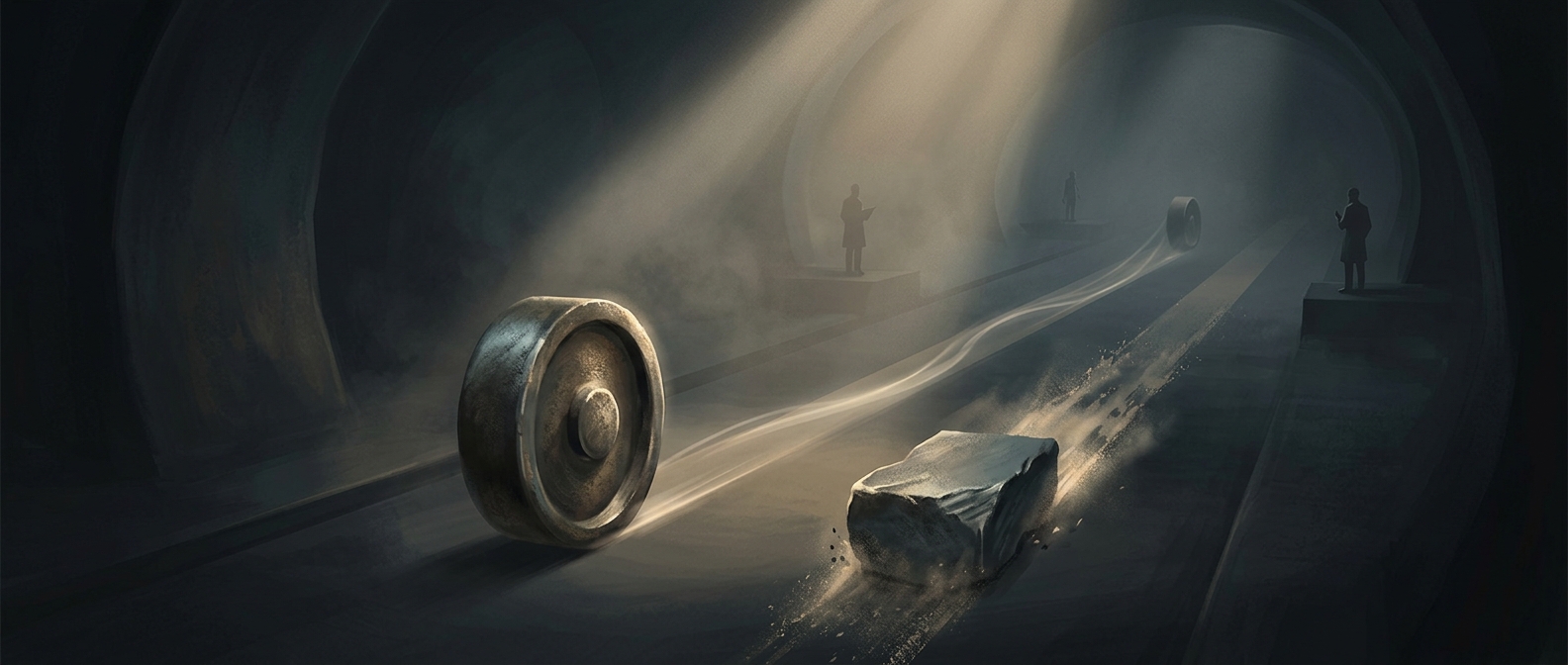
Why a box resists its first shove
A box at rest does not slide the instant you push it because the surfaces in contact resist motion. Their tiny bumps and grooves press against and catch one another. Static friction adjusts to oppose your push, growing stronger as you push harder—until it reaches a maximum. Below that limit, the box stays put; exceed it, and the surfaces begin to slip.
What changes once it moves
As the box slides, the points of contact keep shifting. They do not remain locked together in the same way, so the friction opposing motion is often lower than the maximum static friction. That moving resistance is called kinetic, or sliding, friction. Once the box is underway, your push may only need to match this smaller force, rather than overcome the larger starting threshold.
The difference is not a universal fixed ratio: it depends on the materials, surface condition, and how strongly the surfaces are pressed together. But for many everyday objects, it explains the familiar lurch at the start. A shove strong enough to break the box free can be more force than is needed to keep it moving.
Why furniture suddenly gives way
When moving a heavy piece of furniture, people often push harder and harder while it remains still. The moment the threshold is crossed, the same effort can make it slide more readily—and it may travel farther than expected. The practical lesson is to brace yourself and control the push: the hardest moment is often just before the furniture starts moving.