A tiny mismatch in the weight of nitrogen
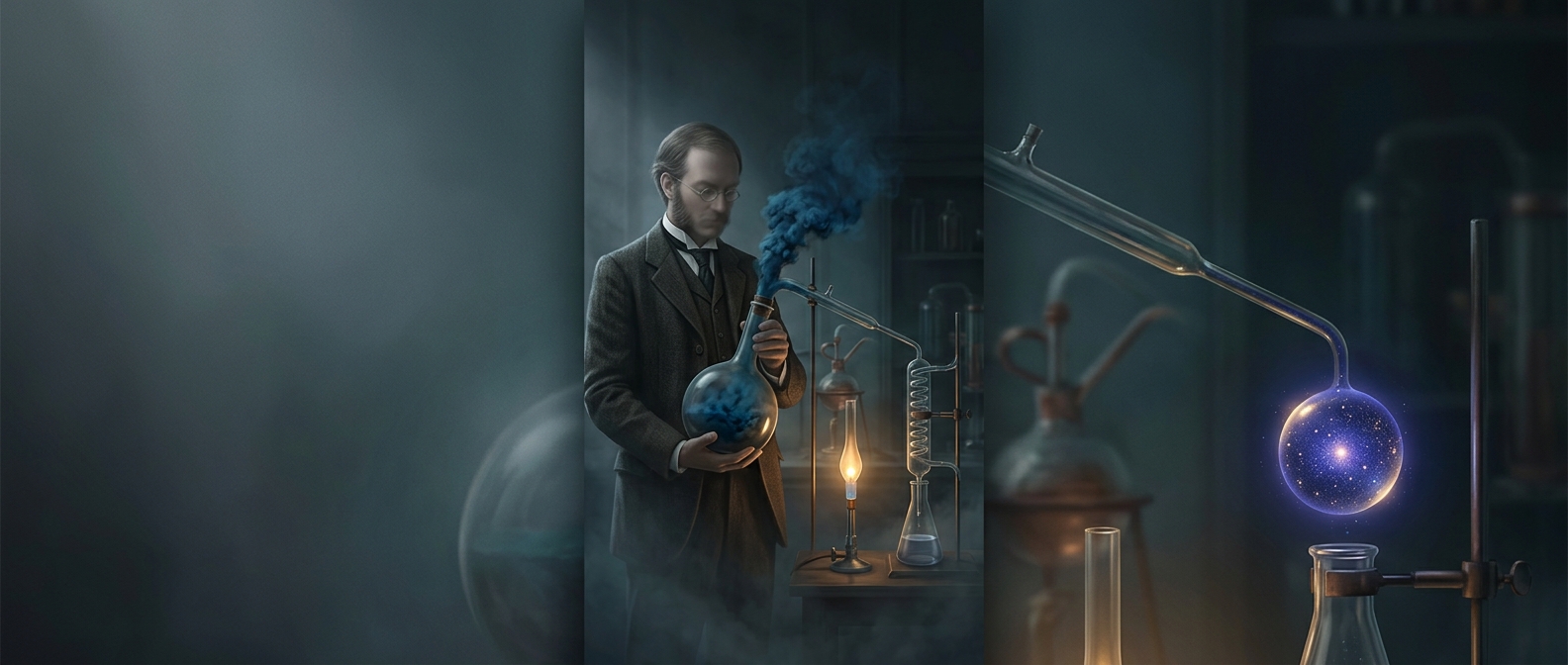
Lord Rayleigh was measuring the density of nitrogen, not searching for a new element. He compared nitrogen separated from air with nitrogen made from chemical compounds. Since both samples were supposed to be the same gas, their weights should have matched under the same conditions. Instead, nitrogen from air was slightly denser.
The difference was small, but it persisted. That mattered because density measurements were precise enough to expose a trace ingredient even when it was invisible and chemically quiet. The atmospheric sample was not quite pure nitrogen: something heavier was mixed in.
How the leftover gas gave itself away
Most gases in air can be separated by making them react. Oxygen, for example, can be removed chemically. Nitrogen is harder to distinguish from an inert gas—one that does not readily react—because ordinary chemical treatments leave both behind. That inert residue would barely affect the sample’s behavior, but it could still raise its measured density.
Rayleigh’s result pointed to an impurity, but weighing alone could not identify it. Working with chemist William Ramsay, he used hot magnesium to consume the nitrogen in a sample of air. The magnesium formed a solid compound with nitrogen, while the unreactive gas remained. This made the hidden component collectable and available for further examination.
Why “dirty” nitrogen mattered
The discovery showed how a supposedly pure substance can reveal an unknown element through a stubborn remainder. Argon had been present in air all along, but its lack of chemical reactions made it easy to overlook: the usual methods for cleaning up nitrogen did not remove it. The clue was not a vivid color or a dramatic reaction, but a small excess in the balance.