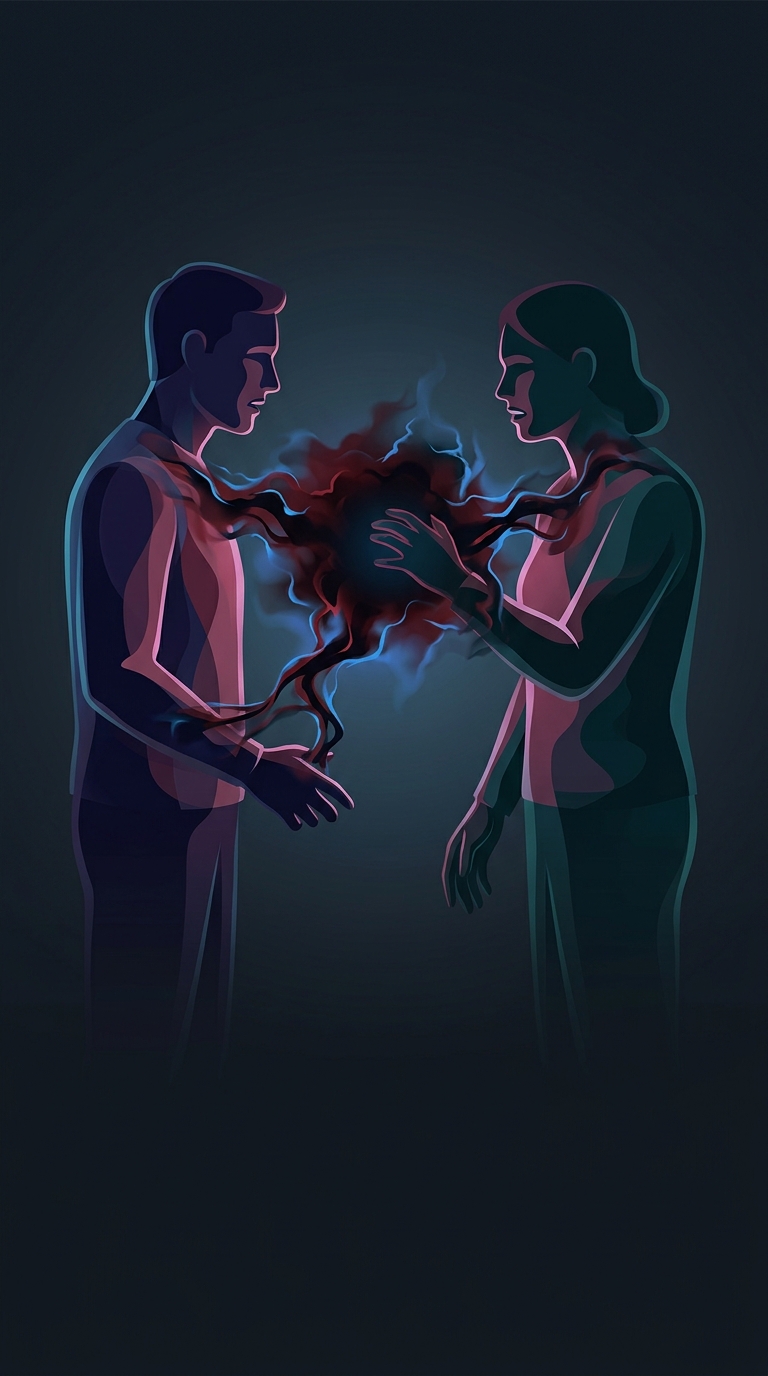
Why Shared Fear Can Bring Strangers Closer
Fear focuses attention on immediate danger—and on the people nearby. When two strangers face something frightening together, each may notice the other’s reactions, look for reassurance, or coordinate what to do. Those small exchanges can create a sense of facing the situation as a team, even before the people know much about one another.
Fear also raises the body’s level of arousal: the heart may race, muscles tense, and attention sharpen. In a shared situation, that heightened state can make the encounter feel especially vivid. The companion becomes part of the memory, not just another person in the room.
The Feeling Needs a Shared Context
The key is not fear by itself. A person who feels threatened by someone else is more likely to withdraw or defend themselves. Bonding is more likely when the fear comes from a common challenge and the other person seems supportive, trustworthy, or simply to be in the same predicament.
That helps explain why a frightening experience can sometimes make a new acquaintance feel unexpectedly familiar. The fear supplies urgency; mutual attention and cooperation turn that urgency into connection. It is not a guarantee of friendship, but it can give strangers a quick first reason to feel they are on the same side.