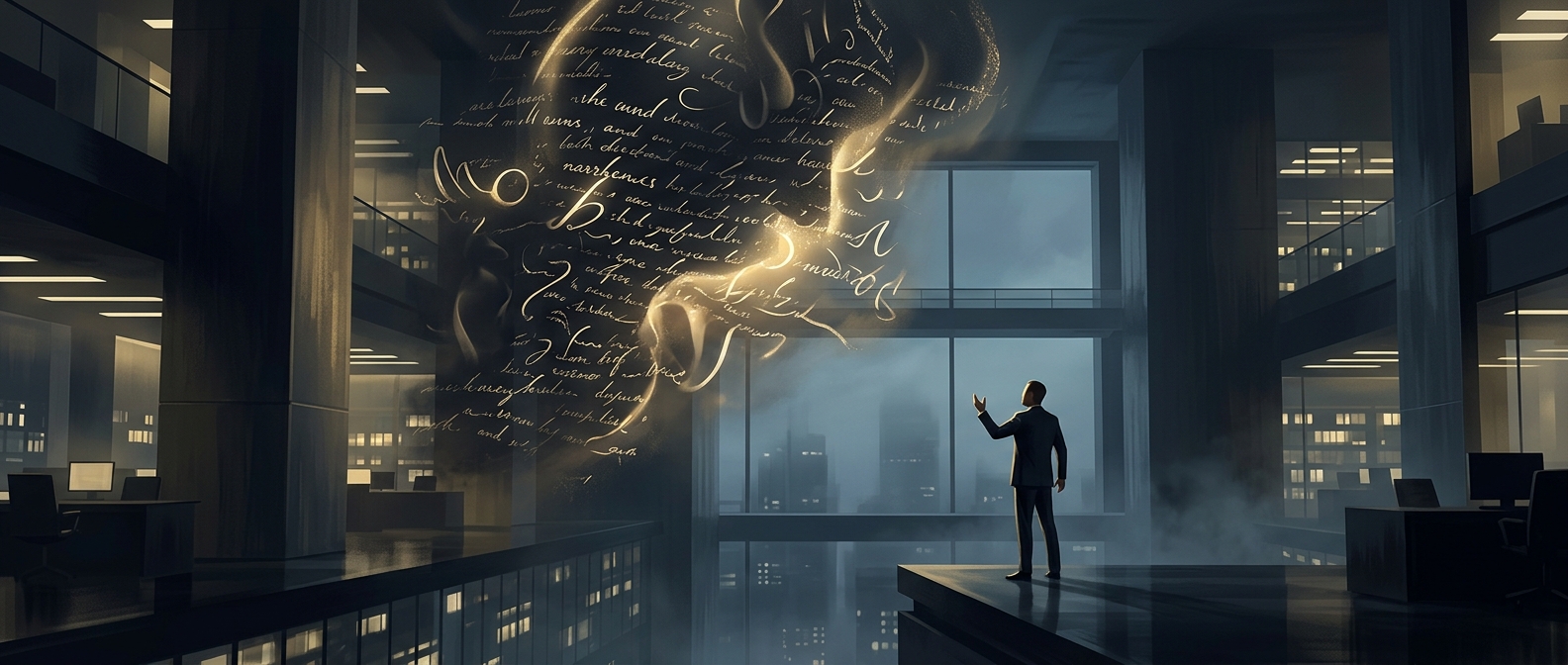
A narrator becomes part of the game’s machinery
In The Stanley Parable, the narrator does more than describe events: he gives Stanley’s actions a voice, framing them as a story with an apparent intended path. The player can follow that path—or refuse it. Each choice creates a gap between what the narrator says should happen and what the player actually does, making the act of narration itself part of the play.
Disobedience is a design choice
That gap is the game’s central trick. A conventional adventure often treats an unexpected turn as an error to correct. Here, deviations are material for the experience: the narrator can react, argue, or revise his account, while the player discovers that resistance is also something the game has anticipated. The freedom is real but bounded; the available routes and responses have been authored in advance.
This turns a simple movement through rooms into a negotiation over control. Is the narrator guiding Stanley, telling a story about him, or trying to keep the player inside a story that can be disrupted? The humor comes from the mismatch, but the structure gives the joke a sharper edge: even a deliberate refusal can become another scene the game has prepared. The player can reject the narrator’s instructions, but cannot step outside the game’s design.