The page has a built-in reading route
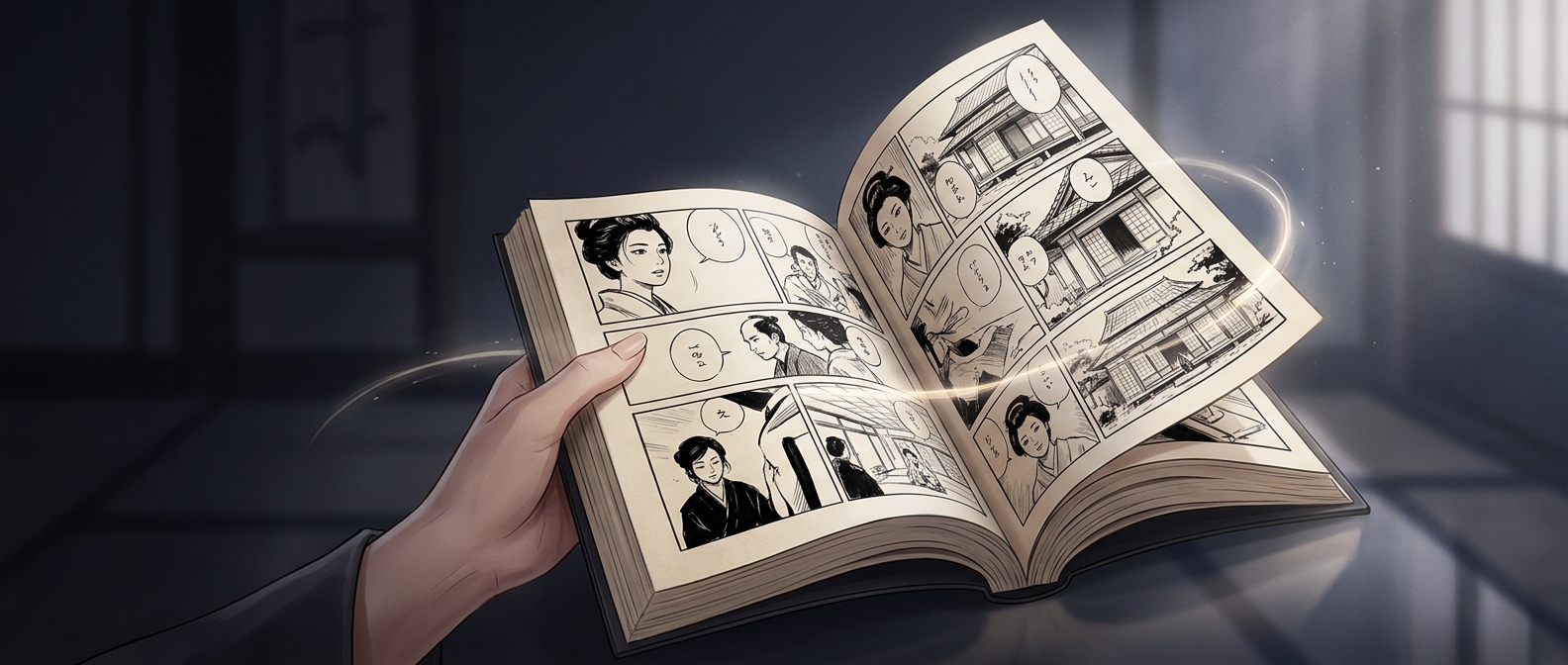
In Japanese manga, readers generally move through a page from right to left: they start with the panel at the upper right, then follow the panels across and downward. Speech balloons and other text follow that route too. It is not just a matter of which way the book opens; the placement of panels, reactions, and dialogue helps establish the order in which a scene unfolds.
Why translation usually leaves the art alone
A publisher could mirror each page to make it read left to right, but that would reverse every visual clue in the drawing. A character’s distinctive side part, a mark on a uniform, or writing on a sign would appear on the wrong side. Even ordinary actions can become confusing when a character’s apparent left and right switch.
Instead, localization—the adaptation of a work for readers in another language—usually preserves the artwork’s orientation and translates the words inside the existing speech balloons. This can require fitting translated text into spaces designed for Japanese writing, but it avoids changing the scene’s visual logic.
The format is part of the storytelling
Keeping the original order also preserves how the creator directs attention. A small reaction panel may be meant to follow a large action panel; shifting the sequence can change the timing of a joke, reveal, or emotional beat. The result is that readers learn a different page-reading direction, while the artwork remains as its creator arranged it.