How a Guess Becomes a Traffic Signal
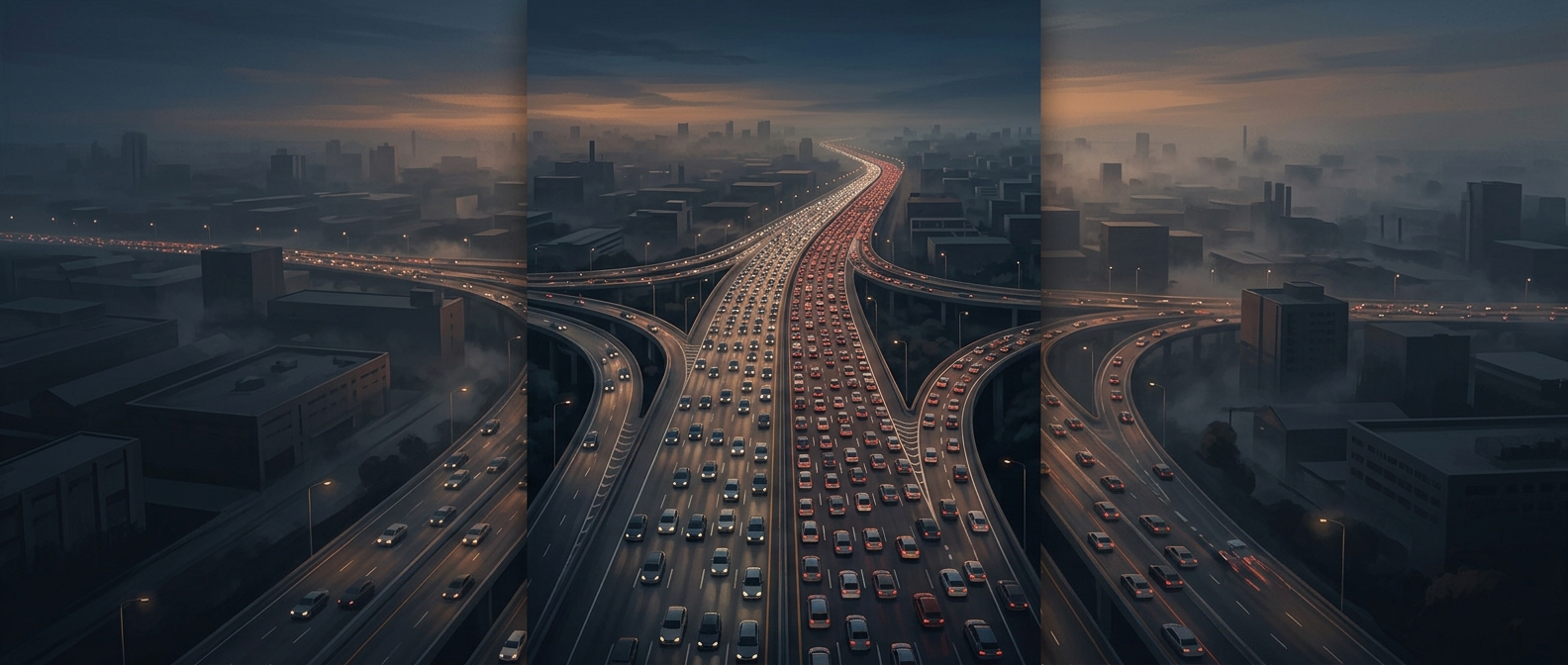
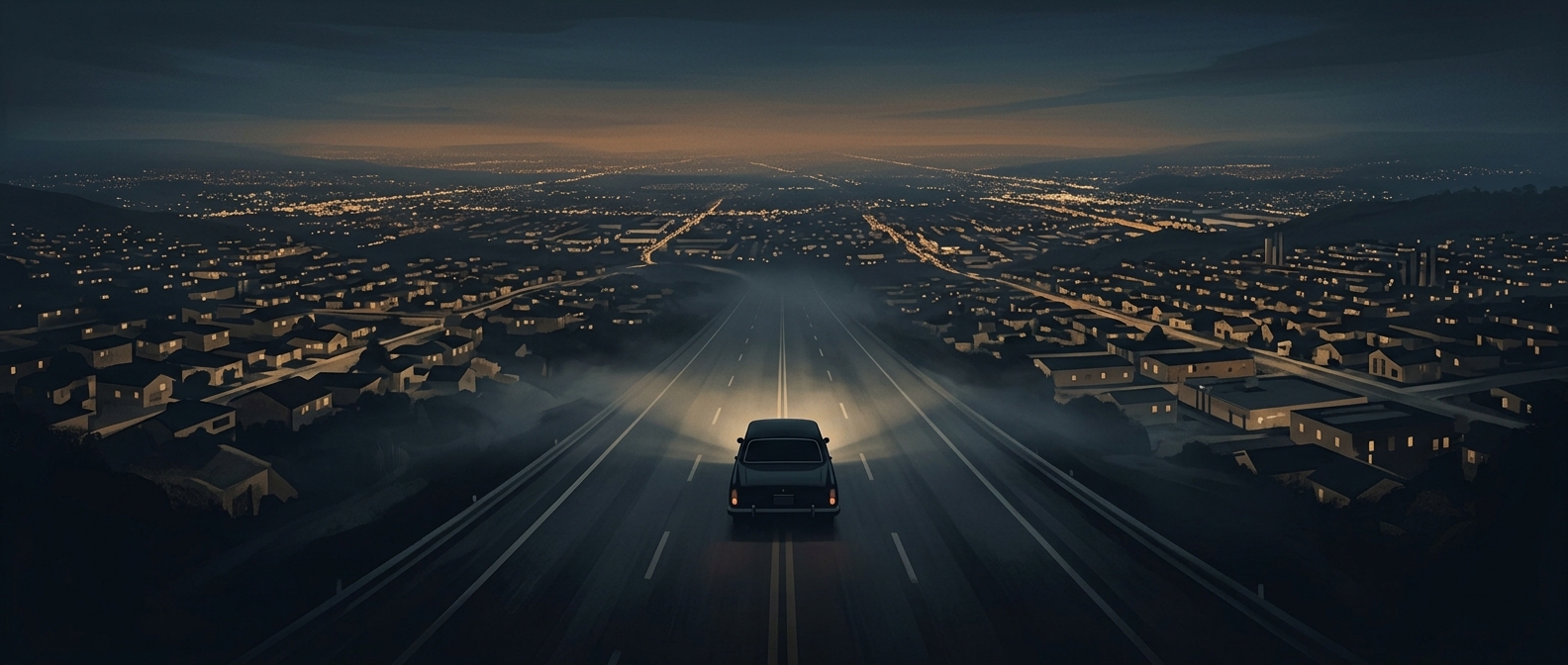
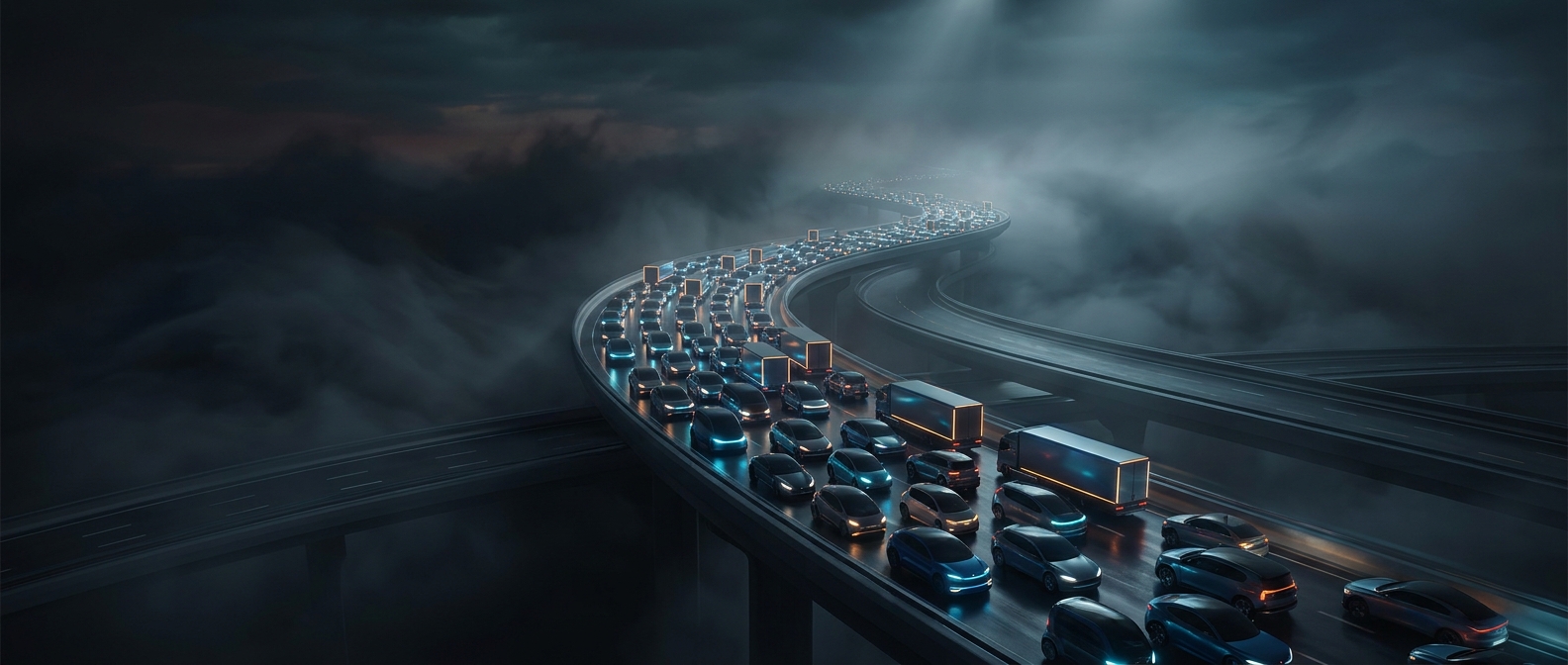
When a driver reaches an unfamiliar fork or sees a sudden slowdown, they have limited information: the map may be unclear, and the road ahead is out of sight. Another car’s choice becomes a clue. If that driver turns off, following can seem safer than making an independent guess—especially when several cars make the same move.
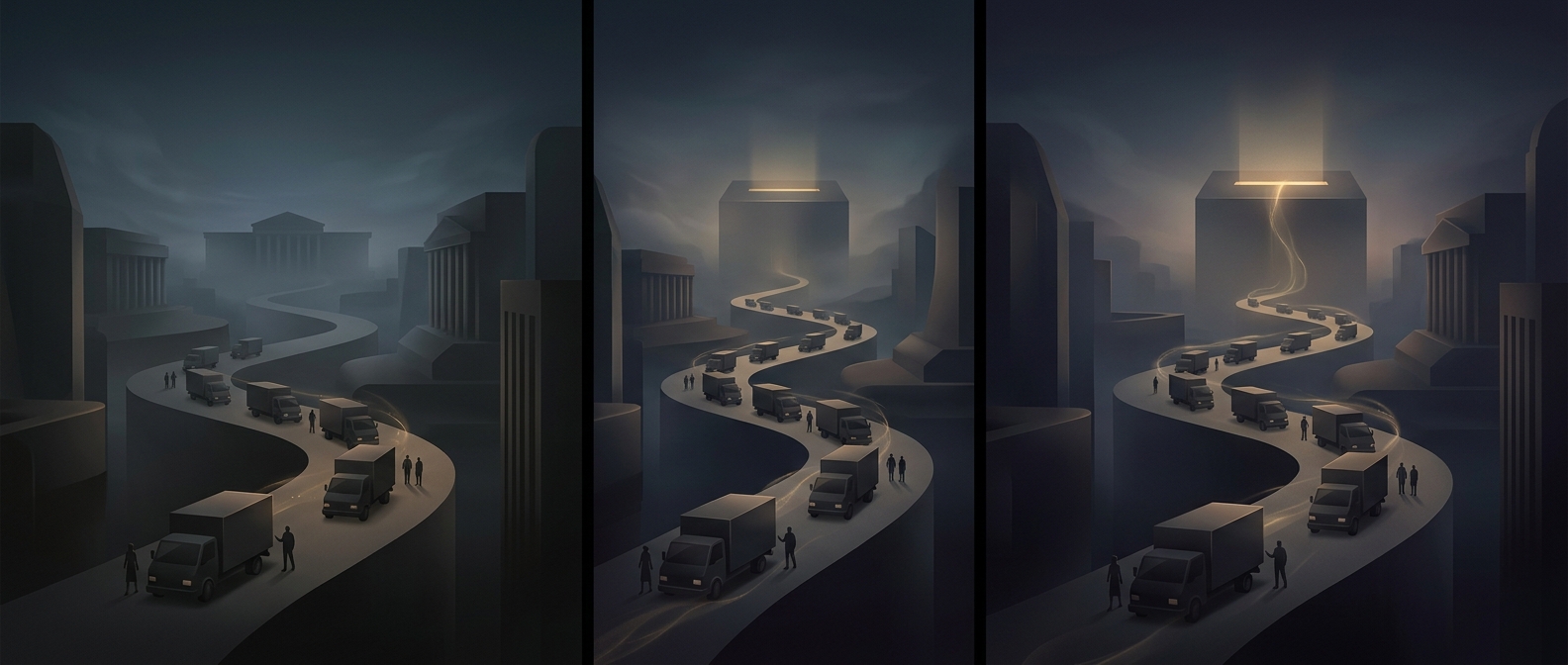
This is an information cascade: people rely on others’ visible decisions, so one early choice can shape many later ones even when it began as a mistake. Each follower may appear to confirm the route, though they may all be copying the same first driver rather than acting on separate evidence.
Why the Detour Can Slow Everyone
A turn that works for one car may not work for a line of them. A side road might have fewer lanes, a tight intersection, or limited room to absorb extra vehicles. As drivers arrive together, they compete for that capacity; queues form, and cars waiting to turn can obstruct other traffic. The shortcut then loses its advantage precisely because so many people chose it.
The incentives are individual but the cost is shared: each driver hopes to avoid delay, while the combined choices can create a new bottleneck. That is why a string of cars taking the same turn is not reliable proof that it is the best route. Sometimes it is simply one uncertain decision, repeated until the road itself makes the mistake visible.