A monster built to occupy the room
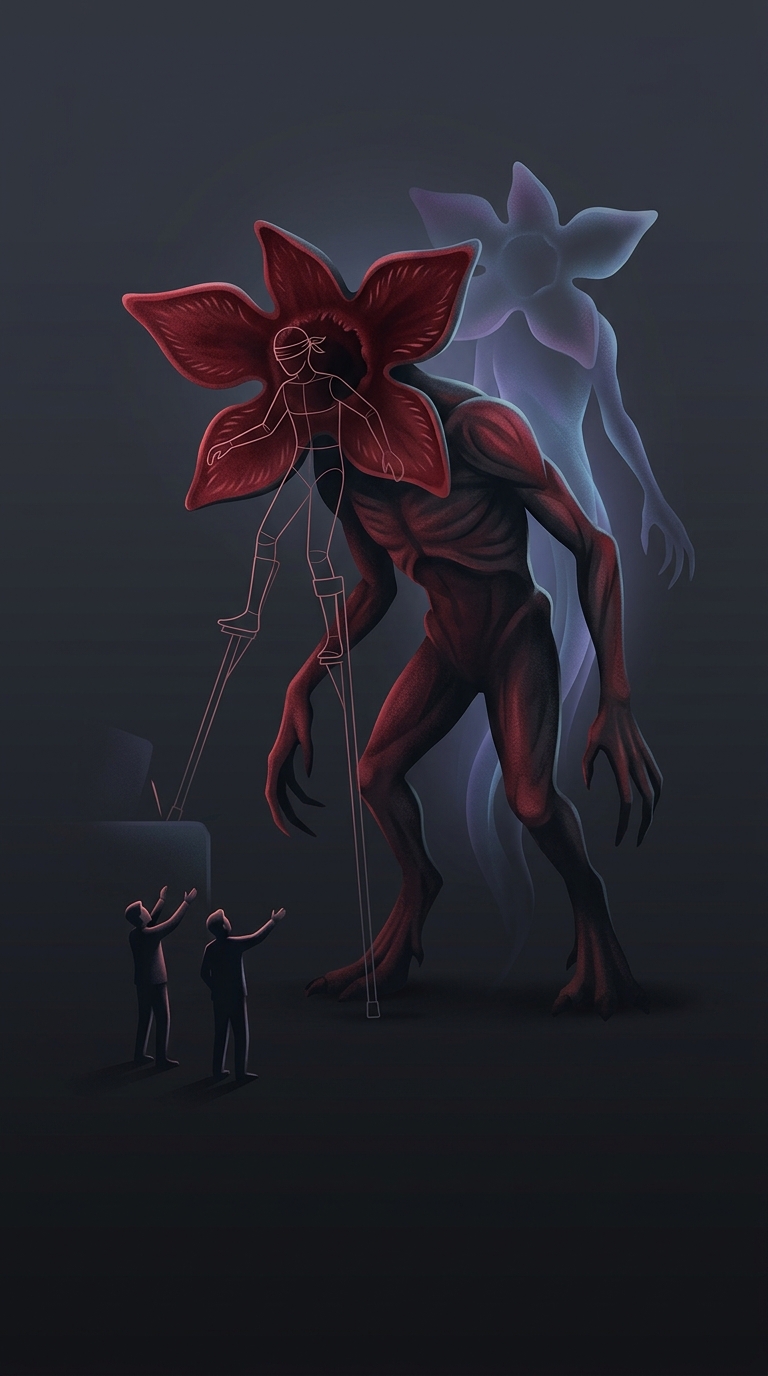
For the first season of Stranger Things, the Demogorgon was not just an image added after filming. A performer wore a physical creature suit, with stilts helping give the monster its unnaturally tall proportions. That choice drew on the tactile effects of 1980s horror: a creature sharing the actors’ space can cast real shadows, block a doorway, and give performers something substantial to react to.
But the same construction that made the Demogorgon look imposing also constrained its movement. A bulky suit limits how quickly a person can turn or change direction; stilts make balance harder still. With the performer’s view restricted by the costume, moving safely through a detailed set required care and coordination. The result could look eerie in a controlled shot, but the suit could not deliver every sudden, fluid movement the creature’s design suggested.
Practical performance meets digital effects
Computer-generated imagery, or CGI, can change a creature’s shape and movement after filming. That gives filmmakers freedom to make a monster lunge, twist, or cross a space without asking a performer in a cumbersome costume to execute the whole action. The tradeoff is that digital movement must be made to fit the lighting, camera, and performances already recorded.
The show’s approach was therefore not simply practical effects versus computers. A physical costume supplied a presence on set, while digital work could extend or replace what the suit could convincingly do. The compromise captures a lasting filmmaking challenge: the more physically imposing a creature is, the harder it can be for a human performer to move like something truly inhuman.