Why Poltergeist Used Real Skeletons
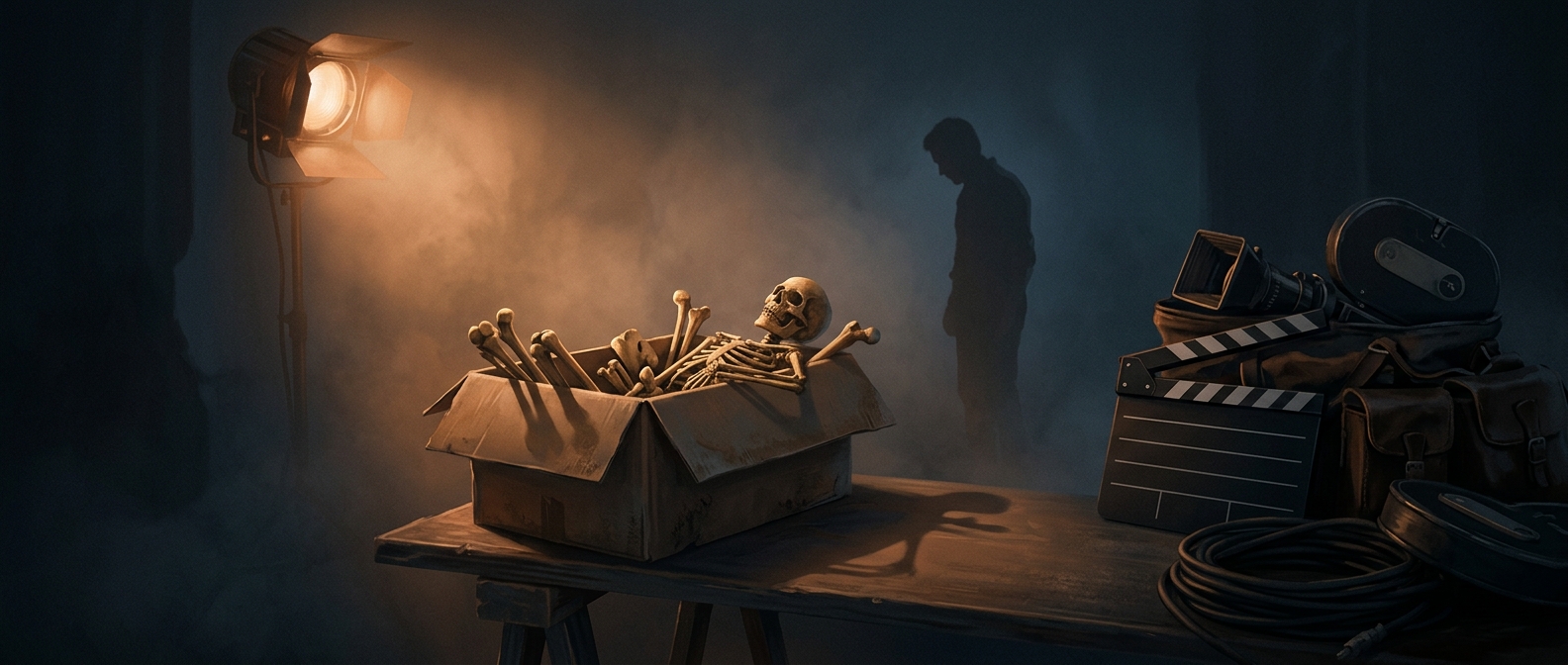
A convincing skeleton is harder to fake than it looks. Plastic bones have to be molded into convincing shapes and finished so they do not look like shiny, identical props. For Poltergeist, the production instead used actual human skeletons, which JoBeth Williams later said the crew told her had come from a medical supply company. The explanation she was given was practical: they cost less than plastic props.
That choice reflects a production tradeoff, not a special effect. The skeletons did not need to move or perform; they needed to appear in the scene. If a real object could do that job at lower cost, buying one could be simpler than manufacturing a convincing substitute.
A Practical Choice With an Unsettling Aftereffect
The decision became especially memorable in the muddy pool scene, where Williams was surrounded by the remains. A prop can be understood as an imitation, but real human bones carry a meaning no fabricated version can quite reproduce. That difference made the scene’s eerie effect inseparable from an ordinary budget calculation: the cheaper option was also the one that made the setting feel most disturbingly real.