A hand trained around a small patch of keys
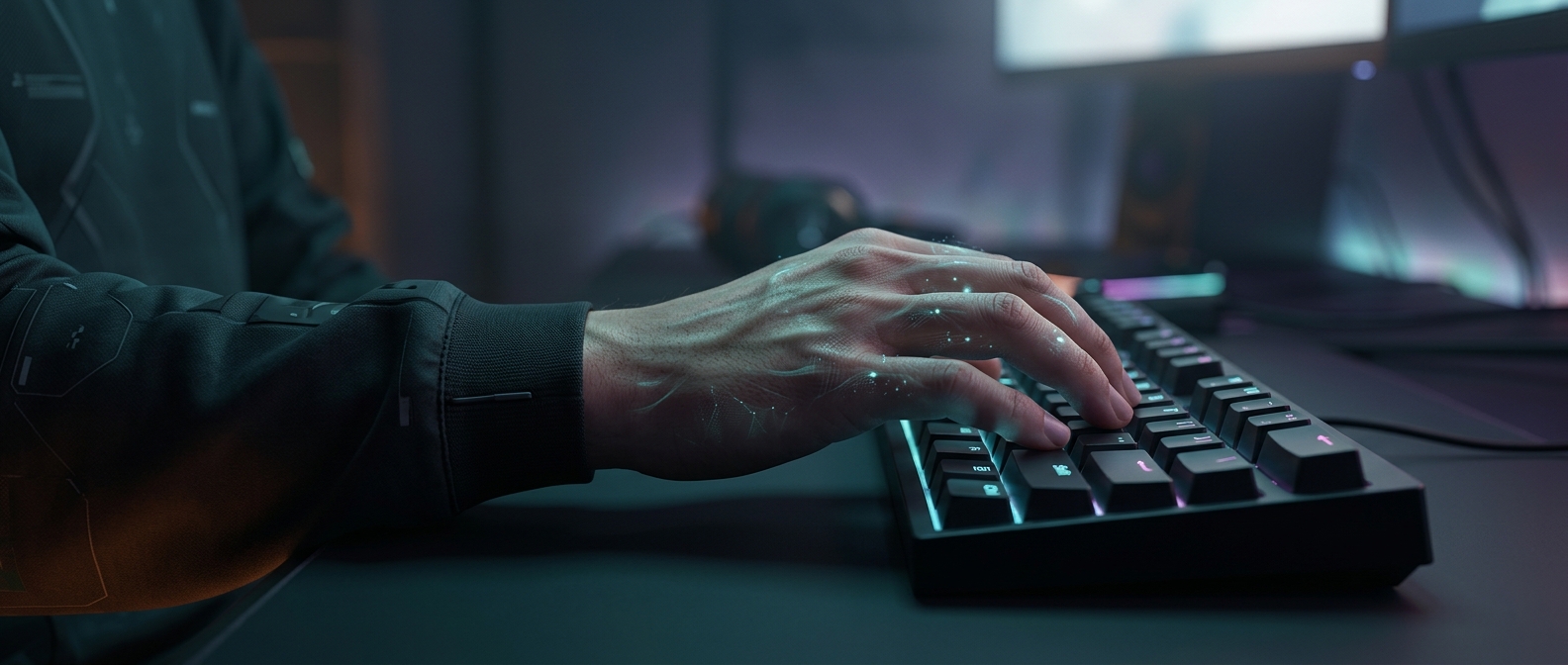
For many PC games, the left hand stays near the same compact control cluster: the little finger can reach Shift or Ctrl, the ring and middle fingers cover nearby keys, and the index finger handles another key or moves toward the surrounding controls. Because the fingers have different lengths and jobs, they naturally settle at different heights and angles rather than lining up flat.
That staggered arrangement is useful in play. It lets a player press a movement key while reaching for a sprint, crouch, or other command without moving the whole hand. The hand becomes a small control surface, ready for several quick actions at once.
Repetition makes the pose feel familiar
With repeated play, the brain learns the distances between those keys and the movements needed to reach them. This is motor learning: practice makes a sequence of movements more automatic, so the player can focus on the game instead of consciously locating each key. Away from the keyboard, some players may still hold their fingers in a similar curl or staggered arrangement because it is a familiar, practiced posture.
It is a habit, not a permanent reshaping of the hand. The position can vary with the player, keyboard, and game, and a relaxed hand does not have to stay curled. The telltale detail is the uneven spacing: each finger seems poised to return to its own place in the control cluster.