Why a Dramatic Game Scene Can Suddenly Turn Silly
A cinematic moment often depends on characters hitting a sequence of cues: one walks to a mark, turns toward another character, delivers a line, then reacts with a particular animation. The scene may look like a short film, but the characters are still being moved through a world with collision, navigation, and game logic underneath.
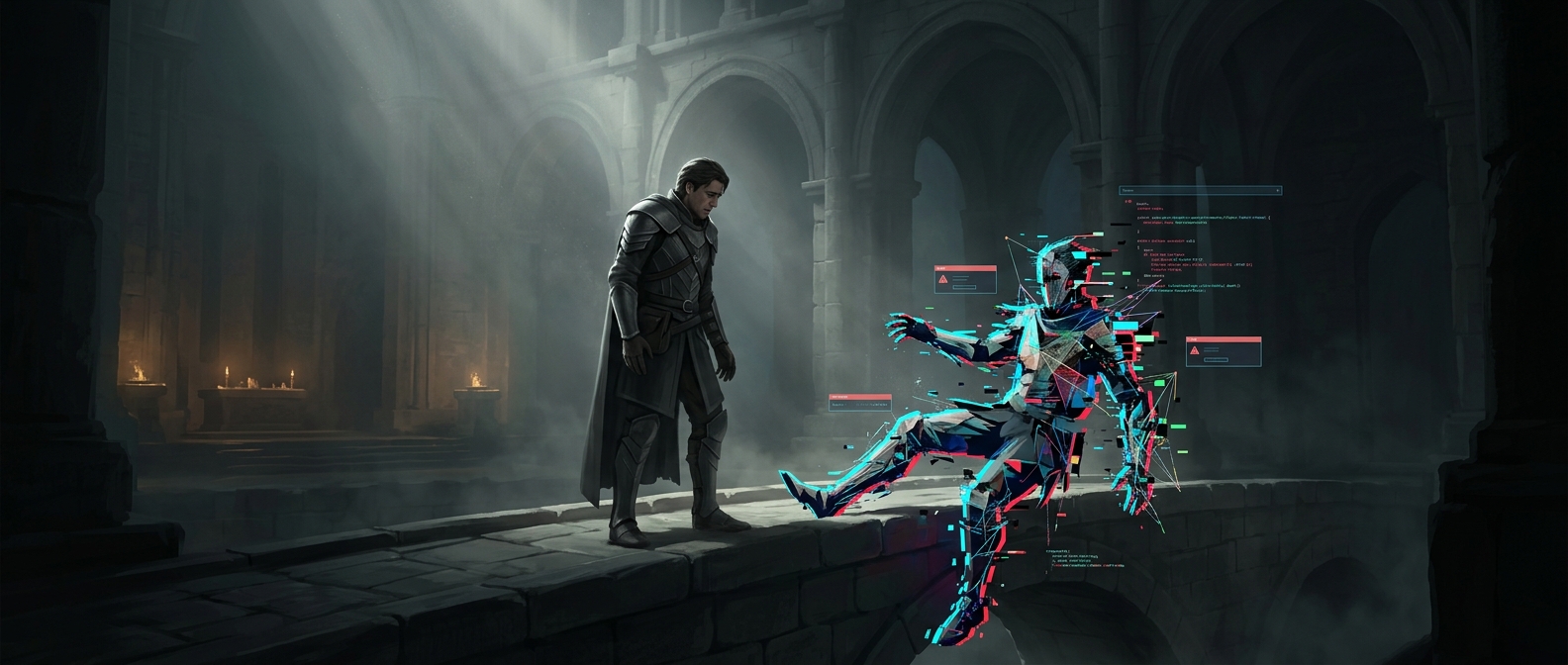
That creates opportunities for failure. A non-player character, or NPC, may get stuck on a chair, arrive late, or fail to recognize that the next cue is ready. The dialogue can continue while the character is still walking—or an animation can begin from an awkward position, making a serious gesture look absurd.
The Game Has to Share Control With the Player
Unlike a film set, a game cannot always guarantee where everyone will be when a scene starts. The player might enter from an unexpected angle, stand in a doorway, or move an object that the scene assumes is elsewhere. Designers can lock down movement or carefully choreograph the sequence, but too much control can make a game feel as if it has stopped being interactive.
So developers often build scenes from smaller instructions and conditions rather than one perfectly fixed performance. That makes them more adaptable, but also means a missed condition or collision can throw off the timing. Testing every possible player position and sequence is difficult, especially in a large game.
A Tiny Failure Can Break the Mood
The joke comes from the contrast: the music and dialogue ask the player to take the moment seriously, while the NPC’s behavior says something entirely different. A character solemnly discussing danger while moonwalking into a wall is memorable precisely because the game is trying so hard to make the scene feel controlled.