A hard drive could not travel with you
The original Xbox’s hard drive made it convenient to keep saved games and player profiles on the console. But that convenience ended when a player went somewhere else: the data stayed inside the Xbox. A removable memory unit offered a way to take selected data along, so a player could bring a profile or save to another console instead of starting from scratch.
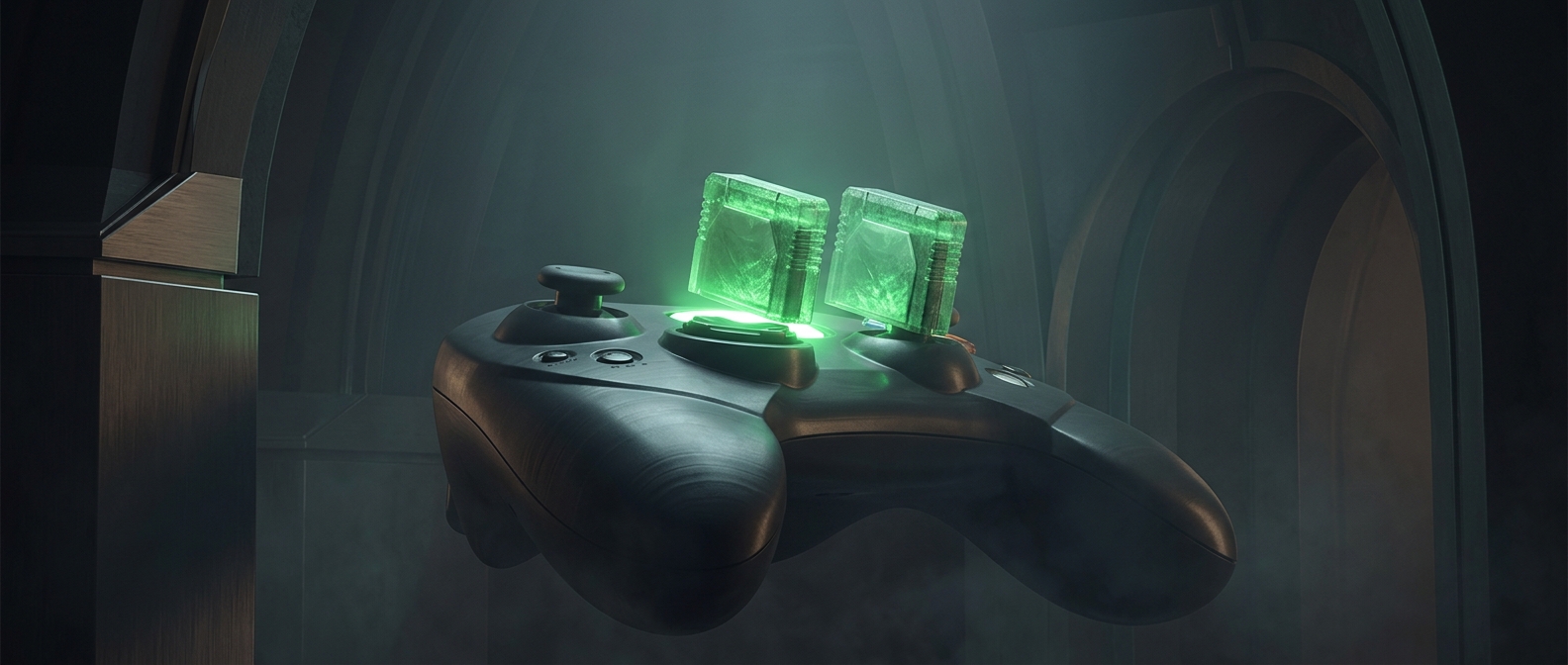
The units plugged into expansion slots on the controller. The controller was therefore the handy connection point, not the storage device itself: the memory unit held the data, while the console’s dashboard let players manage what was copied onto it.
Portability came with a physical tradeoff
Putting the slots on the controller meant the removable storage was attached to something players already handled. It also meant the memory units—and the extra hardware needed to connect them—added weight and bulk. That was a small cost for a practical option: a player could carry a profile in a pocket rather than bring along the entire console and its hard drive.