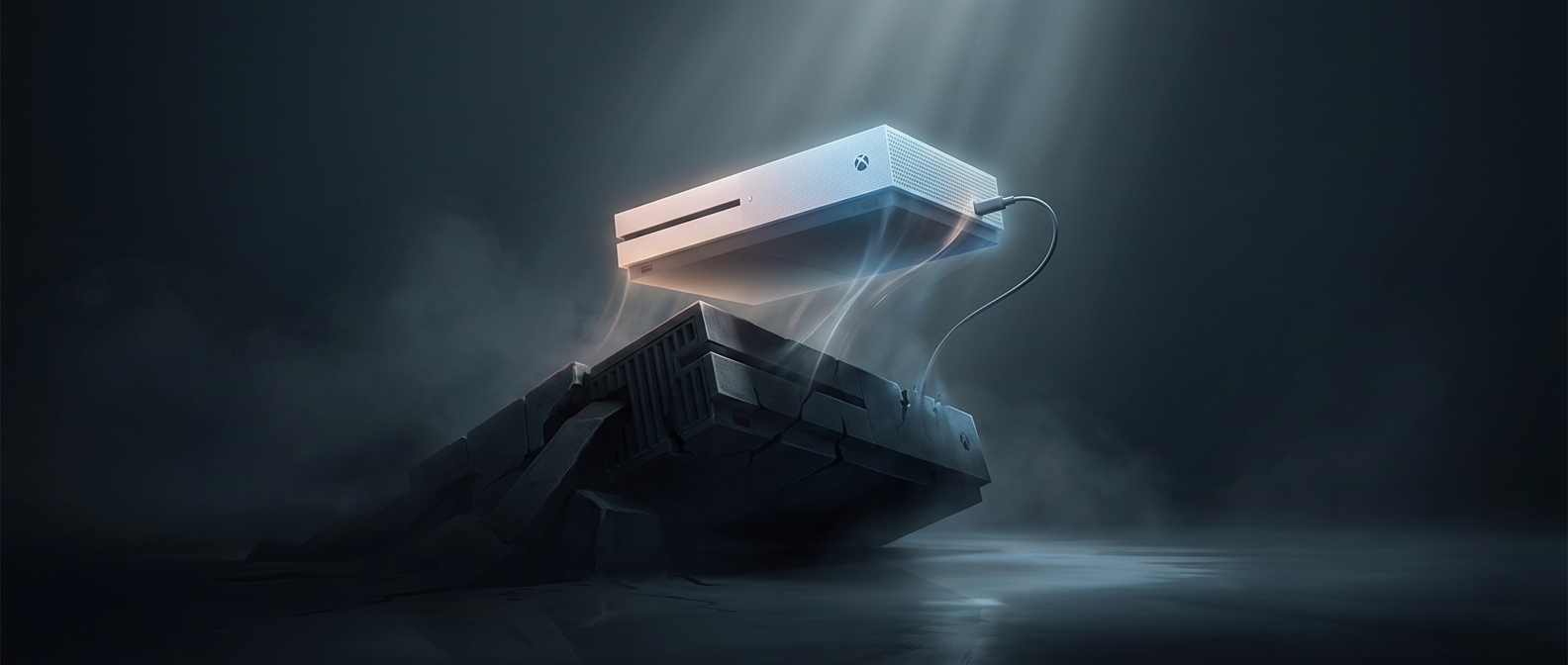
The power supply moved inside the console
An Xbox needs more than a wall connection: its power supply converts household alternating current into the lower-voltage direct current used by the console’s electronics. The original Xbox One performed much of that conversion in a separate brick on the power cable. With the Xbox One S, Microsoft placed the supply inside the console instead.
That change removed a large object from the floor or entertainment-center shelf, but it also changed where the console had to manage heat. An external brick can shed its warmth away from the console. An internal supply adds heat inside the case, so the console’s cooling system must carry it out along with heat from the processor and other components.
A cleaner setup, with tighter engineering
Putting the supply inside meant the One S could use a standard power cord rather than a cable tethered to a bulky adapter. It also made the setup easier to arrange: there was one less box to hide, position, and keep from being stepped on.
The engineering challenge was fitting the power electronics and their cooling needs into a redesigned enclosure. The result was not simply a smaller power brick disguised inside the machine; it was a console built around that added internal heat source. The practical payoff was a tidier cable run, while the design work shifted from managing a separate brick to managing heat within the console itself.