The mess was part of the attraction
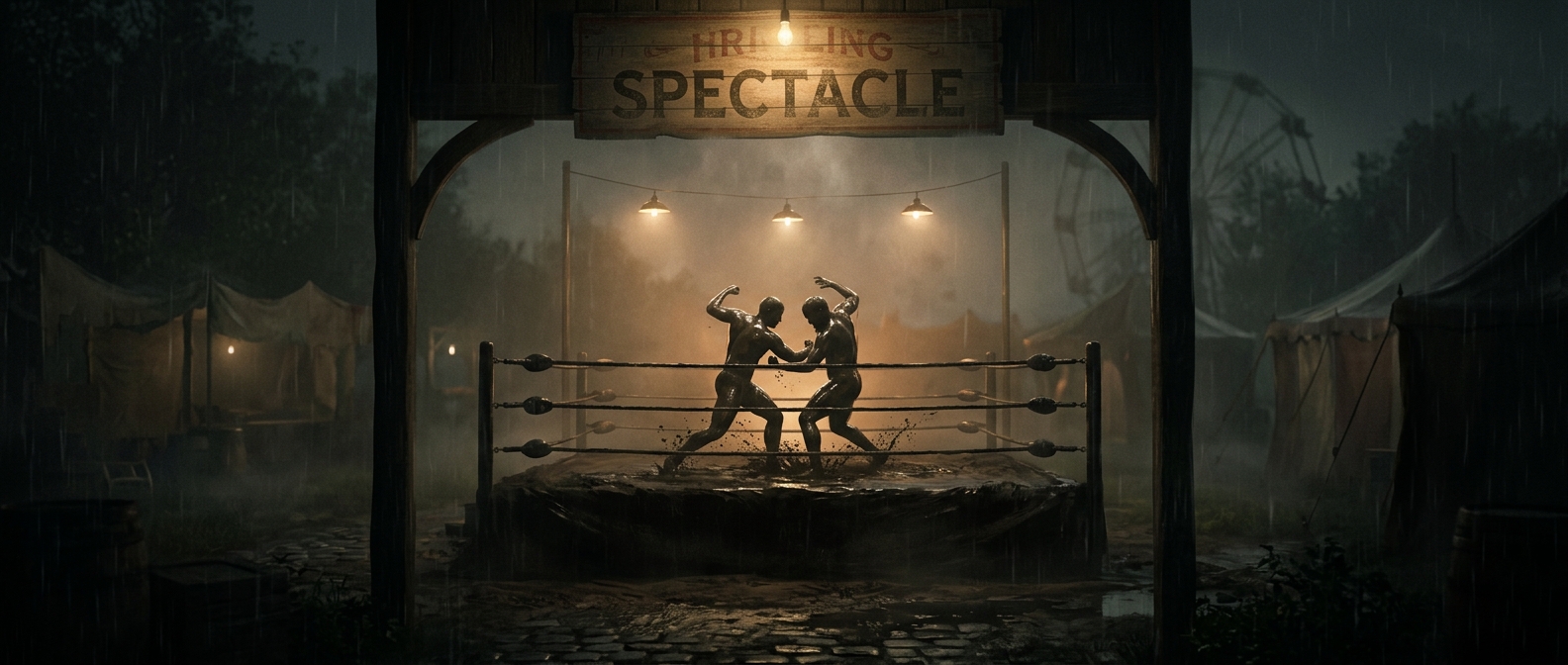
Mud wrestling offered promoters a simple way to make a familiar athletic contest look different. Instead of presenting competitors on a clean, predictable surface, they put them in mud and made the struggle itself visibly messy. Every slip, splash, and attempt to regain footing could become part of the show.
That change mattered because spectators do not watch only for a winner. They watch to see how a contest unfolds. Mud made movement harder to control and the action easier to read from the stands: a stumble or sudden loss of balance was immediately visible, even to someone who knew little about the sport.
From contest to spectacle
In 1930s Akron, promoters framed the event as an alternative to standard athletics. The contrast was the selling point: where conventional sports emphasized orderly competition, mud wrestling promised a rougher, more comic-looking scene. The setting turned the competitors’ effort—and the mess it produced—into entertainment in its own right.
That did not mean the contest stopped being athletic. Wrestling still depended on strength, balance, and resistance; mud simply changed the conditions and the way the action appeared. Promoters had found a format that could be explained at a glance: watch two people struggle for control on a surface that keeps betraying their footing.