How a Camera Mast Changes the View from a Submarine
A traditional periscope carries an image down a long optical tube. When raised above the water, its top collects light; mirrors or prisms guide that light through the hull to an eyepiece inside the control room. The arrangement gives the viewer a direct sightline—but it also requires a substantial shaft and a dedicated opening through the pressure hull, the strong inner structure that keeps the submarine’s crew safe underwater.
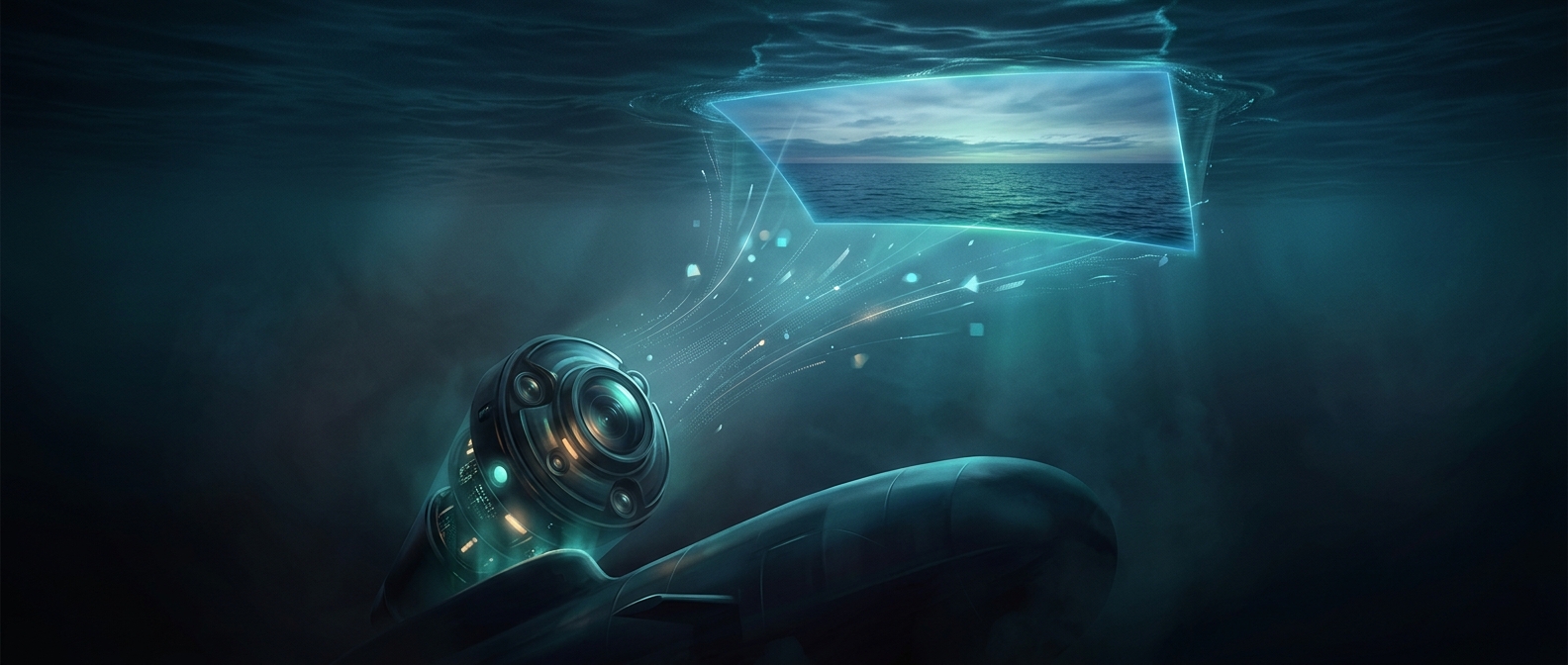
A photonic mast separates the sensors from the people using them. Cameras and other instruments sit in a mast that can be raised above the water, while electronic signals carry their images to screens below. “Photonic” refers to the use of light-based technology in the sensor system; the essential change is that the view travels as data, not down a rigid optical tube.
Why Replacing the Shaft Matters
Without a tall periscope tube running into the control room, designers can avoid the large shaft and its associated hull opening. That gives them more freedom in arranging the space inside the pressure hull and reduces the need to build the room around a single viewing instrument. The mast still has to move above the submarine to collect images, but the crew can remain below and watch the resulting feed on displays.
The electronic image also changes how the view is used: it can be shown on a screen rather than tied to one person looking through one eyepiece. The payoff is not simply a newer way to see above the surface. It is a different division of labor between the equipment outside the hull and the crew inside it—one that can preserve the submarine’s protected interior without a large optical passage through the control room ceiling.