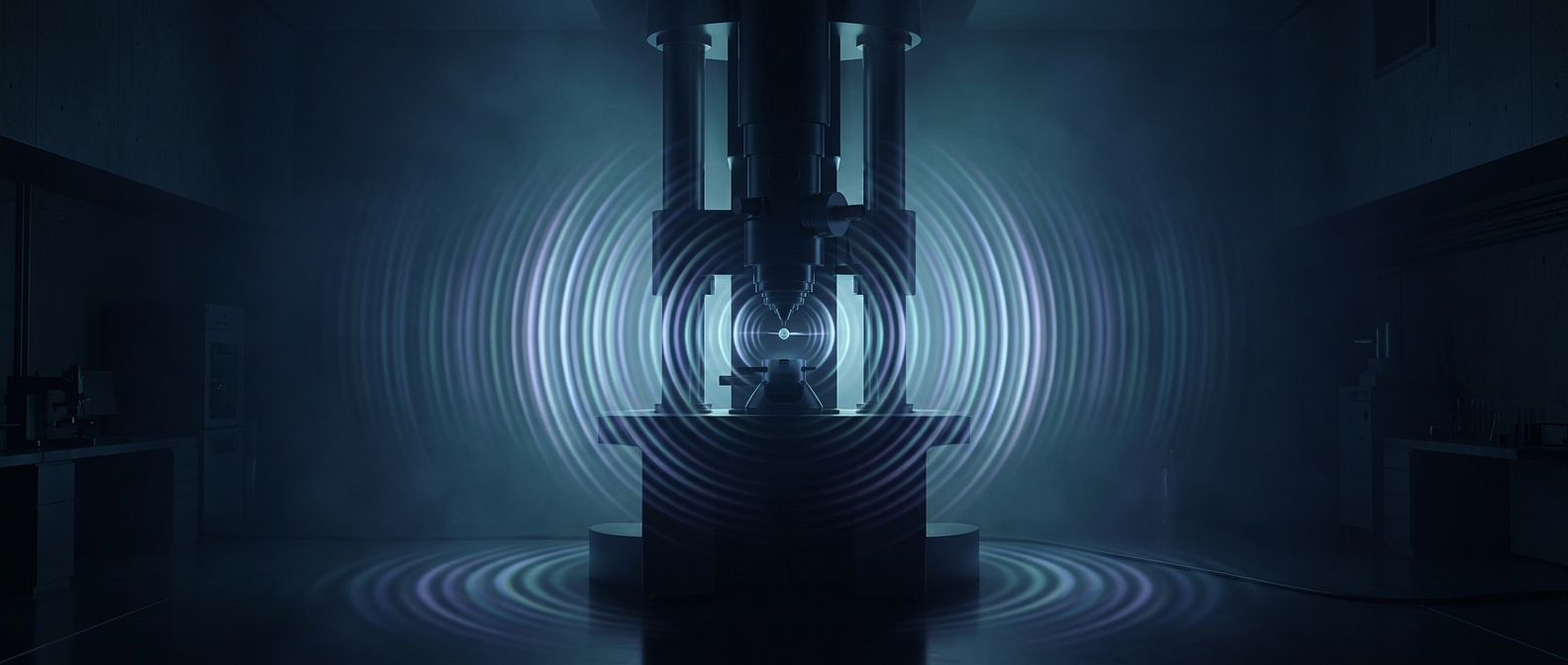
Tiny motion becomes a large image error
An electron microscope forms an image by steering a beam of electrons through or across a specimen and recording how they interact with it. Electromagnetic lenses focus the beam, but they cannot compensate for the specimen shifting unpredictably while the image is being formed.
At ordinary viewing scales, a slight shake may be invisible. At atomic resolution, the microscope is mapping features separated by fractions of a nanometer. A tiny movement during a scan can place each successive line of the image in a slightly different position, smearing fine detail much as a moving camera blurs a photograph.
The room is part of the instrument
Vibrations can travel through the floor from traffic, elevators, pumps, or nearby machinery. They can also come from people walking or from equipment attached to the same building structure. Because the microscope is so sensitive, controlling these disturbances is not just a matter of keeping the room quiet: sound is pressure moving through air, while much of the damaging motion reaches the instrument through its supports.
Labs therefore use vibration isolation—systems that reduce how much motion passes from the building into the microscope. Depending on the instrument and site, that can involve specialized supports, a particularly stable floor, or placing noisy equipment farther away. The goal is not a room with literally no movement, but a stable enough environment for the beam and specimen to remain aligned during measurement.
Stability protects the detail
A sharper image lets researchers distinguish structures that would otherwise blend together. If the specimen drifts or shakes, software may correct some slow movement, but rapid or irregular motion can erase information before the image can be reconstructed. That is why the microscope’s surroundings are engineered as carefully as its lenses: at this scale, a disturbance too small to notice by touch can become a blur in the data.