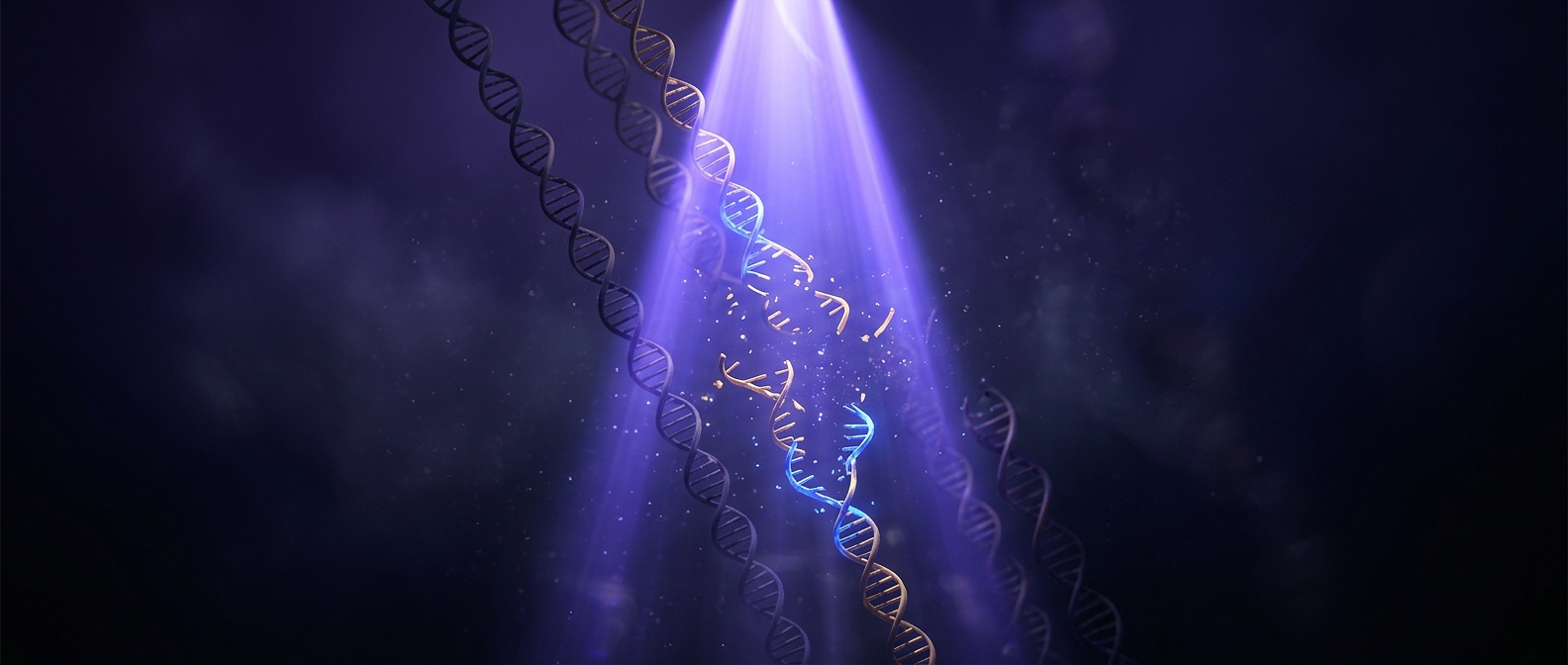
The damage happens inside the microbe
Water-treatment systems typically use ultraviolet light in the UV-C range, which can reach genetic material inside bacteria, viruses, and some parasites. When a pathogen absorbs the light, it can form abnormal links between neighboring DNA building blocks. These lesions distort the genetic instructions, making them difficult to copy correctly.
A microbe that cannot reliably copy its genetic material cannot reproduce and spread an infection. UV treatment therefore disables pathogens rather than necessarily destroying their bodies. Some may remain physically intact in the water, but they have lost the ability to multiply normally.
Exposure matters as much as the lamp
The water must pass close enough to the UV source, and receive enough light for long enough, for the treatment to work. The delivered dose depends on both the light’s intensity and the time the water is exposed. Cloudiness, suspended particles, or buildup on a lamp’s protective sleeve can reduce the light reaching microbes; a particle can even shield one from exposure.
That is why UV systems are commonly used after filtration, and why their design must account for water flow and lamp condition. Faster flow means less exposure unless the system compensates with sufficient UV intensity or another design measure.
A useful limit: no lasting protection
Unlike disinfectants that remain in water, UV light leaves no protective disinfectant behind. Water can be treated as it passes through a unit, but it may be contaminated again afterward through dirty pipes or storage. The practical lesson is that UV can make the treatment step effective only when the water is clear enough, the exposure is adequate, and the treated water stays protected on its way to the tap.