Why a Sewer Blockage Can Turn Rock-Hard
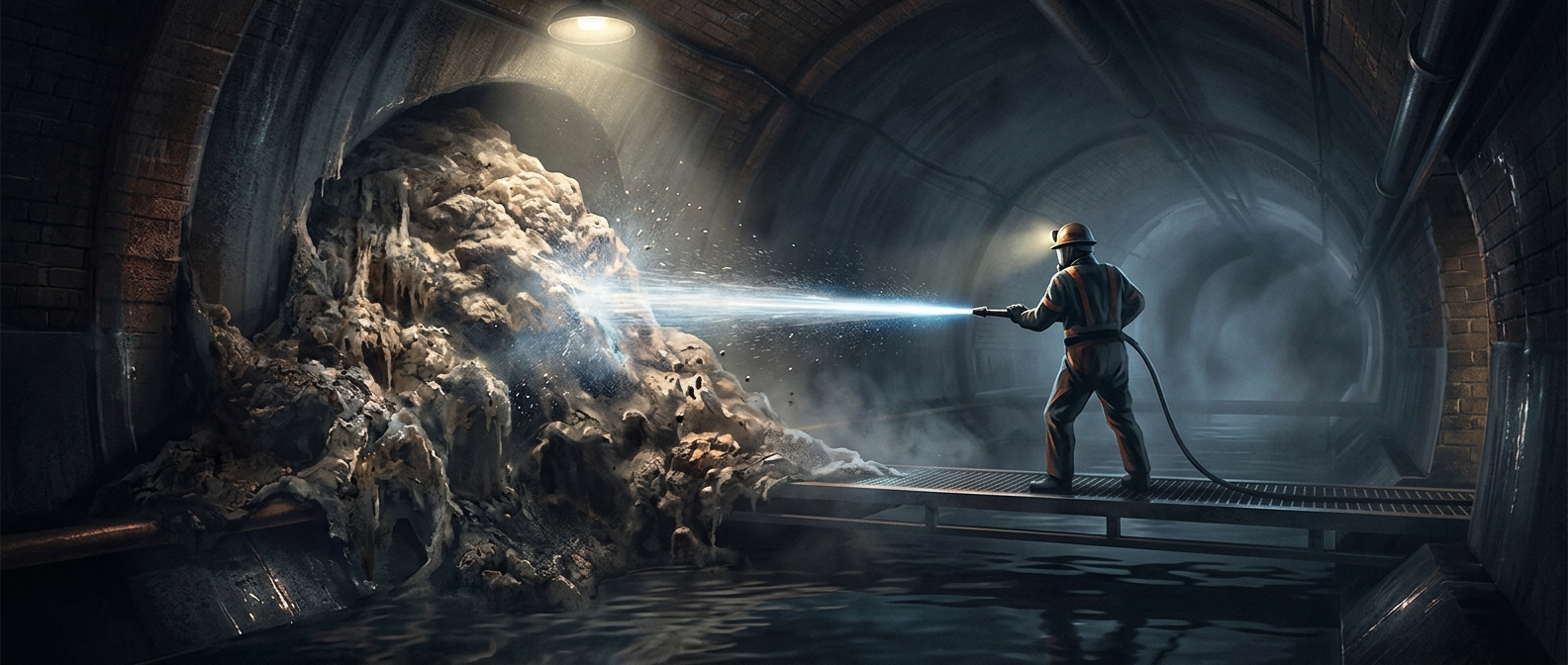
A fatberg is not simply a pool of cooking grease. Fats, oils and grease cool and cling to pipe walls, where they can trap wipes and other solid waste. Layer by layer, the mixture can grow into a dense obstruction that ordinary sewer flow cannot carry away.
That buildup is awkward to tackle from above: workers may have limited access, and the blockage can fill much of a pipe. A remote-controlled crawler lets an operator work inside the sewer without sending a person into the confined space.
Cutting the Mass Down to Size
The crawler positions a nozzle near the obstruction and directs forceful water streams at it. The jets chip and scour the packed material into smaller pieces, gradually opening a route through the blockage. Breaking the mass apart is more practical than trying to pull out one enormous, tightly wedged lump.
The goal is to restore enough room for wastewater to pass and prevent sewage from backing up. The loosened debris still has to be managed as part of the clearing operation; blasting it apart is the cutting step, not a guarantee that every fragment simply disappears down the pipe. The striking part is that a machine can reach the blockage from within the sewer and turn a solid-looking mass into pieces that crews can deal with.