The Sign Can Make a Room Less Visible to Staff
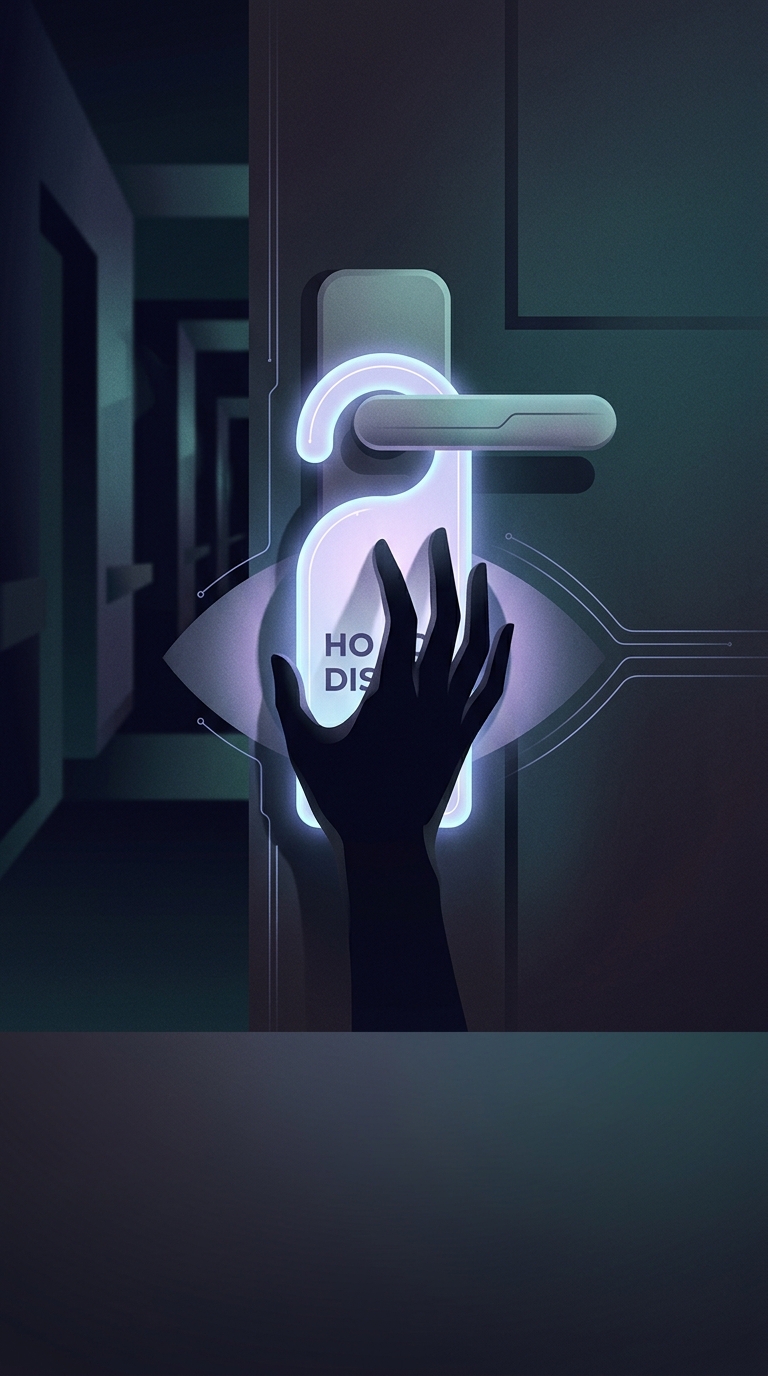
A “Do Not Disturb” sign is meant to set a boundary with housekeeping, but it also tells everyone in the corridor that staff are being asked to stay away. The possible vulnerability is not that the sign proves a room is empty—it doesn’t. It’s that a room receiving no routine visits may attract less attention from employees who would otherwise notice unusual activity.
That distinction matters: a thief cannot reliably tell from the sign whether guests are inside, asleep, or out. But the sign can remove one ordinary reason for staff to approach the door, making it easier for suspicious activity to go unobserved.
Why the Signal Is Ambiguous
Guests use the sign for many reasons: privacy, sleep, a late start, or simply to avoid housekeeping. A person watching the hallway cannot know which one applies. The sign is therefore a weak clue, not a dependable announcement of an empty room.
The practical lesson is to treat it as a privacy request, not a security device. Keep valuables secured, use the room’s lock and deadbolt, and contact the front desk if the sign has been left up for a long time and you want service. The risk lies in reduced visibility, not in the sign revealing with certainty that nobody is there.