How a Face Became Part of Frankenstein’s Identity
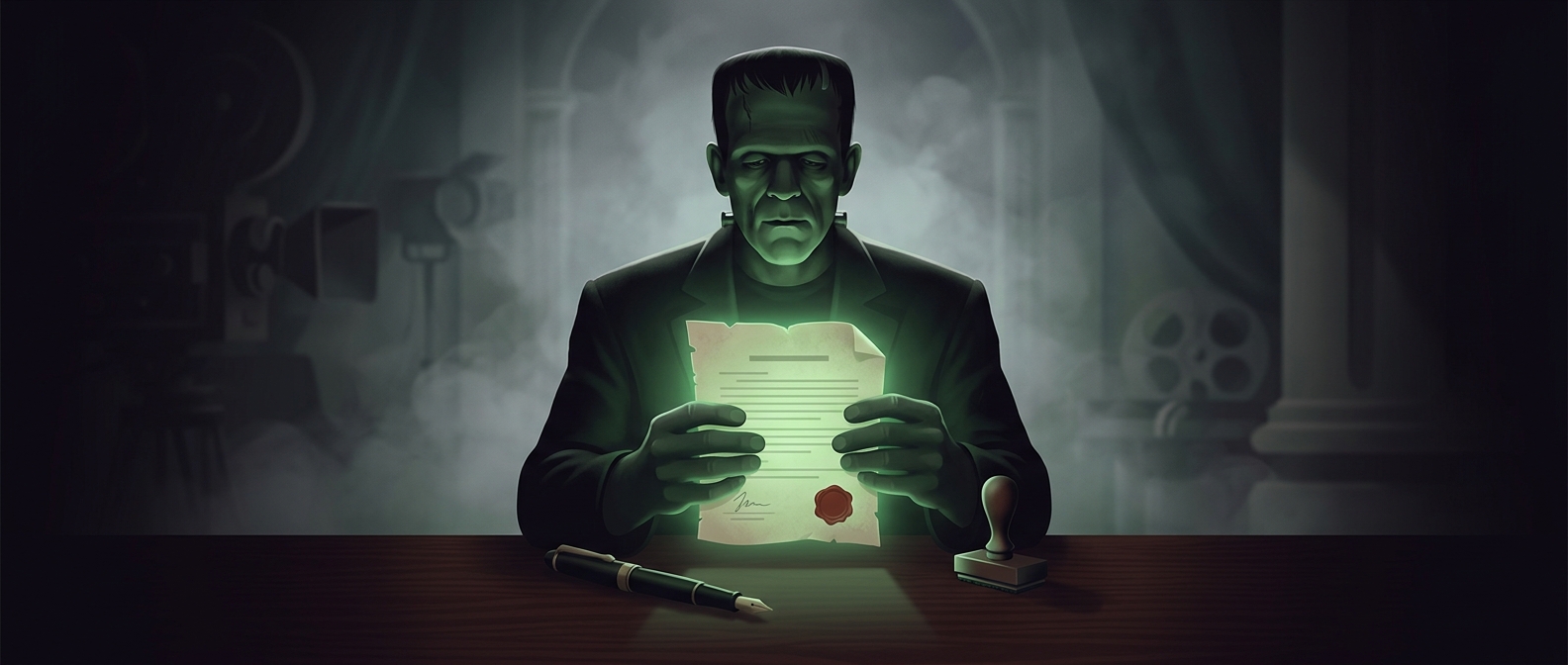
Boris Karloff’s monster was built from choices viewers could recognize at a glance: a heavy brow, sunken features, darkened eyes, and a head shape that seemed almost assembled. Makeup artist Jack Pierce created the look for Universal’s 1931 film. Universal’s copyright claim treated that particular visual design as part of the film’s protected creative expression—not merely as a general idea of what Frankenstein’s creature might look like.
That distinction matters. Mary Shelley’s creature was not originally defined by Karloff’s squared head or bolts; those became familiar through later screen versions. Protecting a specific depiction could give the studio control over the distinctive look it had developed, while leaving the broader character available for other interpretations.
Designing for the Camera, Not Just the Mirror
The makeup had to work under the film’s lighting and on a moving actor’s face. Pierce used shading and sculpted effects to make Karloff’s features read as strange and imposing from a distance, while still allowing expression. The result was not simply a disguise: it helped the audience understand the creature as physically powerful, visibly artificial, and emotionally readable.
The famous green color is a detail of the makeup’s later cultural life. The 1931 film was black-and-white, so audiences then saw the design through contrasts of light and shadow, not as green. Color publicity images and later portrayals helped cement green as the monster’s expected complexion.
A Template With a Long Afterlife
Copyrighting a particular design could help Universal preserve the commercial value of its screen version as the monster appeared in publicity, merchandise, and later productions. It did not make every possible Frankenstein’s monster look the same. The lasting effect was subtler: one studio’s interpretation became so recognizable that later audiences often treated its visual choices as if they had always belonged to the character.