A collision that skips the awkward introduction
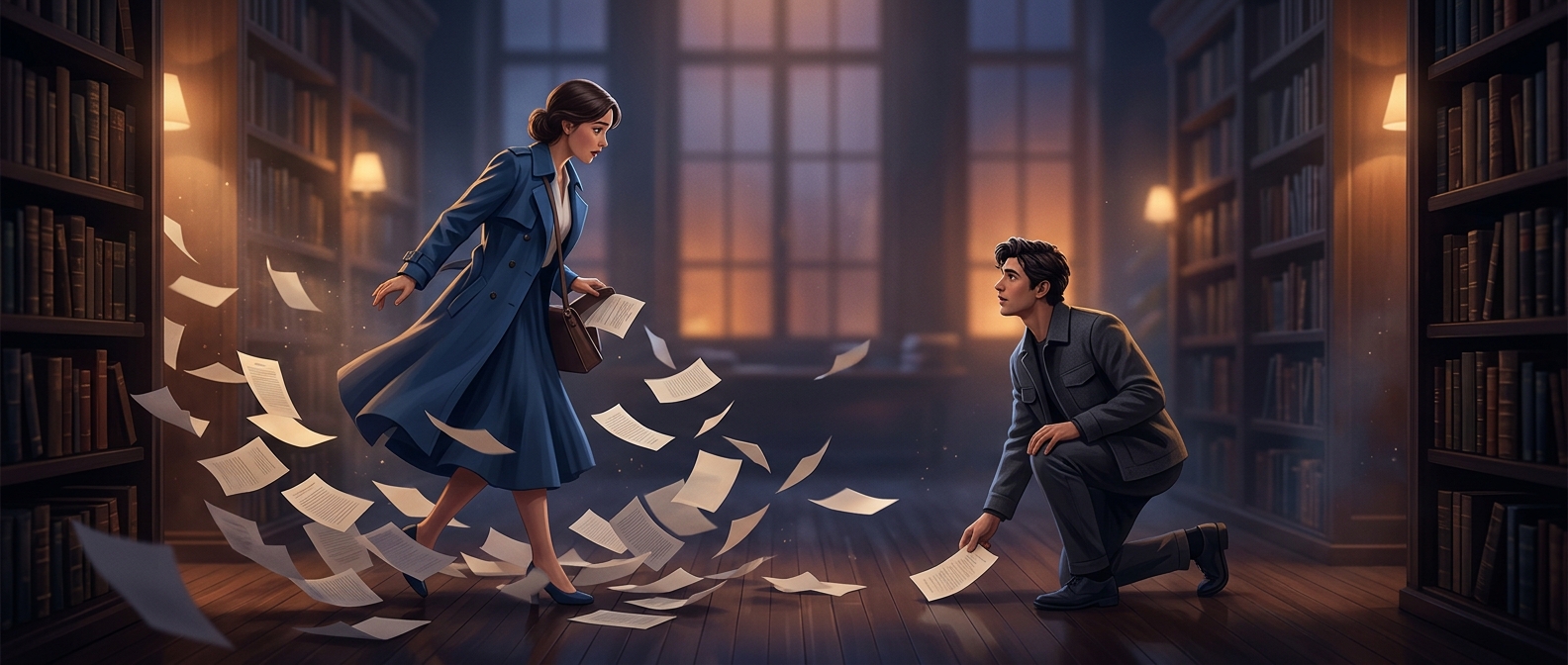
A meet-cute has a practical job in a romantic comedy: it gives two strangers a reason to interact before either has to announce, “I’m looking for love.” A spill, a mix-up, or a dropped stack of papers creates an immediate problem they can solve together. Helping supplies a small act of kindness; the mishap gives the scene a spark of embarrassment and a reason to remember one another.
That makes the paper-gathering scene less about stationery than about compressed storytelling. In a few beats, the film can introduce both characters, show how they behave under pressure, and hint at a possible connection. The audience gets the pleasure of recognizing the setup even as it waits to see whether these particular strangers will click.
Why filmmakers keep reaching for the same trick
Romantic comedies have limited time to move from first encounter to an evolving relationship. A contrived coincidence can bring the leads together quickly, while a physical task keeps the first exchange from becoming a static conversation. The familiar setup also gives writers room to vary the characters’ reactions: one may be flustered, amused, impatient, or unexpectedly considerate.
The shorthand has a cost. Because the audience knows the pattern, the scene can feel less like a genuine accident than like a signal that the plot has started. The papers themselves are interchangeable; what matters is what the characters reveal while collecting them. The trope works when the mishap opens a door to personality, not when it stands in for it. That is why the memorable part is rarely the scattered pages—it is the first impression made while picking them up.