A Budget Decision Changed Breaking Bad’s Landscape
Vince Gilligan initially placed the pilot in Riverside, California. The production instead moved to Albuquerque, New Mexico, where state incentives made filming more financially attractive. Such incentives return or credit part of a production’s eligible local spending, lowering the effective cost of hiring crew, renting equipment, and doing other work in the state. For a series facing a real production budget, that savings can influence where the cameras go—not just where the story is said to happen.
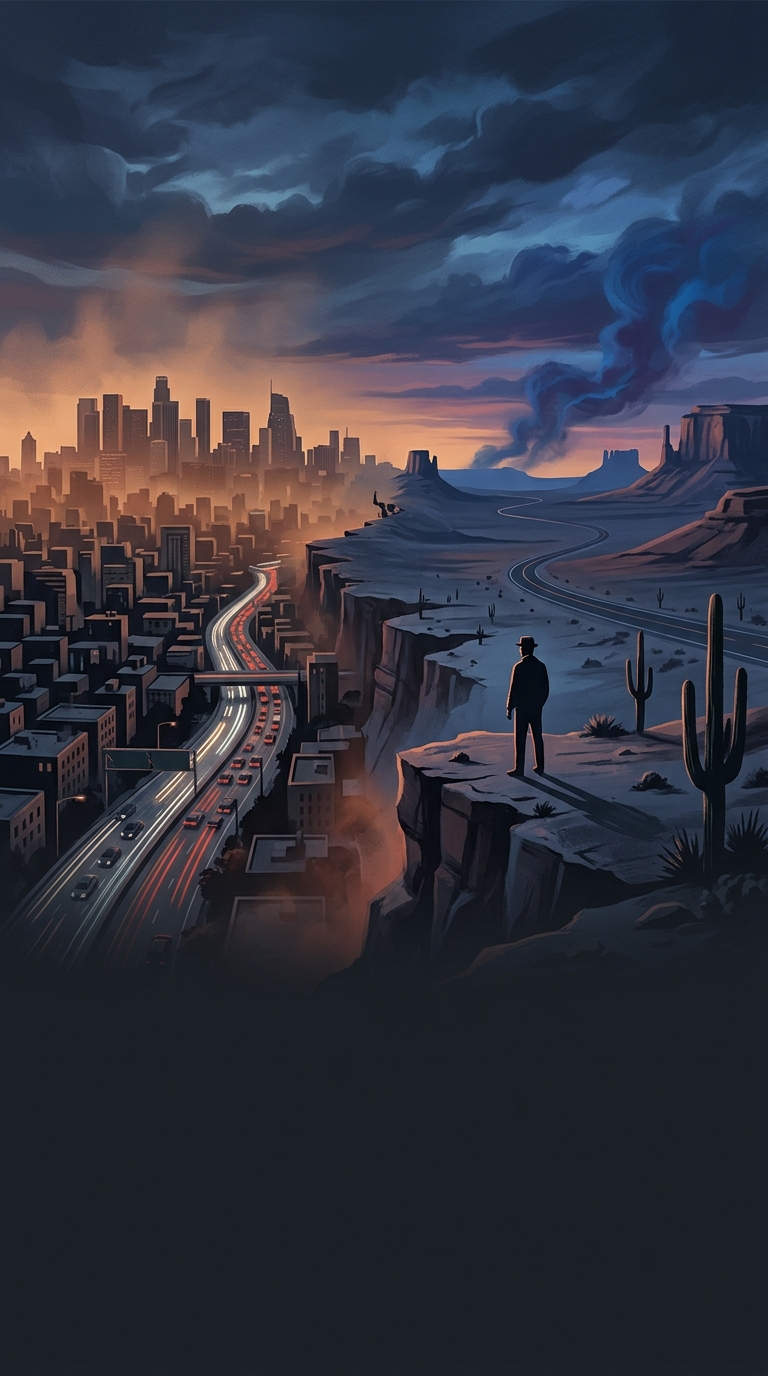
The move was more than a change of address. Once Albuquerque became the working location, the production could build its visual world around the city and its surroundings rather than trying to reproduce them elsewhere. The desert light, open roads, and arid terrain became part of the show’s visual vocabulary: settings that could make characters seem exposed, isolated, or small against the landscape.
The Incentive Became Part of the Show’s Look
A tax incentive does not dictate a scene or create a visual style by itself. It changes the practical choices available to producers. Filming where a story is set can also make it easier to use real streets, local businesses, and nearby landscapes, while keeping production activity—and spending—in the region offering the incentive.
In Breaking Bad, that economic calculation helped put the production in a place whose actual surroundings suited the story. What began as a location decision became inseparable from the series’ atmosphere: the New Mexico landscape was not merely a backdrop added in postproduction, but a place the crew could frame directly around the characters.