A microphone built into Player Two’s controller
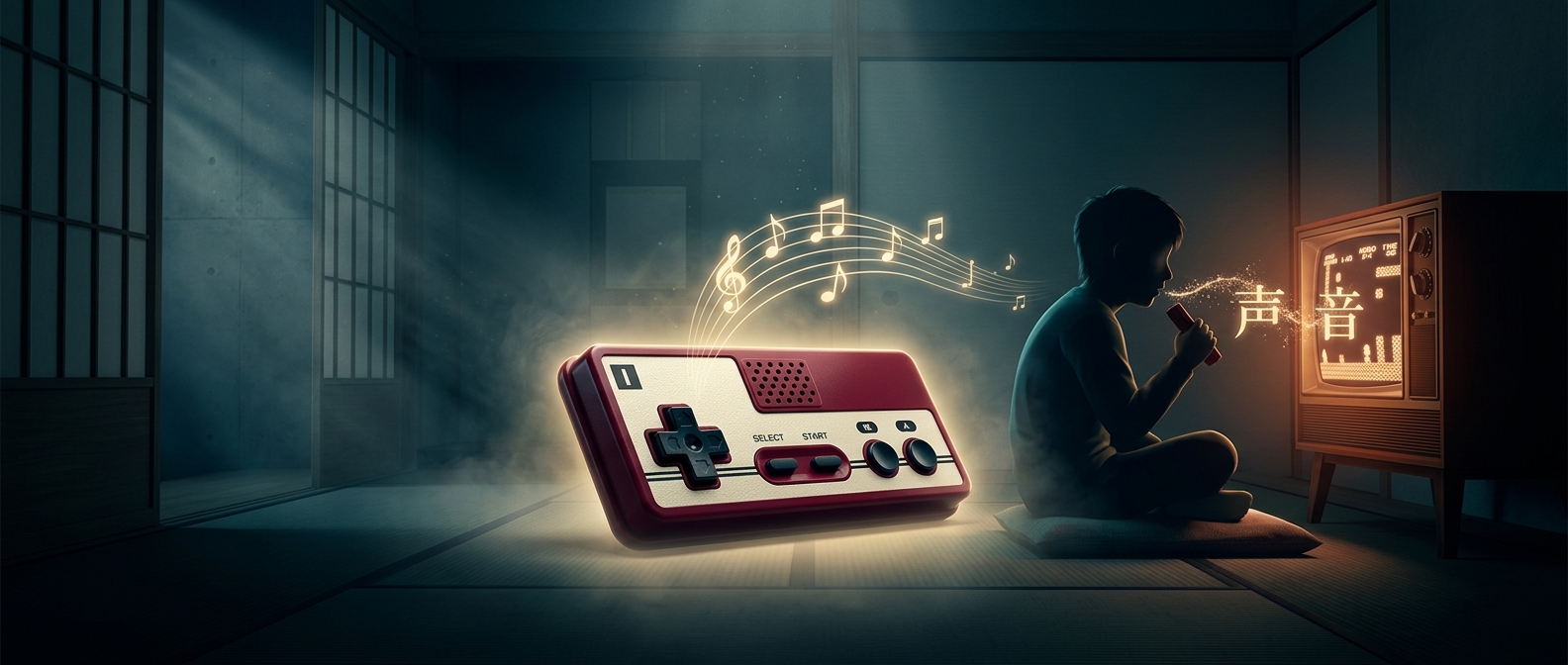
On the Japanese Famicom, the second controller had a small microphone where the first controller had Start and Select buttons. A volume slider sat beside it. The microphone did not understand words: games could respond to sound picked up through it, making a shout or other noise an unusual kind of input.
That meant the feature was less like giving Player Two a voice chat and more like adding a sound-triggered switch. The game had to be designed to listen for it, and the microphone could not provide the precise, repeatable commands that buttons did.
A memorable trick, with limited reach
One famous use appeared in the Japanese version of The Legend of Zelda. There, making noise into the microphone could help defeat Pols Voice enemies. The detail shows what the hardware made possible: a player could affect the game with a sound rather than a button press. But it was a special case, not a standard control method adopted across the Famicom’s library.
The microphone also came with a tradeoff for Player Two: that controller lacked Start and Select. And because a game needed to deliberately support microphone input, the built-in hardware did not guarantee that it would be useful in any particular title. In practice, it gave developers an extra, quirky option while leaving the familiar buttons to do most of the work.
That is why the microphone is best remembered as a glimpse of an alternate kind of controller—not as a feature that transformed how Famicom games were played.