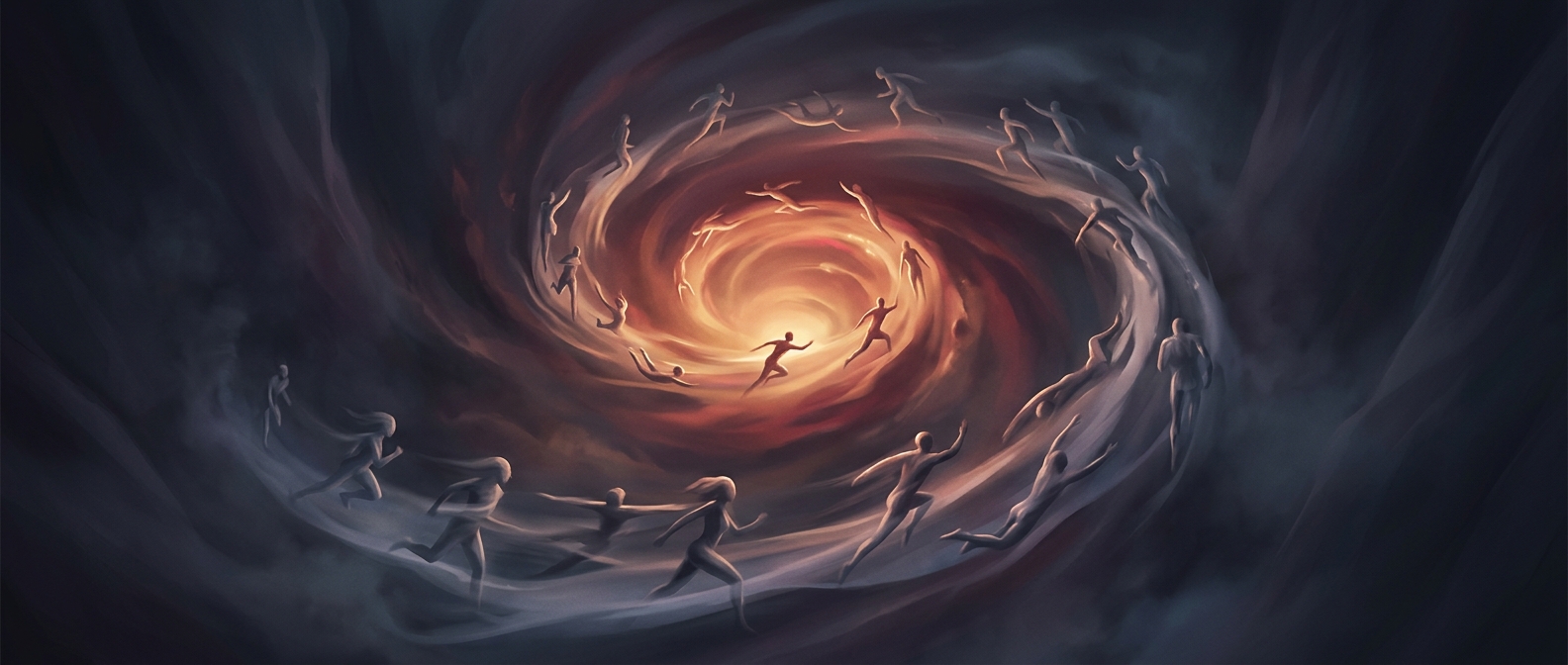
Rajas: The force of wanting and doing
In Indian philosophical traditions that use the three gunas—qualities said to shape nature and the mind—rajas names the quality of motion, desire, and striving. It is often explained alongside sattva, associated with clarity, and tamas, associated with inertia or obscurity. These are not simply fixed personality types: the gunas are understood as changing influences that can appear in different mixtures.
Rajas can give a person the push to begin, compete, create, or pursue a goal. Its restless side emerges when action is tied tightly to wanting a result: another achievement, response, or sign of success. The mind then has trouble settling, because each completed task can make room for a new desire.
Why drive can become restlessness
The tradition does not treat activity as automatically bad. Work and effort are part of life; the concern is attachment to what action will deliver. In this framing, rajas keeps attention reaching outward—toward the next task or reward—rather than resting in what is already happening. That makes the same energy useful for getting a project underway and tiring when it leaves no room for pause.
The practical distinction is not simply between being busy and being still. It is between acting with purpose and being pulled along by an appetite for more. A late-night burst of emails may look like productivity, but the rajas lens asks what is driving it—and whether the person can choose to stop.