A keepsake made from what remained
For Victorian mourners, hair offered a remarkably personal kind of memorial. A lock could be saved when a loved one died, then worked into a brooch, ring, bracelet, or watch chain. Unlike a portrait, it was not merely an image of the absent person: it was a physical remnant of them, small enough to carry or wear.
Hair was also practical material for keepsakes. Its keratin fibers can retain their shape and texture for a long time when kept dry and protected, though hair is not literally immune to decay. That durability helped make a lock seem like a lasting link to someone who was gone.
Turning a lock into jewelry
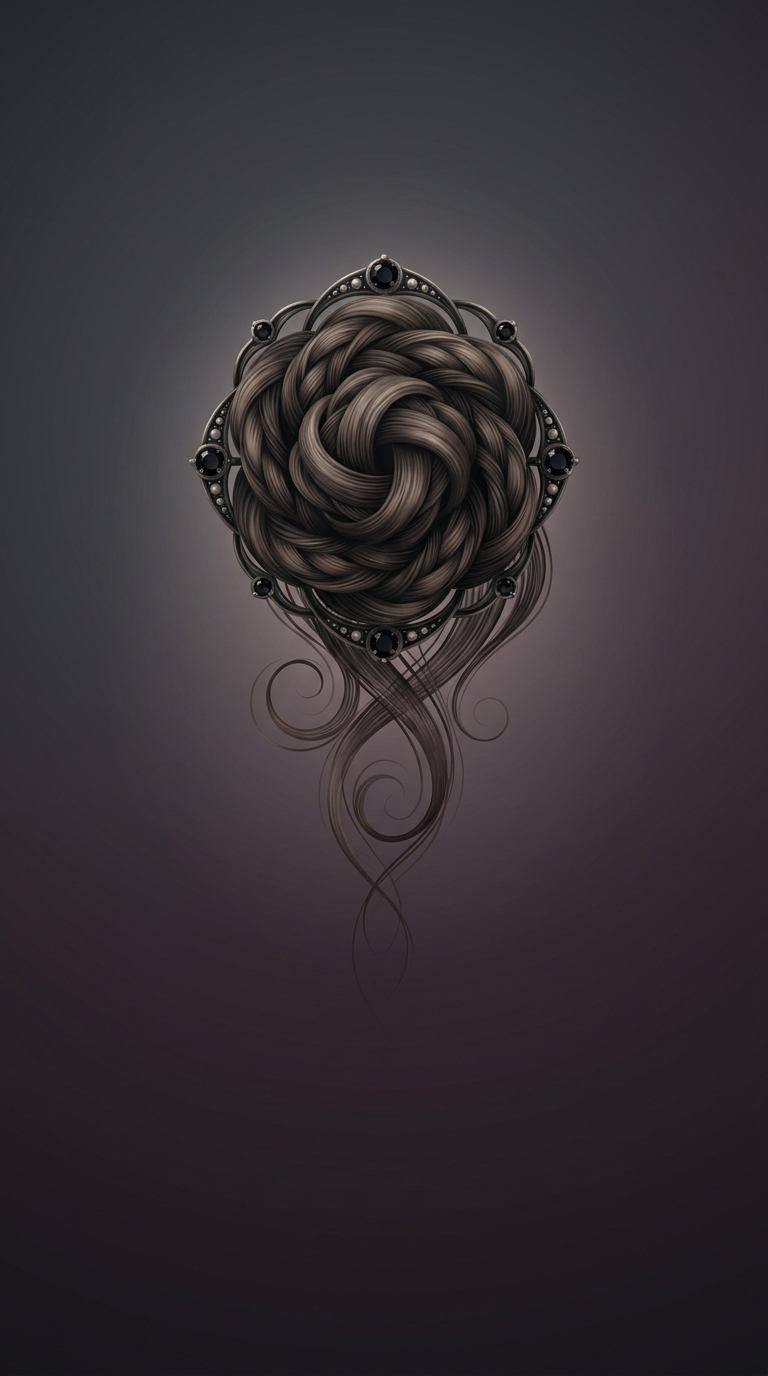
The work took patience. Makers sorted and prepared the strands, then braided, looped, or wove them into patterns. Some designs used hair as the visible centerpiece; others placed it beneath glass or incorporated it into a more conventional piece of jewelry. The result might look like a delicate ornament, but its meaning depended on knowing whose hair it held.
Hairwork was not limited to mourning: people also exchanged hair while alive as a token of affection. In bereavement, however, the same intimate material took on a different force. Wearing it brought private grief into ordinary routines—a loved one’s hair could travel with the mourner rather than remain only in a grave or keepsake box.
Fashion as a language of remembrance
Victorian mourning customs gave grief visible forms, from clothing to household mementos. Hair jewelry fit that world because it joined skilled craft with a direct personal connection. Its intricacy was not decoration alone; it made remembrance something a person could hold, wear, and explain. A tiny woven pattern could therefore serve as both ornament and a portable family memorial.