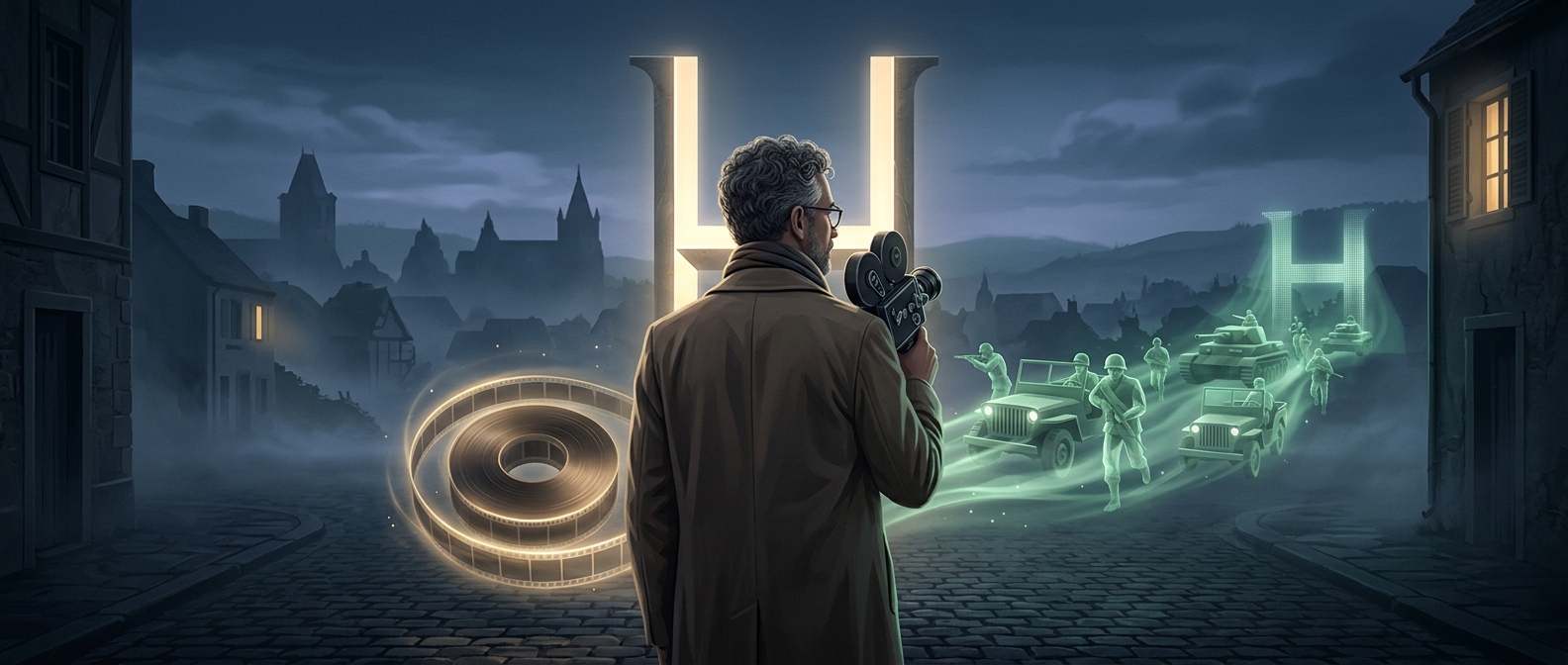
From war film to playable mission
Steven Spielberg’s contribution to Medal of Honor began with a question of form: what would it mean to enter a World War II story rather than watch one? After making Saving Private Ryan, he helped develop the idea for a game that could put players inside the conflict. DreamWorks Interactive built the first Medal of Honor, released for PlayStation in 1999, as a first-person shooter—a game viewed through the eyes of the character carrying out the action.
That viewpoint changed the audience’s role. A film can show a battle unfolding across many people and places; a game asks one player to move through a sequence of immediate problems. In Medal of Honor, players took the role of an American agent operating in Nazi-occupied Europe, completing missions that drew on espionage as well as combat.
History shaped into objectives
The game could not reproduce the full scale or uncertainty of a world war. It had to turn the setting into levels, routes, enemies, and goals that a player could understand and act on. That meant presenting history through a narrow, playable perspective: the player encountered the war as a chain of missions, not as a comprehensive account of its causes or consequences.
The format also made the setting more than scenery. A player had to navigate danger and make progress directly, using the controls to advance through the story. That was the franchise’s distinctive promise: a younger audience could encounter a recognizable historical conflict through participation, while the game’s structure inevitably emphasized the missions it was built to make playable.