Why volcanic ash made a useful roof coating
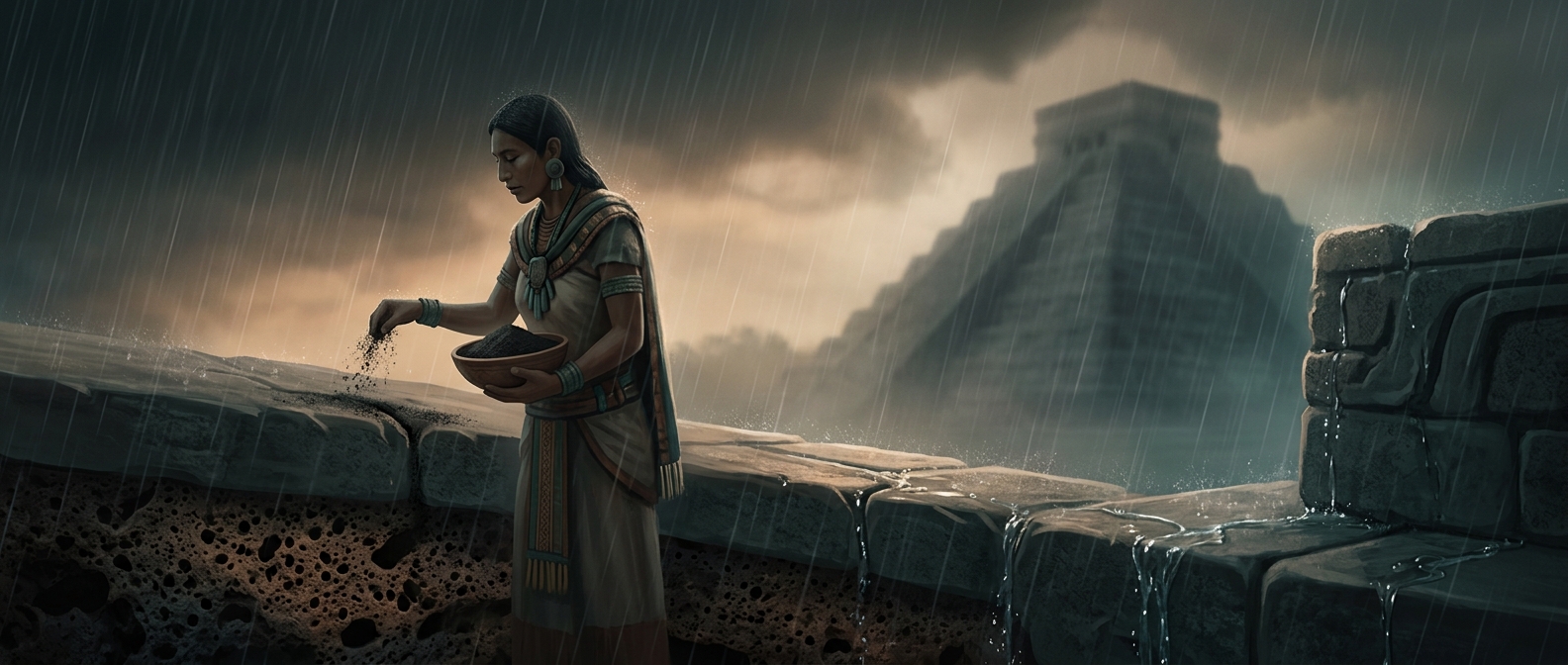
A stone roof could shed rain and still leak. Water could find its way through tiny gaps between stones or into a porous surface, where repeated wetting could weaken the building. A coating of stucco helped close those paths—but its ingredients mattered. Ordinary lime plaster can soften or erode when it stays wet.
Ash helped lime set into a tougher binder
Builders could mix volcanic ash with lime and water to make a mortar or plaster that hardened more reliably in damp conditions. The ash contains silica- and alumina-rich minerals. When these react with lime in the presence of water, they form binding compounds that knit the mixture together. This is called a pozzolanic reaction: in plain terms, the ash helps lime-based material harden even when moisture is present.
The result was not a magical, perfectly sealed membrane. It was a dense, durable coating that resisted rain better than lime plaster alone. Applied over stone, it could cover small openings and protect the roof surface from direct weathering.
A hidden layer with a practical job
Volcanic ash was valuable not because it looked impressive, but because it changed how the plaster behaved. The finished roof might appear to be stone, while an unshowy layer of ash, lime, and water did much of the work of keeping that stone assembly dry. That practical chemistry helped ancient buildings endure repeated exposure to rain.