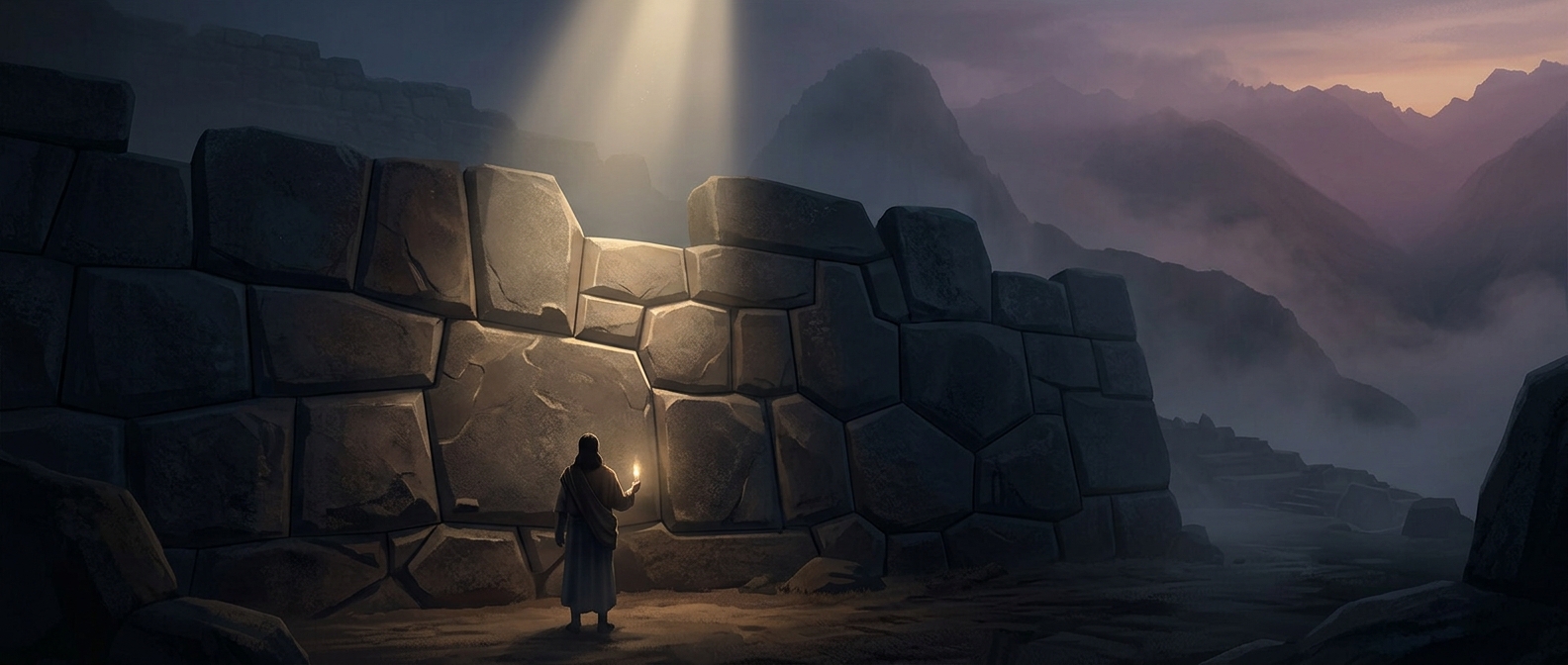
Why Andean walls have so many-sided stones
In parts of the Andes, some stone blocks have several angled edges rather than neat rectangular faces. Masons shaped each block to meet the stones around it, creating joints that turn and change direction across the wall. The result resembles a jigsaw, but the fit was achieved by working stone against stone—not by assembling standardized pieces.
A fit made one block at a time
Building this way demanded careful planning. A newly shaped stone had to match the neighboring blocks, including their irregular outlines and the angles where they met. If a joint was too wide or a face sat at the wrong angle, the block would not settle properly. The masons therefore had to remove material gradually and check the fit as they worked.
This approach made the layout less dependent on straight, continuous seams. Where one joint ended, another could meet it at a different angle. That interlocking pattern helped hold the stones in place and spread forces through the wall rather than along a single uninterrupted line.
Why the joints mattered
The Andes are prone to earthquakes, which shake walls from side to side. A wall made of carefully fitted stones can shift slightly under movement and settle back, while its interlocking joints make it harder for individual blocks to slide freely out of place. The stones are not bonded by mortar; their weight and contact with neighboring blocks do much of the work.
Each unusual outline was therefore both a construction challenge and part of the wall’s structure. A block with many corners was not merely decorative: its shape linked it to several neighbors, turning a collection of heavy stones into a tightly fitted whole.