A tomb designed as an operating court
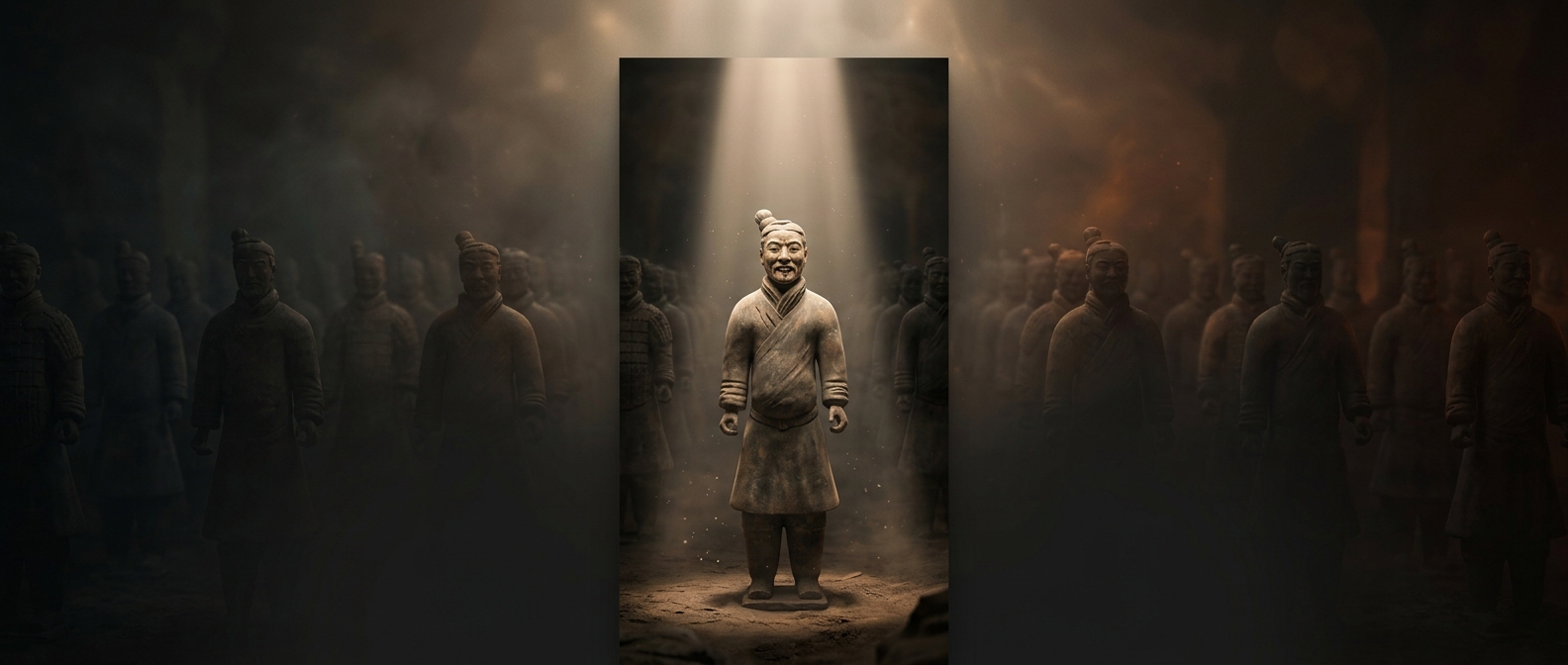
For Qin Shi Huang, burial was not simply a place to store a body. The first emperor of a newly unified China expected his authority and household to continue beyond death, so his mausoleum was conceived as an underground counterpart to the world he had ruled. The clay soldiers were only one part of that larger vision: they stood in organized formations, as an army would, rather than being piled together as decoration.
Making a force from repeatable parts
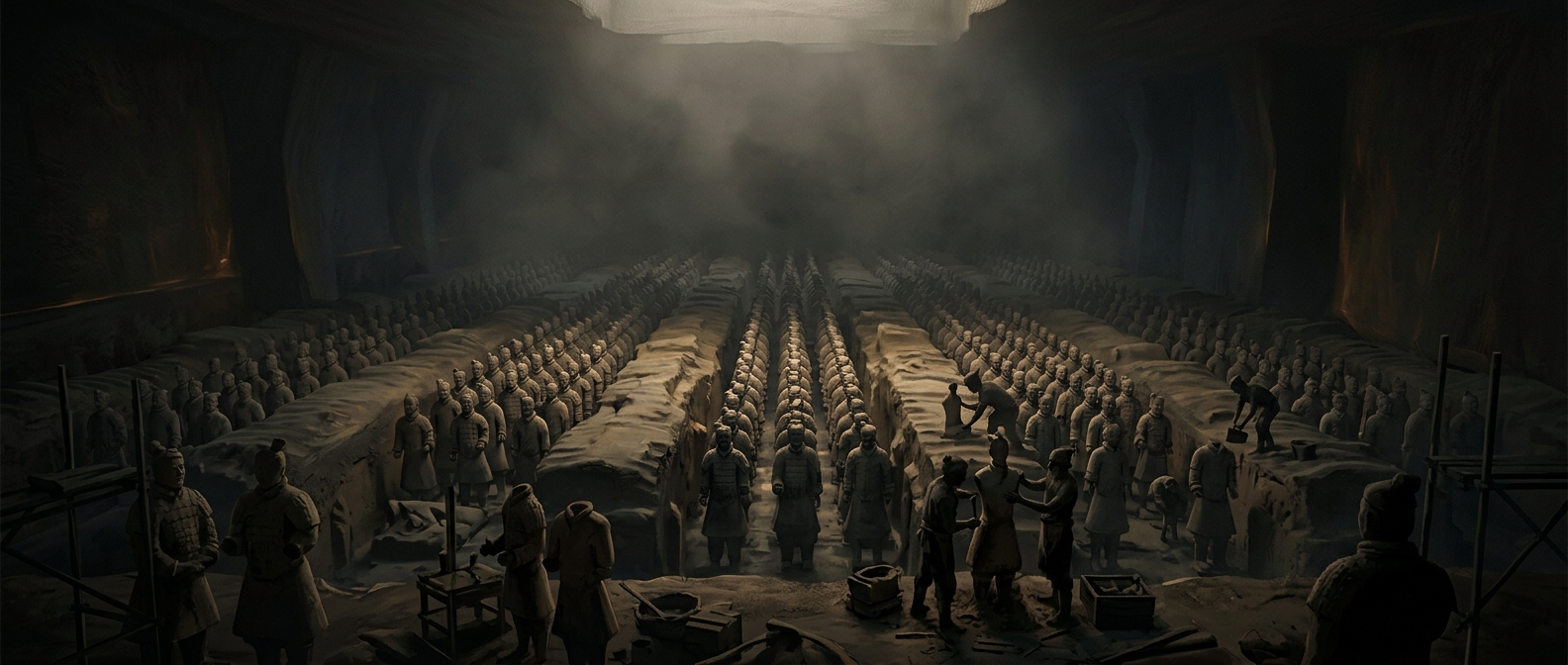
Building such a force required more than sculptors working one figure at a time. Workshops could produce components—such as bodies, limbs, and armor—in batches, then assemble and finish them. This approach made a vast project manageable while leaving room for variation in faces, hairstyles, and details. The result suggests both standardization and individual craft: the figures belong to one imperial army, yet they are not identical copies.
The work also depended on coordination. Clay had to be prepared and shaped, figures assembled and fired, and finished troops moved into their assigned positions. A failure at any stage could damage a heavy, brittle figure. The decades-long effort was therefore a logistical undertaking as well as an artistic one, requiring labor and materials to be directed across a project far larger than a single workshop.
An army preserved underground
The soldiers’ formation gives the mausoleum its force as an archaeological discovery: it preserves not just statues, but an intended arrangement of military power. Their placement makes the emperor’s imagined afterlife legible in physical form—an army positioned to serve its ruler even after his death. The clay ranks were built to do more than represent an army; they were meant to make one present in the tomb.