Rhodes Turned a Failed Siege Into a Bronze Giant
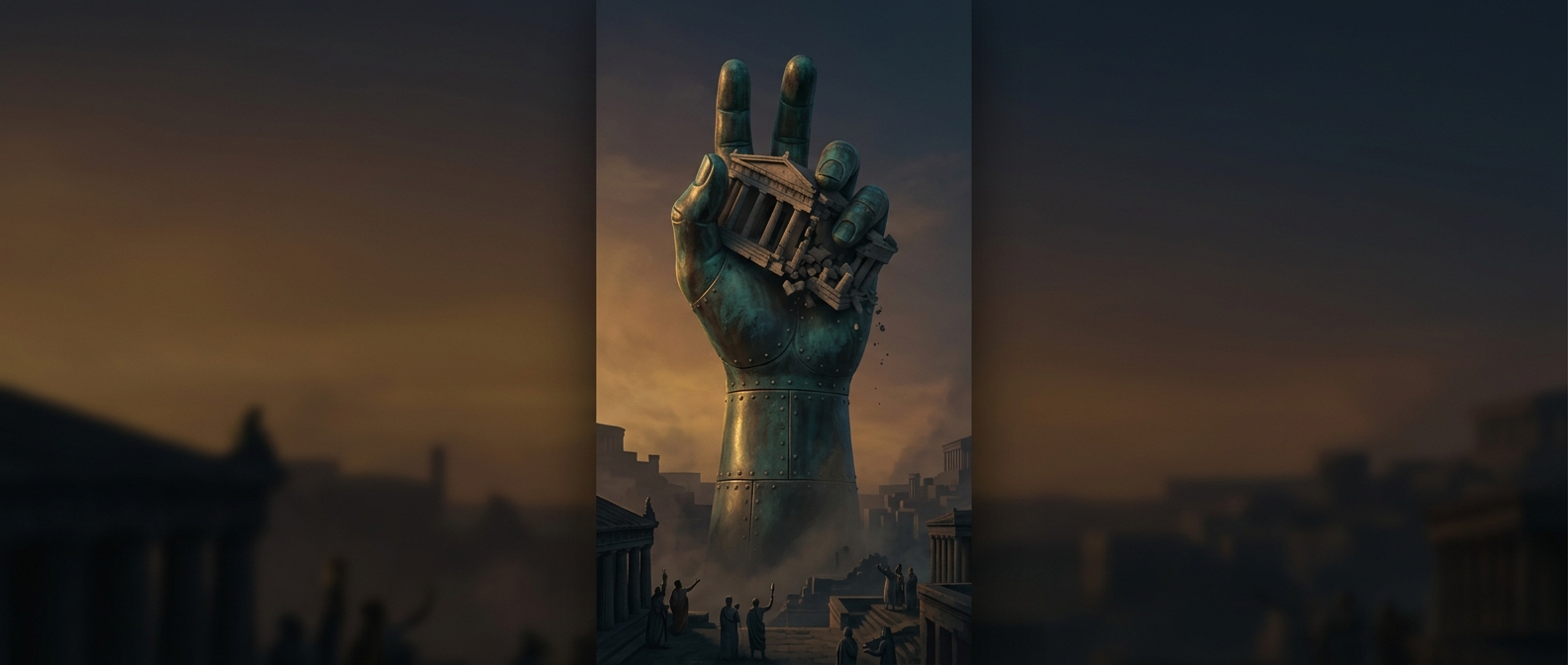
The Colossus of Rhodes was more than an oversized statue. It made a political argument: the island city had survived a powerful enemy and could afford to commemorate that survival on a monumental scale. The statue honored Helios, the sun god associated with Rhodes, and was completed around 280 BCE, after the city had resisted a siege by Demetrius I of Macedon.
The siege left behind a practical source of funding. The Rhodians sold equipment abandoned by the attackers, including parts of their siege machinery, and used the proceeds toward the monument. In that sense, the Colossus turned the remnants of an attempted conquest into a public display of resilience and wealth.
A Monument Built to Be Seen—and Built to Last
The bronze figure stood roughly 30 meters (about 100 feet) tall. Ancient accounts attribute it to the sculptor Chares of Lindos, though details of its construction and appearance remain uncertain. It was likely assembled from bronze sections supported by an internal structure—a demanding way to build a statue at that scale, before modern cranes or steel framing.
Its enormous size made the work itself part of the message. Bronze was valuable, and a structure of this height required substantial materials, labor, and technical skill. The monument announced not just devotion to a god, but the resources and organization Rhodes could bring to bear.
The Earthquake Changed the Story
Around 226 BCE, only decades after its completion, an earthquake brought the Colossus down. Ancient descriptions say it broke at the knees. The fallen statue remained a landmark, but its brief upright life gave the monument an ironic afterlife: the symbol of Rhodian power became a reminder that even an extraordinary engineering achievement could not command nature.
The Colossus did not need to stand for centuries to make its point. Its construction celebrated a city’s survival; its ruin made that celebration inseparable from the fragility of the world it was built to impress.