A stone-colored surface, an iron skeleton
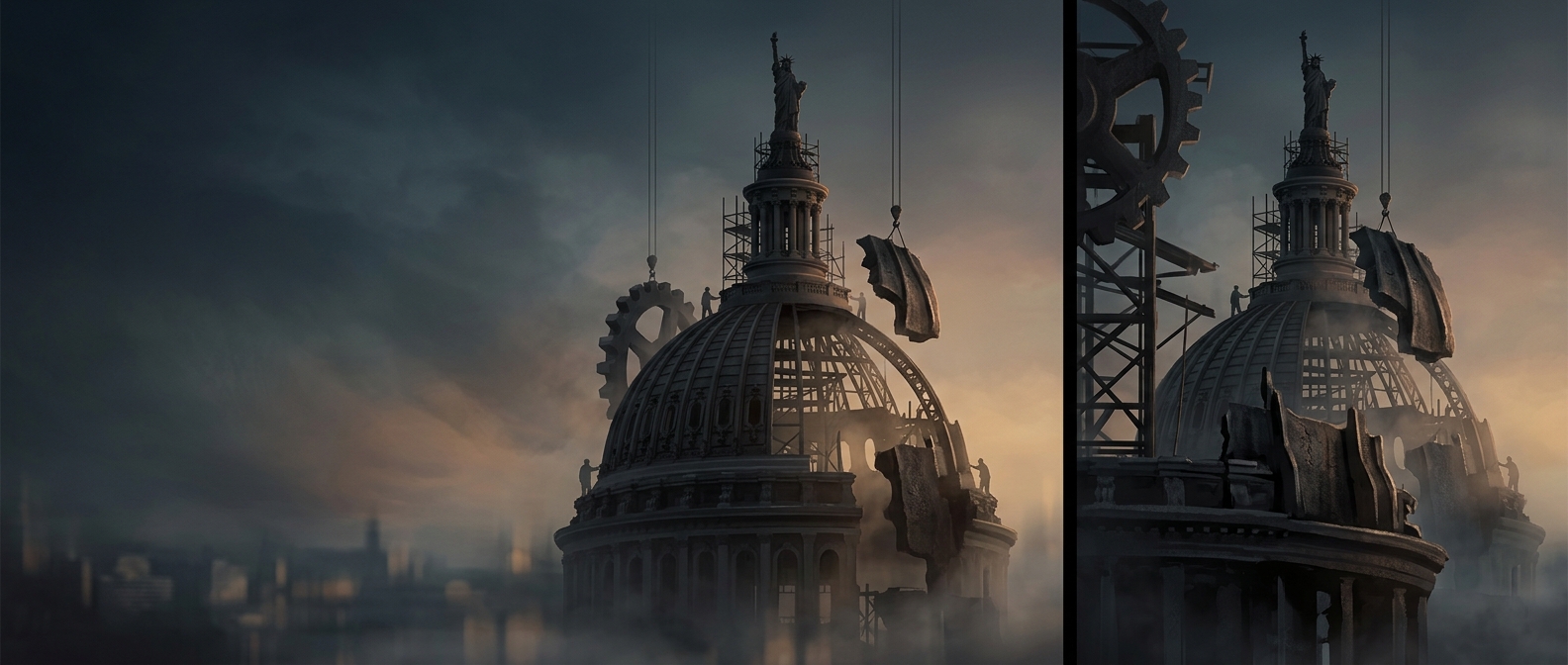
The Capitol’s white dome can look like a carved stone crown, but its visible finish conceals a metal structure. The reported 8.9 million pounds refers to the cast iron used in the dome—not one enormous lump, but many iron pieces fitted together to form its framework and skin. Paint supplies the pale, marble-like appearance; it does not make the dome marble.
That distinction mattered because the dome had to be both imposing and buildable. Architect Thomas U. Walter designed the replacement dome in the 1850s as the Capitol was being enlarged. Cast iron could be shaped into repeatable components and assembled into a large, curved structure, avoiding the need to carve and stack vast quantities of stone overhead.
Why the dome has layers
The structure is more complicated than its smooth exterior suggests. It has an inner dome and a taller outer one: the inner form shapes the space seen from inside the Capitol, while the outer form creates the familiar profile above the building. Iron members carry the load through the dome’s framework, so the white exterior is a finish over an engineered assembly, not a solid stone shell.
Construction began in 1855 and continued through the Civil War, with the dome completed in 1866. Its iron construction also reduced the danger that fire would destroy the roof, a serious concern in a building whose earlier dome was made of wood. The result made a practical tradeoff visible: from a distance, the Capitol appears crowned in classical stone; up close, that monumental look depends on thousands of metal parts held together beneath the paint.