A cathedral rooftop was the wrong stage for David
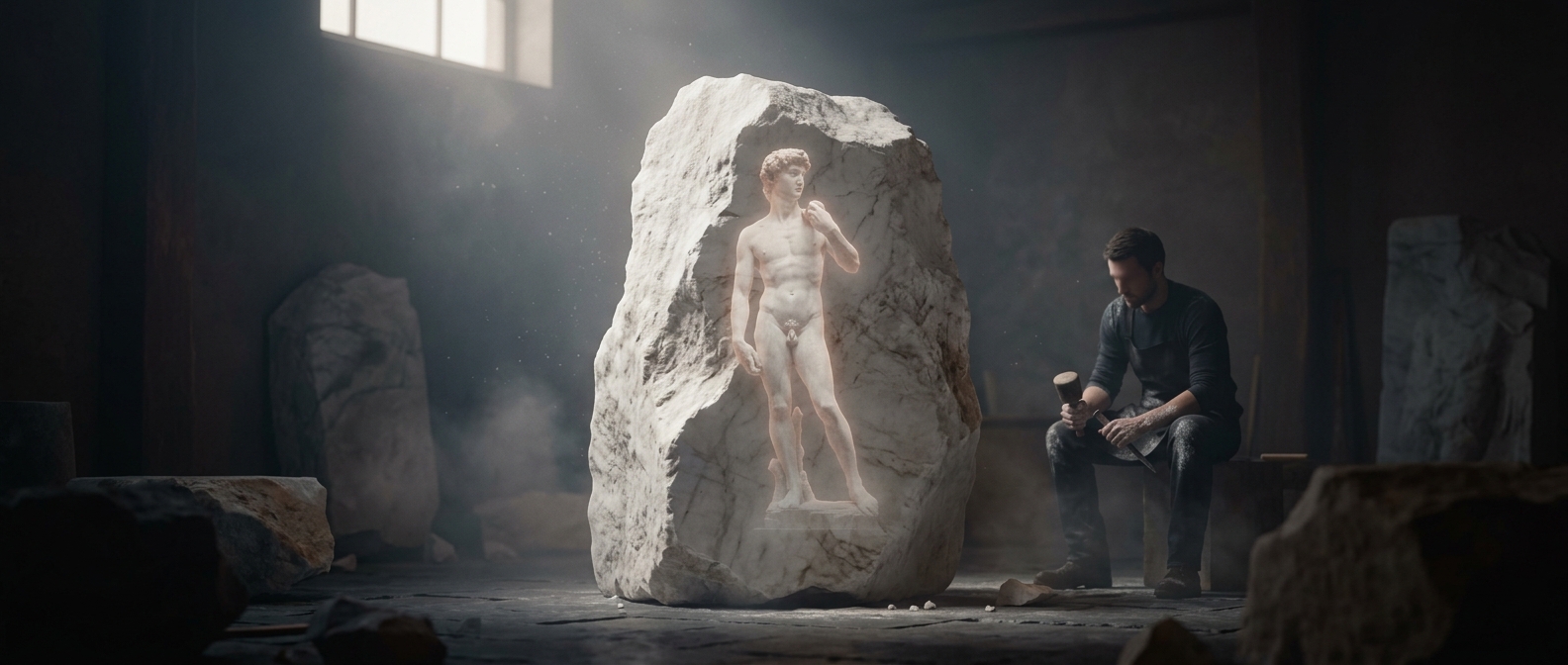
Michelangelo’s David began as a cathedral project. Florence’s cathedral authorities had commissioned a series of large Old Testament figures to stand high on the building’s exterior. Seen from the ground, such statues would appear smaller than they were, so the sculpture had to be monumental. David rose more than five meters and weighed roughly six tons.
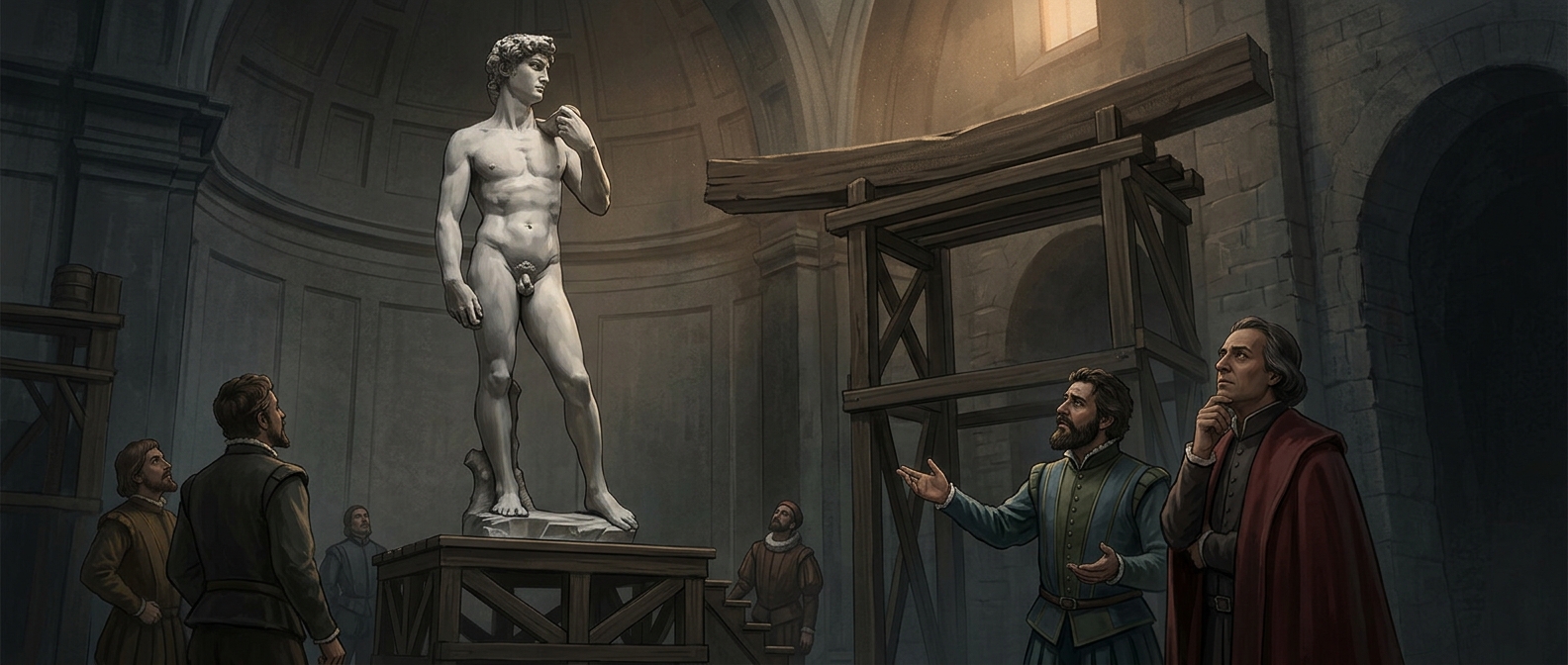
That scale created a practical problem. Raising a solid marble figure is not like hoisting a bundle of building materials: its weight must be supported evenly, and the statue’s tall, narrow shape makes it vulnerable to tipping or damage. The cathedral’s elevated position added another challenge. Getting David into place would require a secure lifting arrangement and a structure able to bear the load—not simply a strong rope and enough workers.
The move changed what the statue meant
In 1504, Florentine officials reconsidered where the finished sculpture belonged. Rather than sending it high above the city, they placed it beside the Palazzo Vecchio, the seat of the city government. The move made the figure a public landmark at street level, where people could see its scale and details directly.
That location also gave David a civic meaning. The biblical shepherd who faces a stronger enemy could be read as an image of Florence itself: a small republic asserting its independence. A construction challenge had therefore changed more than the statue’s address. Instead of serving as distant cathedral decoration, David stood at the threshold of political power, visible to the citizens whose city he came to symbolize.