Why Vermeer’s body of work is so small
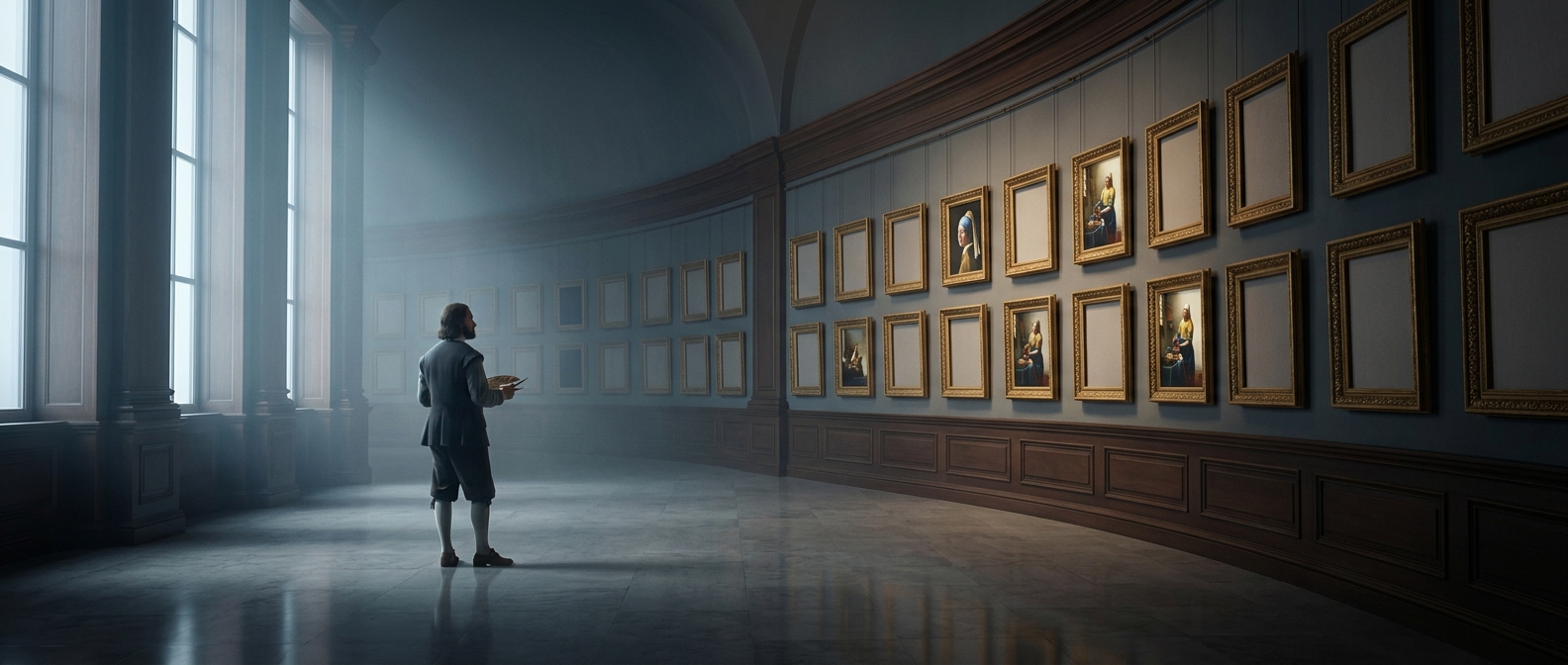
Johannes Vermeer is known today for luminous scenes of everyday life, but only about 34 paintings are generally accepted as his. That small total is striking partly because he was not simply an obscure artist whose work disappeared: he lived and worked in Delft, a Dutch city with an active market for paintings, and seems to have supported himself through a mix of painting and art dealing.
The number is an estimate of authenticated works—paintings specialists consider genuinely his—not a complete inventory of everything he ever made. In the past, paintings were sometimes attributed to Vermeer because they resembled his style or seemed to fit his story. Better examination of materials, technique, and documentary evidence has led experts to reject some attributions, while the fate of any lost or unrecorded works remains unknown.
A slow, selective way of working
Vermeer’s surviving pictures suggest a careful process. He often built compositions around a small number of figures and objects, using controlled light and subtle shifts in color to make an ordinary room feel absorbing. Such refinement may have taken time, but there is no secure record of exactly how long he spent on each painting or how many works he completed in a typical year.
He also did not appear to run a large workshop producing pictures in his name, as some successful artists did. His output may therefore have been limited by the time and labor he put into each work, as well as by the demand of a local art market. Those explanations are plausible, not a definitive account of his private working habits.
A small legacy, closely examined
Vermeer died in 1675, leaving a family in financial difficulty. His limited surviving output means each accepted painting carries unusual weight: a newly discovered document or a disputed attribution can change how scholars understand his career. It also helps explain why viewers can encounter the full arc of his artistic achievement in a relatively small group of rooms.