A crossing balanced on a few pounds
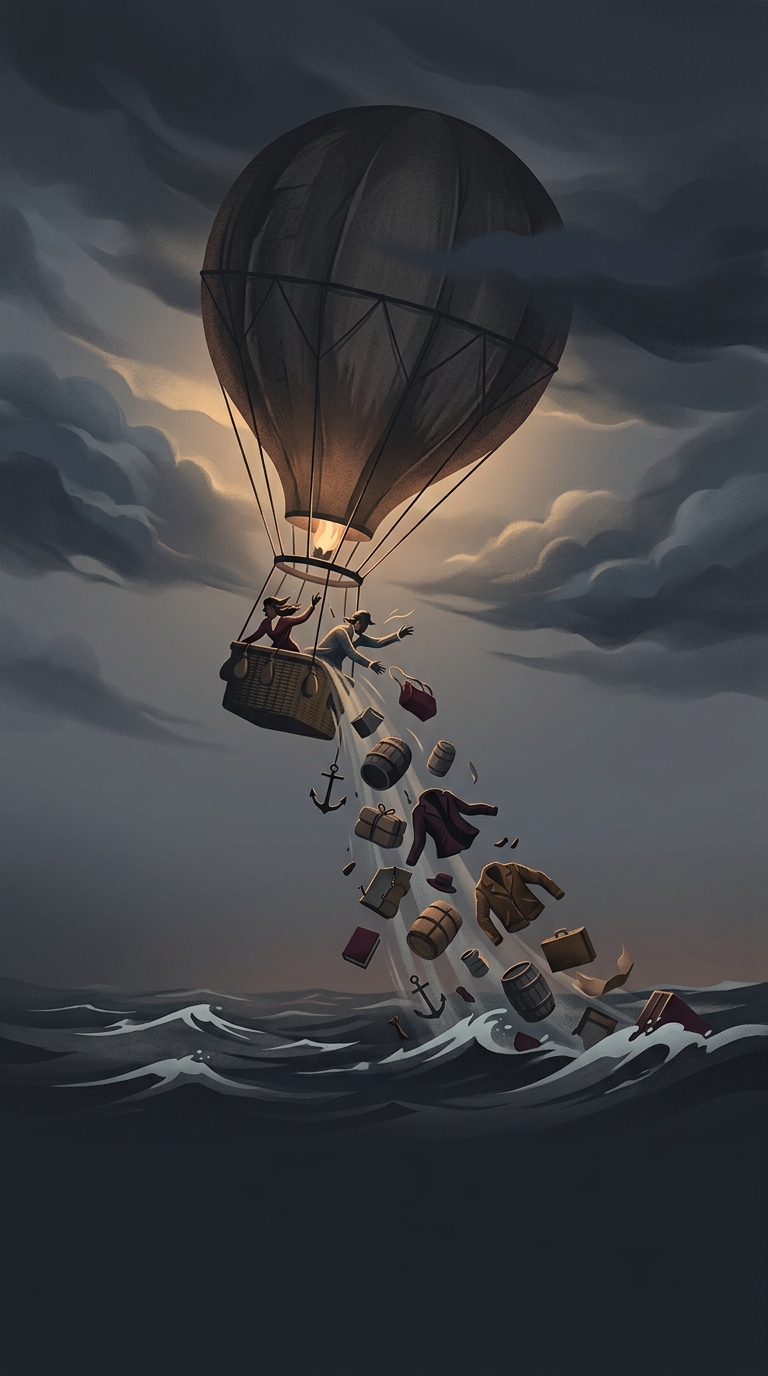
Jean-Pierre Blanchard and John Jeffries had to manage a basic problem of balloon flight: the balloon could rise only while the lift from its gas exceeded the combined weight of the envelope, the two men, and everything aboard. If the craft began to sink over the Channel, dropping cargo made it lighter and could restore its climb.
The balloon was filled with hydrogen, not heated air. Hydrogen is less dense than the surrounding atmosphere, so it provides lift; the crew could adjust their altitude by releasing gas or throwing out weight. Over open water, there was no safe place to land if they descended too soon.
From supplies to trousers
As the balloon lost height, the men discarded items they had brought for the journey, including provisions, coats, and anchors. Those anchors were useful for securing the balloon at landing, but over the sea they were dead weight. Eventually, even their clothing became expendable. The sequence was a practical calculation, not a planned stunt: each item tossed overboard bought the balloon more lift.
They reached the French coast on January 7, 1785, and landed in France in their underwear. The dramatic wardrobe sacrifice reveals the crossing’s real constraint: a balloon could carry only what its lift allowed, and every extra object competed with the passengers for that limited capacity. Above the Channel, the final margin was measured in trousers.