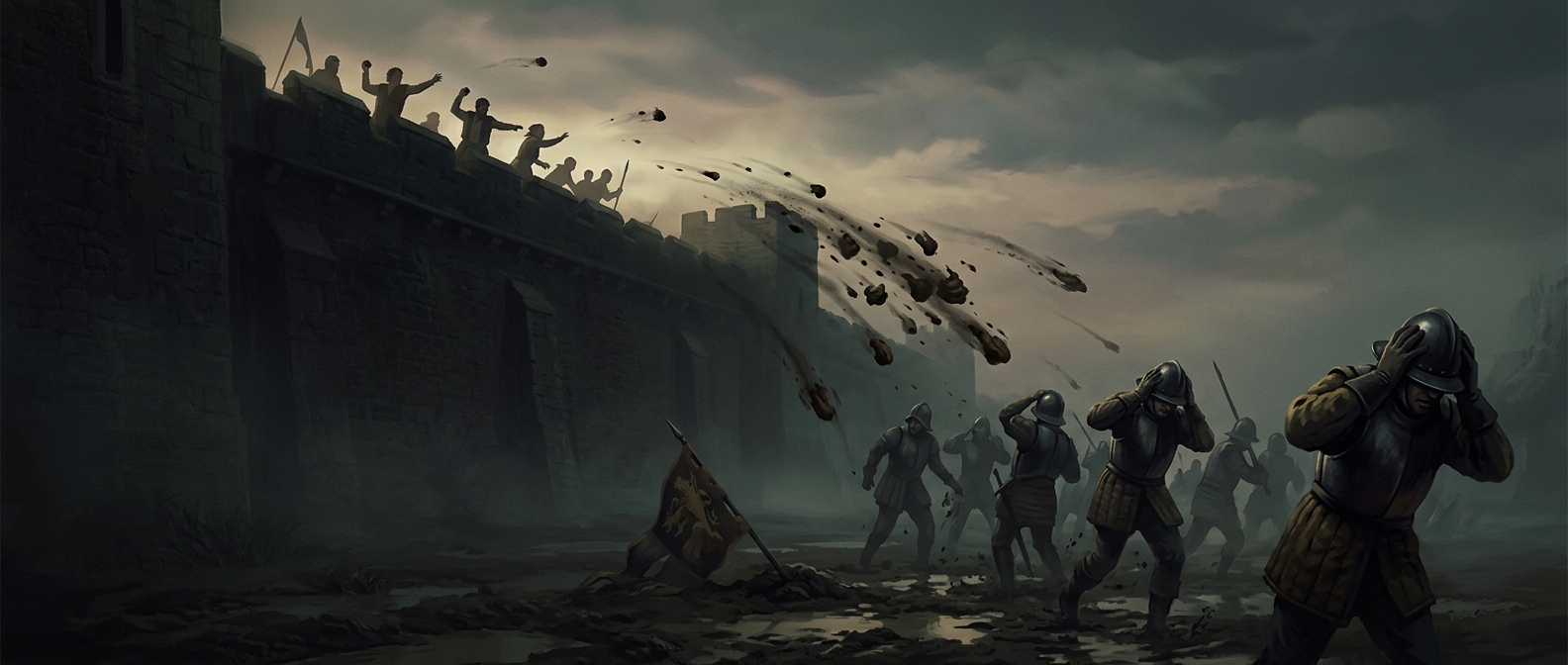
A Charge Disrupted by the Unexpected
Kett’s Rebellion was a major rising in Tudor England, led by Norfolk landowner Robert Kett in 1549. Its rebels confronted royal forces that included cavalry—mounted soldiers whose speed and momentum made a charge especially dangerous to people on foot.
A later-recounted incident from the fighting describes one rebel answering an advancing cavalry force by throwing his own feces at the horsemen. The story’s force lies less in the object’s practical power than in its sheer unpredictability: a cavalry charge depended on maintaining forward movement and frightening opponents into breaking. A sudden, shocking act could interrupt that nerve and coordination, even if it could not physically stop a line of horses.
Why the Story Endures
The account says the horsemen briefly retreated, but it does not establish how many riders were involved or how much the episode changed the battle. It is best understood as a reported moment of improvised resistance, not as a tactic capable of defeating cavalry on its own.
That distinction makes the anecdote revealing. Rebellions were not fought only with weapons and formations; they also depended on whether ordinary people could stand their ground against a force designed to intimidate them. In this telling, the charge faltered for a moment—and the rebels’ answer was as startlingly undignified as it was memorable.