A discouraging forecast at the start of Planck’s career
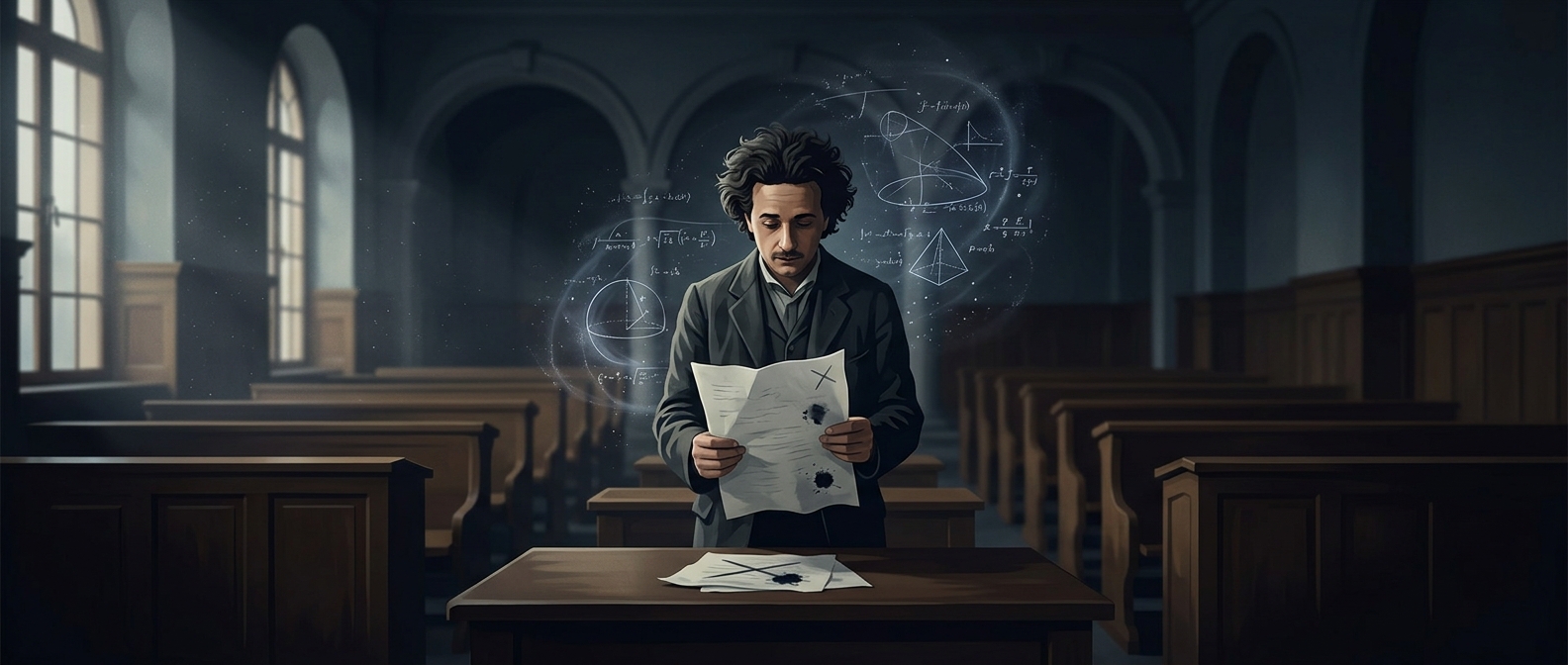
When Max Planck was deciding what to study in 1874, physics could look like a field nearing completion. His Munich professor Philipp von Jolly reportedly warned him that its major discoveries had largely been made, leaving only details to fill in. The advice reflected a widespread confidence that classical physics—the established framework of motion, heat, and electricity—could explain nature with a few remaining refinements.
Planck chose physics anyway. The forecast did not mean the field had literally stopped producing discoveries; it captured how settled its foundations seemed before new experiments exposed their limits.
Heat radiation opened a crack in the old picture
Decades later, Planck confronted a stubborn problem: the spectrum of light emitted by a hot object. Existing theories could not correctly describe how the radiation’s energy was distributed across different wavelengths. Planck searched for a mathematical account that matched the measurements.
In 1900, he found that the calculation worked if matter exchanged energy in discrete amounts rather than in any arbitrary quantity. Each amount depended on the radiation’s frequency. This was a radical departure from the smooth, continuous energy changes assumed in classical physics. Planck introduced the idea as a way to solve the radiation problem, not as a fully formed new worldview.
A small assumption with far-reaching consequences
That step helped launch quantum theory, the framework that later reshaped explanations of atoms, light, and matter. The irony is not simply that Planck proved his professor wrong. It is that the “details” left for physics to fill in included phenomena that demanded a different set of basic rules.
A field can look nearly complete when its best theories work remarkably well within familiar limits. Planck’s career became a reminder that a stubborn mismatch between theory and observation may be more than a loose end: it can point toward an entirely new way to describe nature.