The experiment that made air’s weight visible
In the 17th century, many people accepted that air could press on objects, but how to demonstrate that pressure was a difficult question. Evangelista Torricelli, an Italian mathematician and physicist, devised a test using mercury, a dense liquid, and a glass tube sealed at one end.
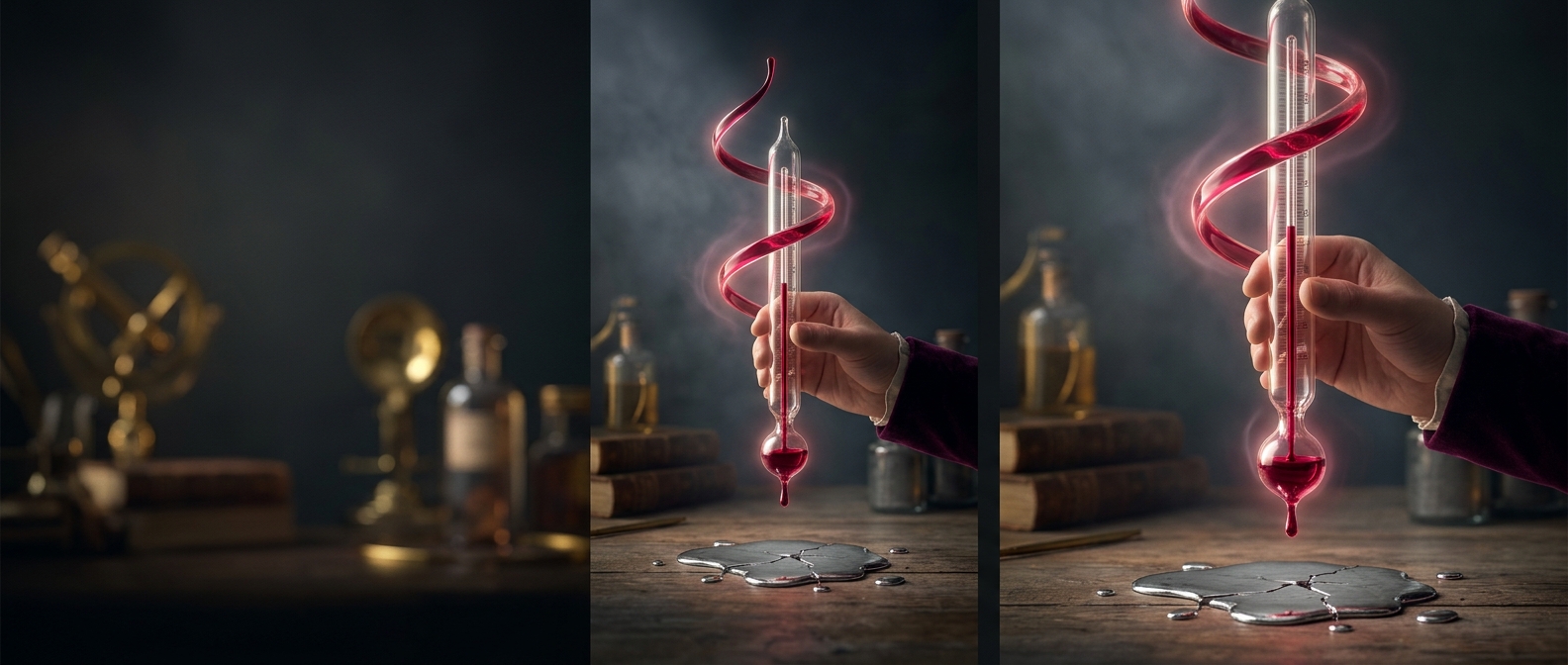
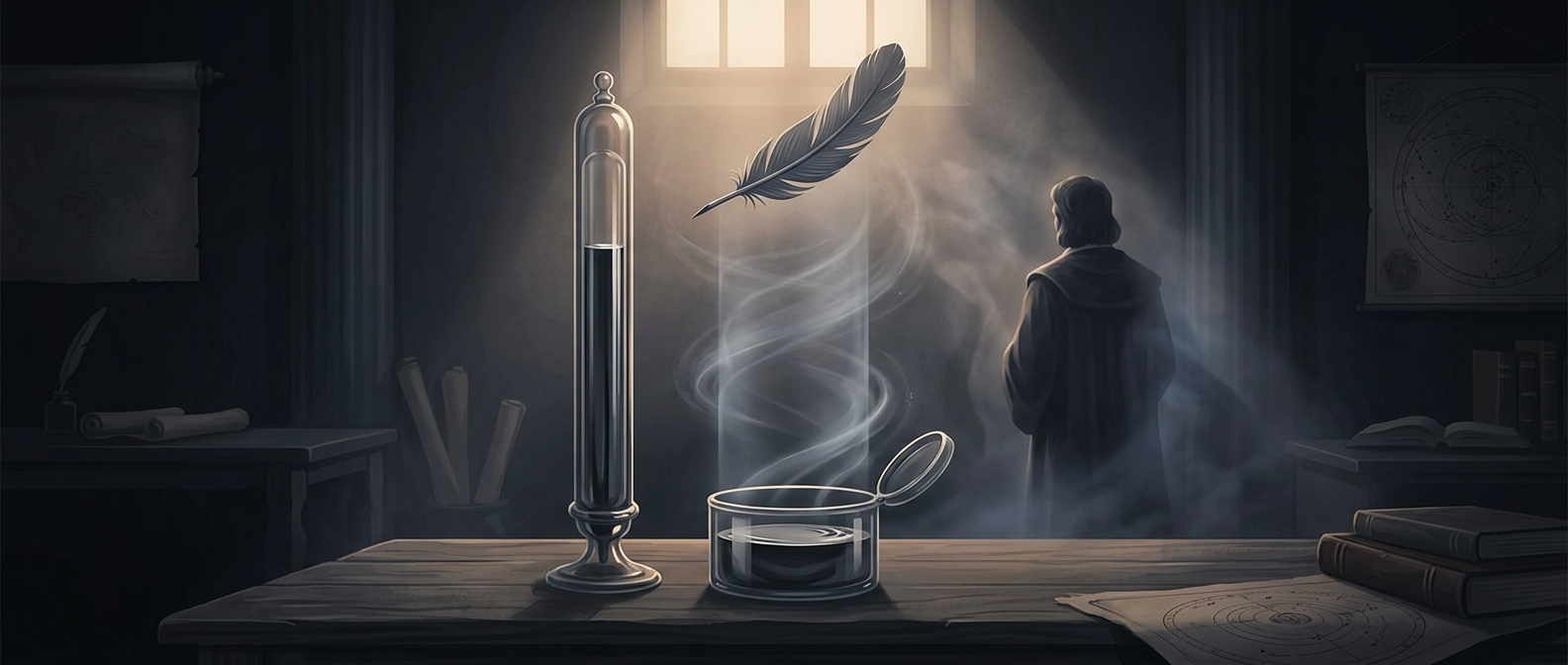
He filled the tube with mercury, closed its open end, and inverted it into a dish of mercury. Some liquid flowed into the dish, but a column remained in the tube. The space above it was nearly empty. Torricelli’s key insight was that the mercury was not being held up by a mysterious pull from the empty space: the surrounding air pressed on the mercury in the dish, supporting the column in the tube.
A column turns pressure into a measurement
The column settled at a height where the air’s downward push on the dish balanced the mercury’s weight. When atmospheric pressure changed, the column rose or fell. Because mercury is unusually dense, a manageable tube could register that balance clearly.
That made the instrument more than a demonstration. It gave researchers a way to compare atmospheric pressure—something invisible and hard to grasp—with a visible length of liquid. The device became the basis of the mercury barometer.
From a physics puzzle to weather clues
Pressure varies as air masses and weather systems change. A falling barometer reading can signal that pressure is decreasing, while a rising reading indicates increasing pressure; the reading alone does not guarantee a particular forecast, but it provides useful evidence about changing conditions.
Torricelli’s experiment also challenged the old idea that nature could not contain a vacuum. The empty space at the top of the tube suggested that a vacuum could exist—and that air itself, rather than an unseen force, could explain why the mercury stayed suspended. A column of liquid made the atmosphere’s invisible pressure visible enough to measure.