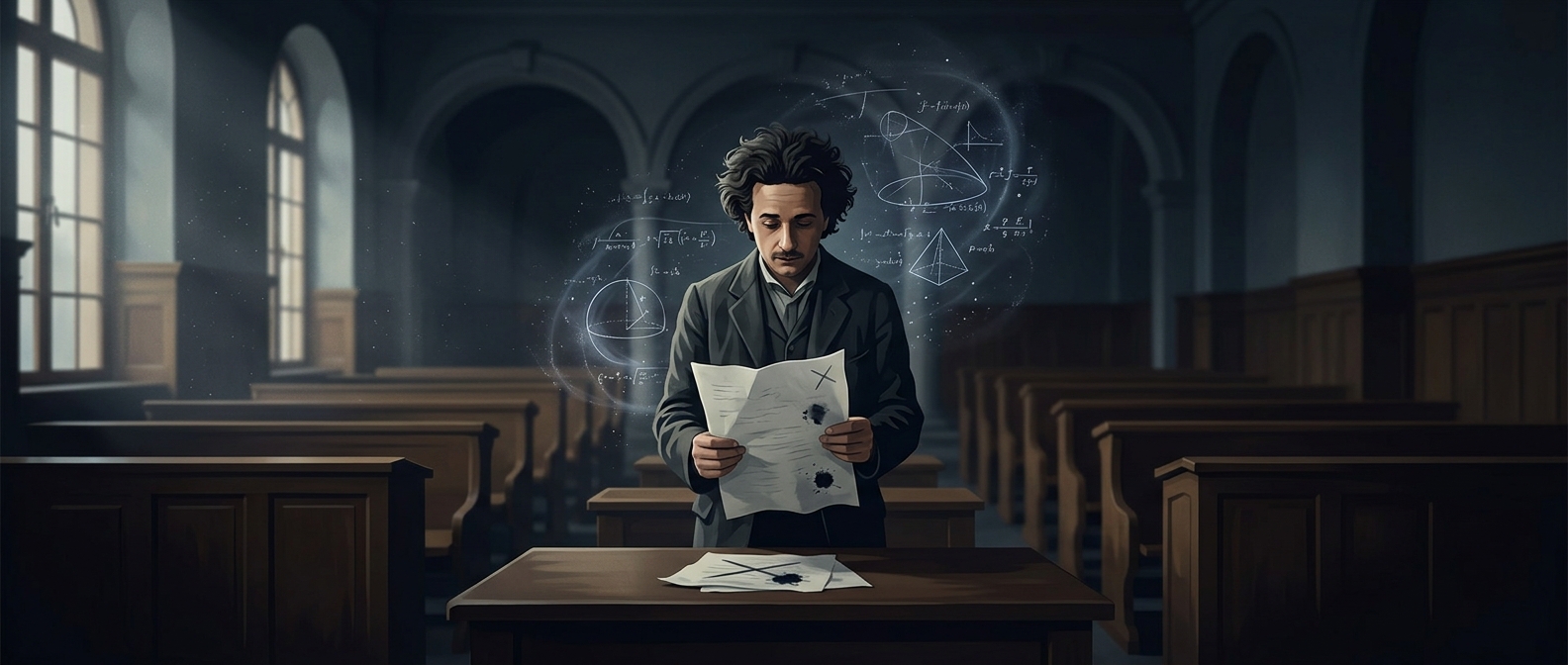
A strong science score was not enough
In 1895, 16-year-old Albert Einstein sat the entrance examination for the Swiss Federal Polytechnic in Zurich, a school for advanced technical and scientific study. He was especially strong in mathematics and physics, but the exam covered more than his future specialty. He fell short in areas including language and botany, so his excellent science work did not earn him admission.
That outcome reflects how entrance exams can work: they test whether an applicant meets a broad set of requirements, not just whether the applicant excels in one subject. Einstein’s result was a setback, but it did not mean he lacked the ability to study physics.
The detour that got him in
Instead of beginning at the Polytechnic, Einstein continued his schooling at the cantonal school in Aarau, Switzerland. After completing that stage of his education, he took the entrance exam again and entered the Polytechnic in 1896.
The first attempt became a memorable wrinkle in his biography, but it also shows the practical consequence of a broad admissions checklist: even a standout in mathematics may have to strengthen other subjects before moving on. Einstein’s route to advanced study ran through another year of school, not a sudden change in ambition.