Why the Flute Fit Schopenhauer’s View of Music
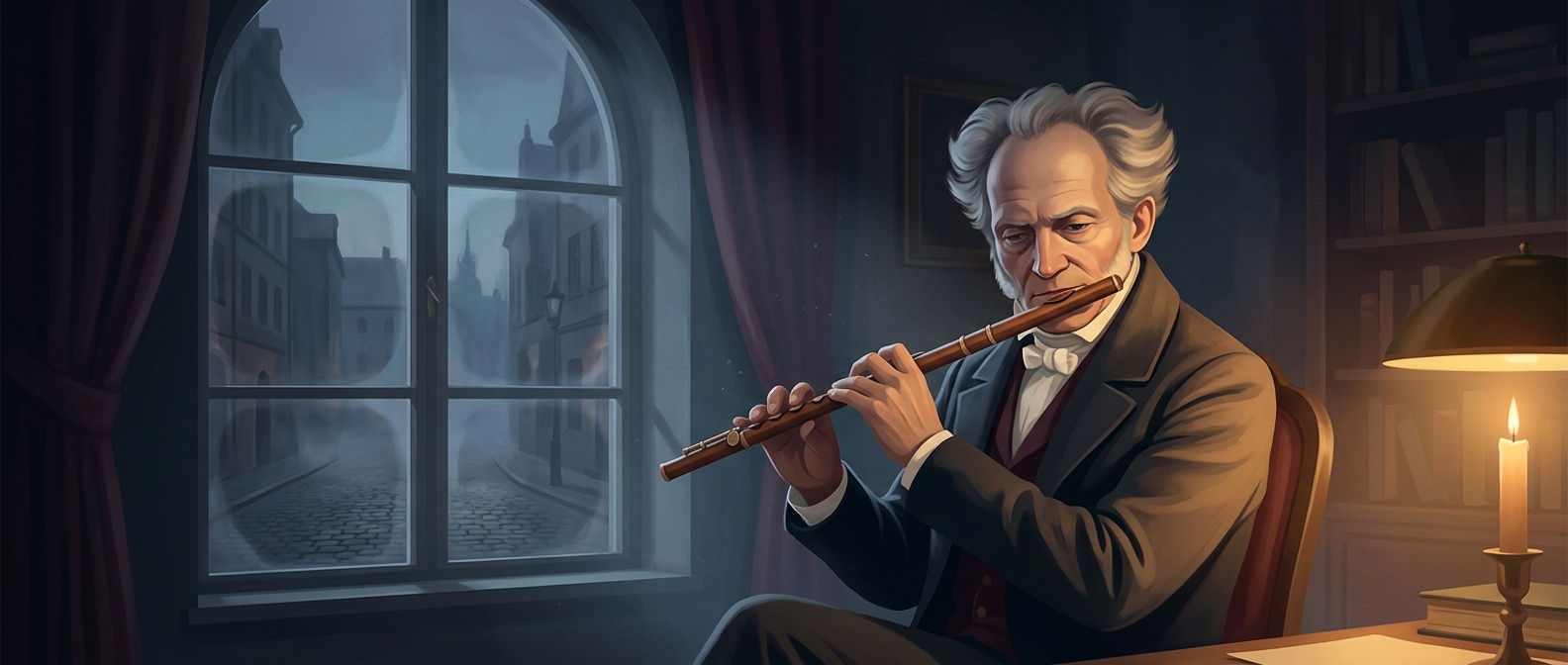
Arthur Schopenhauer’s daily flute playing brought a hands-on ritual into the life of a philosopher known for describing existence in bleak terms. In his philosophy, human beings are driven by an insistent force he called the will: endless wanting that keeps people dissatisfied. Music mattered to him because he thought it expressed this force more directly than other arts, rather than merely depicting particular objects or events.
That idea gives the practice an especially suggestive place in his life. Music could engage the emotions without requiring them to become another argument about the world. Playing offered a way to enter sound, breath, and rhythm—an immediate activity alongside the abstract work of philosophy.
A Routine, Not Just a Theory
The timing made the habit concrete: he played every day before dinner. Repetition turns an interest into a dependable part of a day, and the flute required active attention rather than passive listening. A player must shape each note with breath and keep the melody moving from one moment to the next.
The routine does not make Schopenhauer’s pessimism disappear; it shows that a bleak account of life could coexist with a regular source of pleasure and focus. His philosophy gave music a special place, while daily practice made that conviction audible in the ordinary hours before a meal.