A memorial designed to be seen
Jeremy Bentham, the English philosopher associated with utilitarianism—the idea that actions should be judged by their effects on people’s well-being—planned an unusually practical memorial. In his will, he asked for his body to be dissected and preserved as an “Auto-Icon”: literally, an image of himself made from his own remains, rather than a statue made by someone else.
The plan reflected Bentham’s interest in making his body useful after death. Dissection could serve anatomical study, while the assembled figure could keep his presence visible. His skeleton was dressed in his clothes and fitted with a wax head, creating a recognizable, seated version of the philosopher.
From private will to college ritual
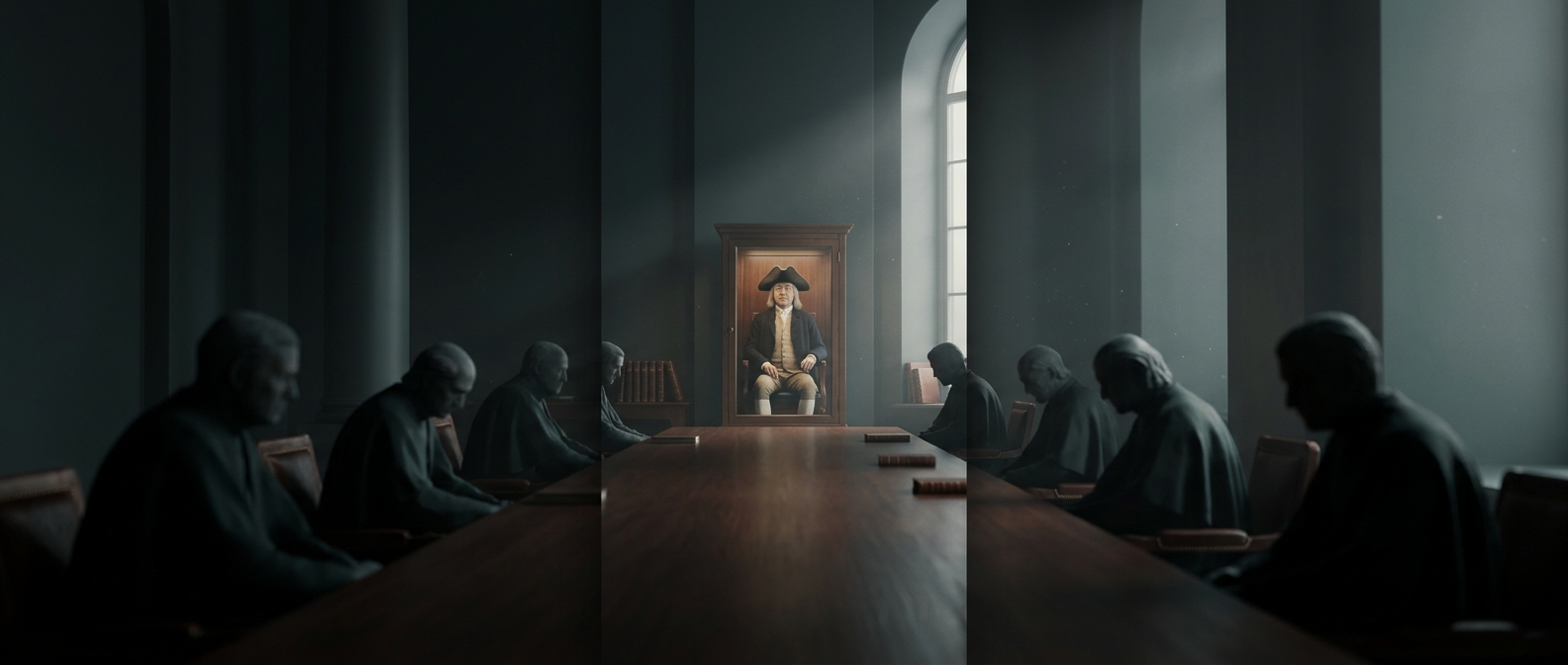
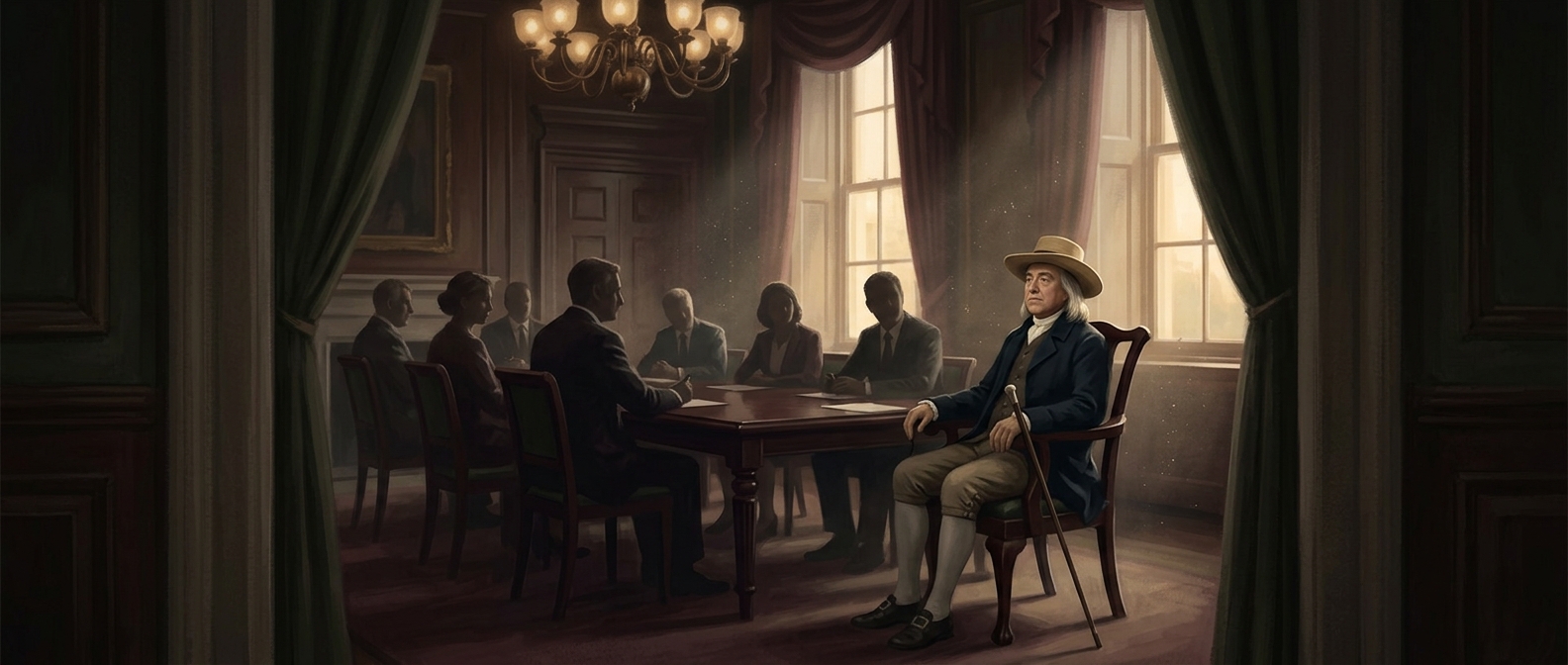
Bentham’s remains are kept at University College London (UCL), the institution he helped inspire. There, the Auto-Icon is more than an exhibit: it can be brought into college meetings. The image of a founder physically arriving among later generations turns a written wish into a continuing institutional ritual.
That ritual also gives the memorial a pointed character. A conventional portrait records how an institution wants to remember its founder; Bentham’s Auto-Icon makes the founder’s own body part of the record. His presence at a meeting is not a vote or a voice, but a very literal reminder that the institution’s past still occupies a seat in the room.