A philosopher’s death, told as a punchline
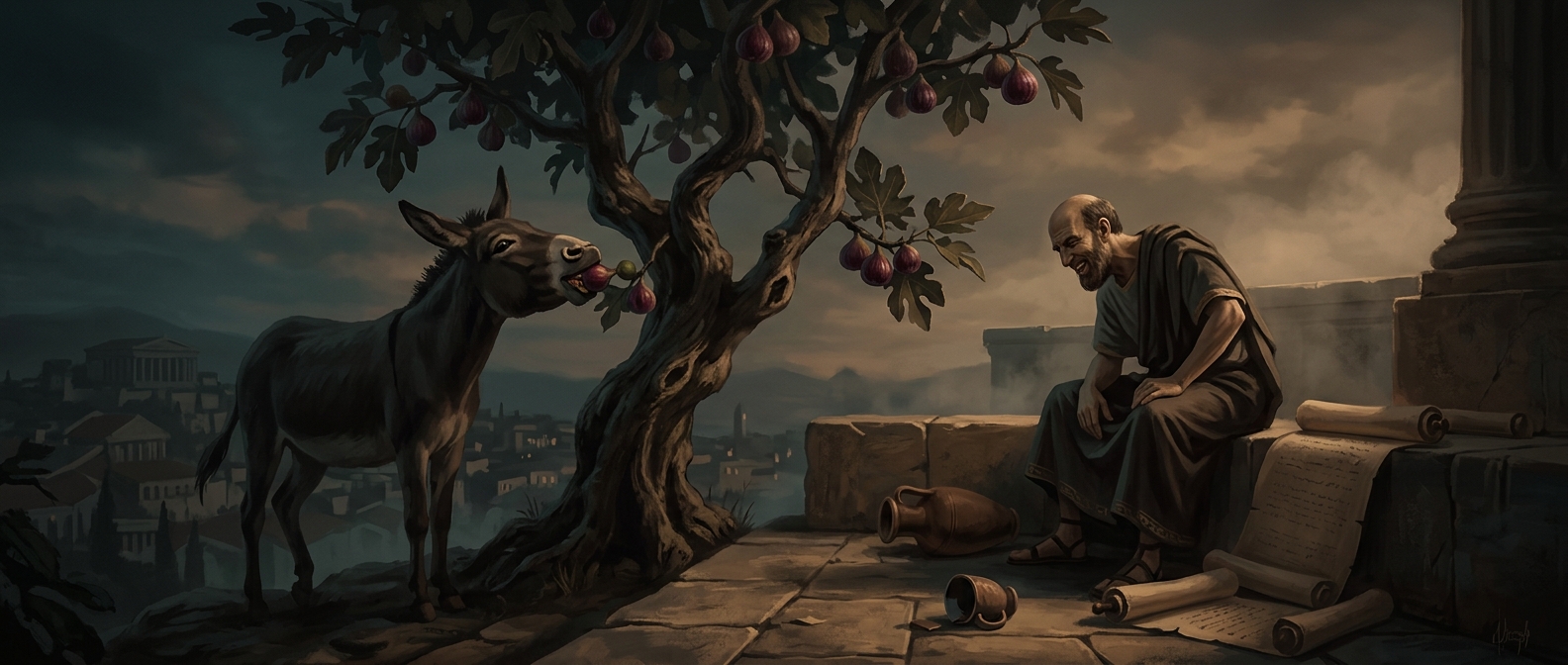
Chrysippus was a leading thinker of ancient Stoicism, the school that taught people to govern their reactions through reason. Yet the story attached to his death gives him a very un-Stoic final moment: seeing a donkey eat figs, he supposedly told a servant to give the animal wine to wash them down, then laughed until he died.
The donkey’s clumsy appetite is only half the joke. Chrysippus’s imagined instruction treats an absurd scene as if it called for a sensible, practical solution. The gap between the animal’s behavior and the philosopher’s deadpan response is what makes the anecdote land.
Why the story stuck
Ancient accounts of philosophers’ lives often preserved memorable sayings and death stories alongside their ideas. Such scenes made abstract reputations vivid: a thinker could be remembered not only for arguments, but for the kind of person people imagined him to be. In Chrysippus’s case, the laughter story gives a celebrated Stoic a comic, bodily ending rather than a solemn one.
It is best understood as an ancient anecdote, not a verifiable medical report. Its lasting appeal lies in the contrast: the philosopher famed for discipline supposedly loses himself over a donkey, figs, and wine. The story turns a difficult thinker into someone easy to picture—and makes his final moment sound like one last joke.