Rousseau’s theory began with the child
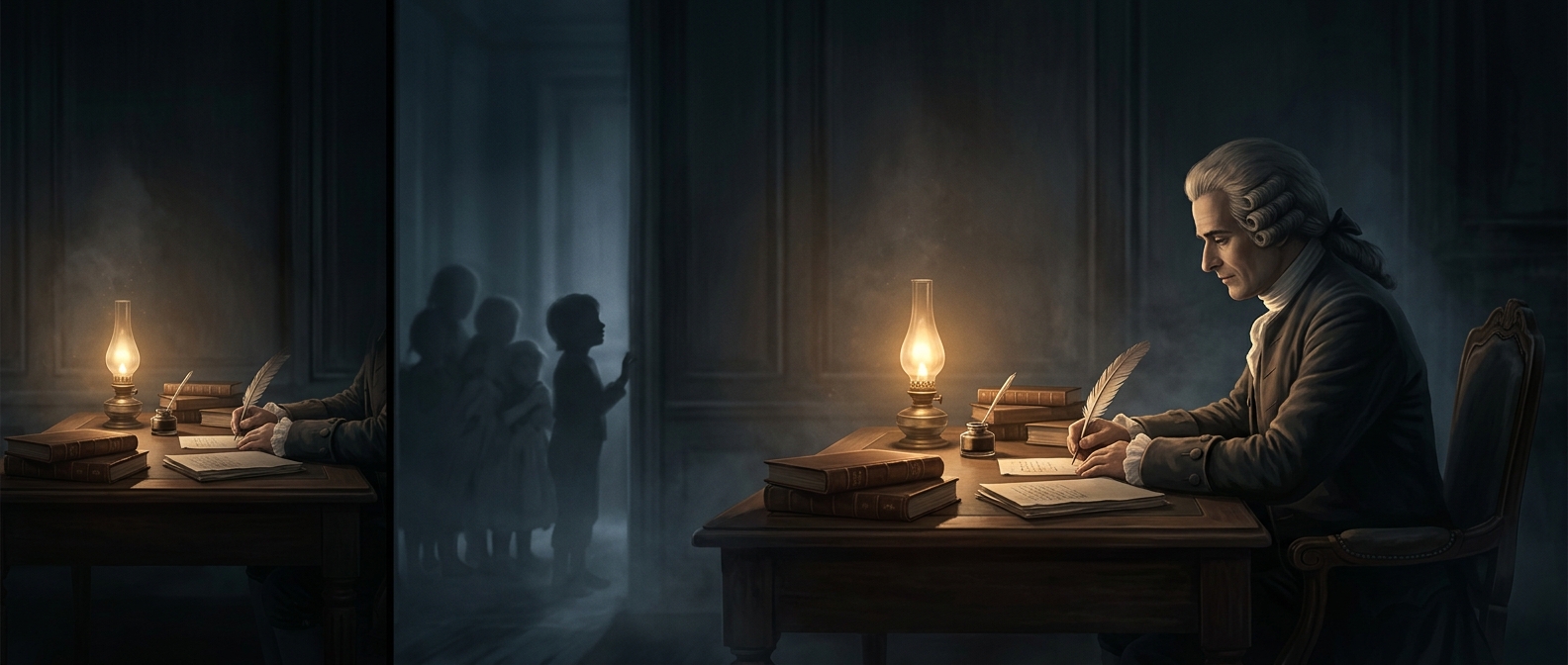
In Émile, his influential book on education, Jean-Jacques Rousseau argued that children are not simply small adults to be drilled into obedience. They develop in stages, he wrote, and education should respect those stages rather than force them to conform to society too soon. He also treated early care as crucial: a child’s first relationships and surroundings shape what comes later.
That made his own family history especially jarring. Rousseau and Thérèse Levasseur had five children, whom he placed in a foundling hospital—an institution that took in infants whose parents could not or would not raise them.
A decision with lasting consequences
In his later autobiographical writing, Rousseau acknowledged the decision and offered reasons for it, including his inability to provide for the children and his fear that family responsibilities would overwhelm him. Those explanations are his account of his own choice, not proof that the children received the kind of upbringing his educational theory envisioned.
Foundling hospitals were not substitutes for the attentive, gradual education Rousseau described. They were a stark form of public relief for families in crisis, and life for children placed in them could be precarious. The surviving record does not give us a clear picture of what happened to each of Rousseau’s children.
The contradiction became part of how readers judged him. His ideas could be discussed on their own merits, but his conduct made the central question personal: could someone argue so powerfully for children’s needs while relinquishing responsibility for his own? That tension has kept Rousseau’s family life attached to his educational legacy, rather than allowing Émile to stand as theory alone.