A memorial designed to be useful
Jeremy Bentham did not want the usual kind of monument. The English philosopher argued that actions should be judged by how much benefit they brought to people, and he applied that practical outlook to his own death. In his will, he asked for his body to be dissected and its remains arranged as an “auto-icon”—literally, a self-image made from the person rather than carved in stone.
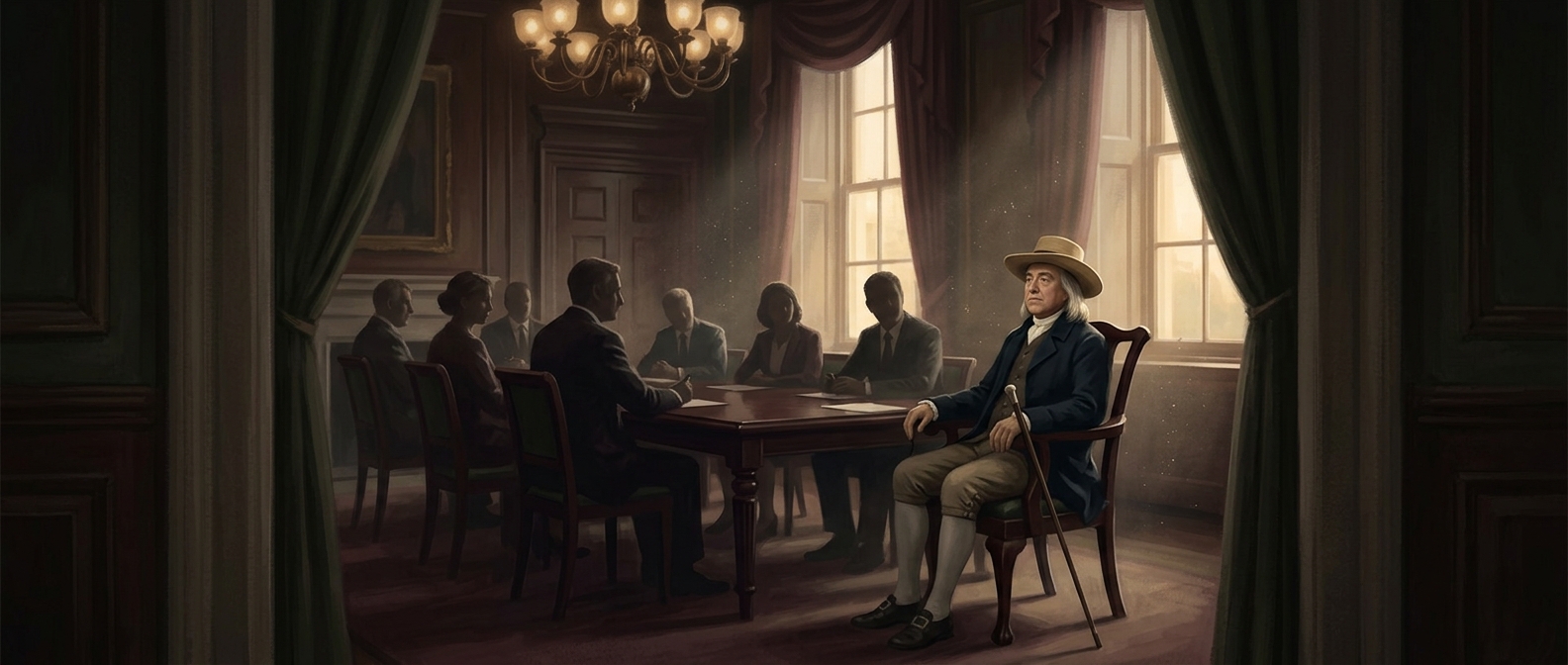
Bentham’s plan was more than a request for an unusual display. He wanted his body to serve anatomy and then remain a visible memorial, avoiding what he regarded as the expense and emptiness of conventional monuments. He specified that his skeleton should be dressed in his clothes and seated in a chair.
The plan, and its imperfect result
The dissection was carried out by physician Thomas Southwood Smith. Bentham’s head was preserved separately, but the process did not produce a convincing likeness. A wax likeness was made instead; the preserved head was later kept out of the main display. The dressed skeleton, with the wax head, was placed in a cabinet.
That compromise is part of what makes the exhibit revealing. Bentham’s carefully reasoned memorial depended on the limits of preservation—and on the people who had to carry out his instructions. The cabinet at University College London turns an abstract argument about utility into something startlingly physical: a philosopher’s body made to continue its work as a public object.