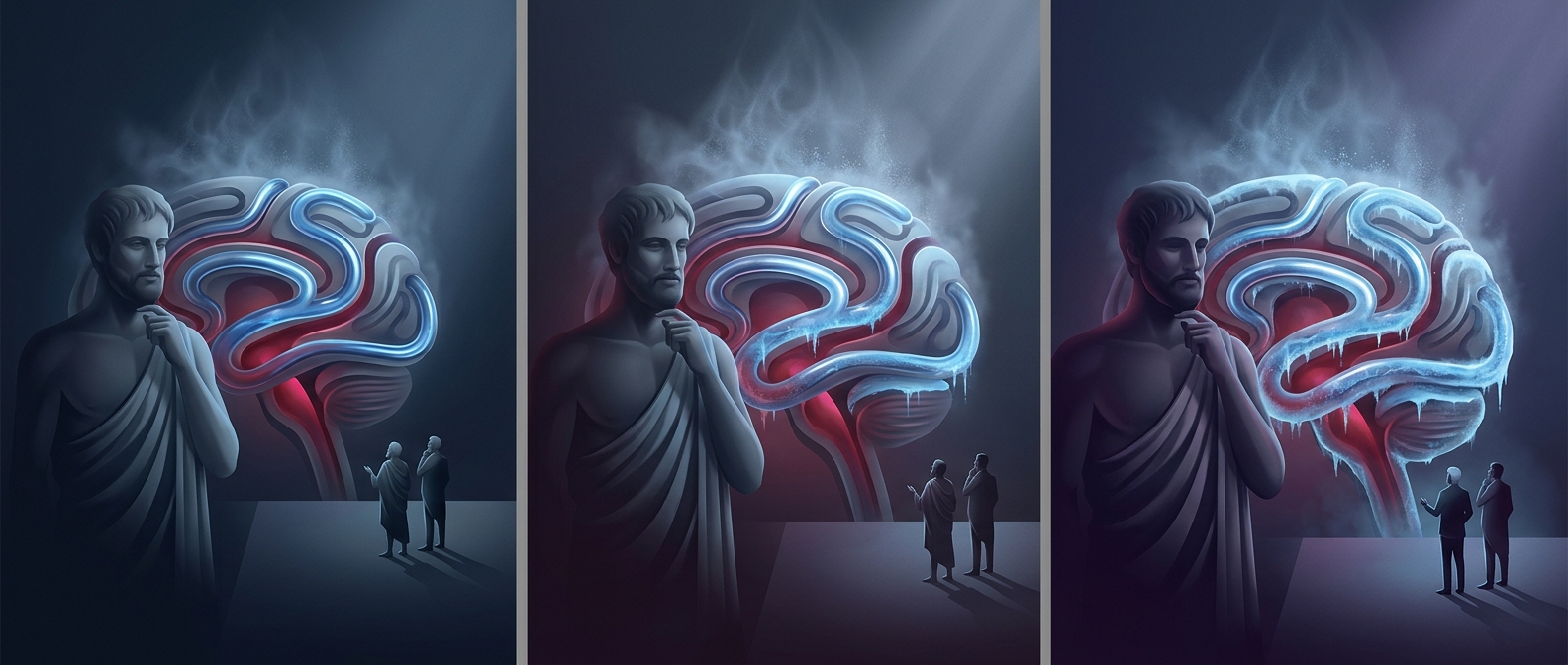
Why Aristotle made the brain a cooling organ
Aristotle’s model began with a question that still makes intuitive sense: if the heart was the body’s center of life and sensation, what was the brain for? He placed perception and emotion in the heart, which he regarded as the body’s principal source of heat. The brain, by contrast, seemed cool and bloodless. He reasoned that it must help keep the heart’s heat from becoming excessive.
In this account, the brain was not idle; it had an important regulating job. But it did not issue commands or house thought. It acted more like a counterweight to the heart, cooling the blood and helping preserve the body’s balance.
A mistaken map built from visible clues
The idea shows how anatomical observation can lead to a persuasive but incomplete explanation. A heart visibly beats and bleeds when injured; the brain does not beat in the same way, and its tissue appears pale beside blood-filled organs. Aristotle interpreted those differences through his broader belief that heat was central to life. The visible evidence was real, but the role he assigned it was wrong.
Later understanding relocated the work of sensation and thought to the nervous system and established the brain’s role in processing information. Aristotle’s error nevertheless captures a lasting challenge in medicine: an organ’s appearance can suggest a function, but only evidence about how the body works can show whether that explanation holds.