A block with a history
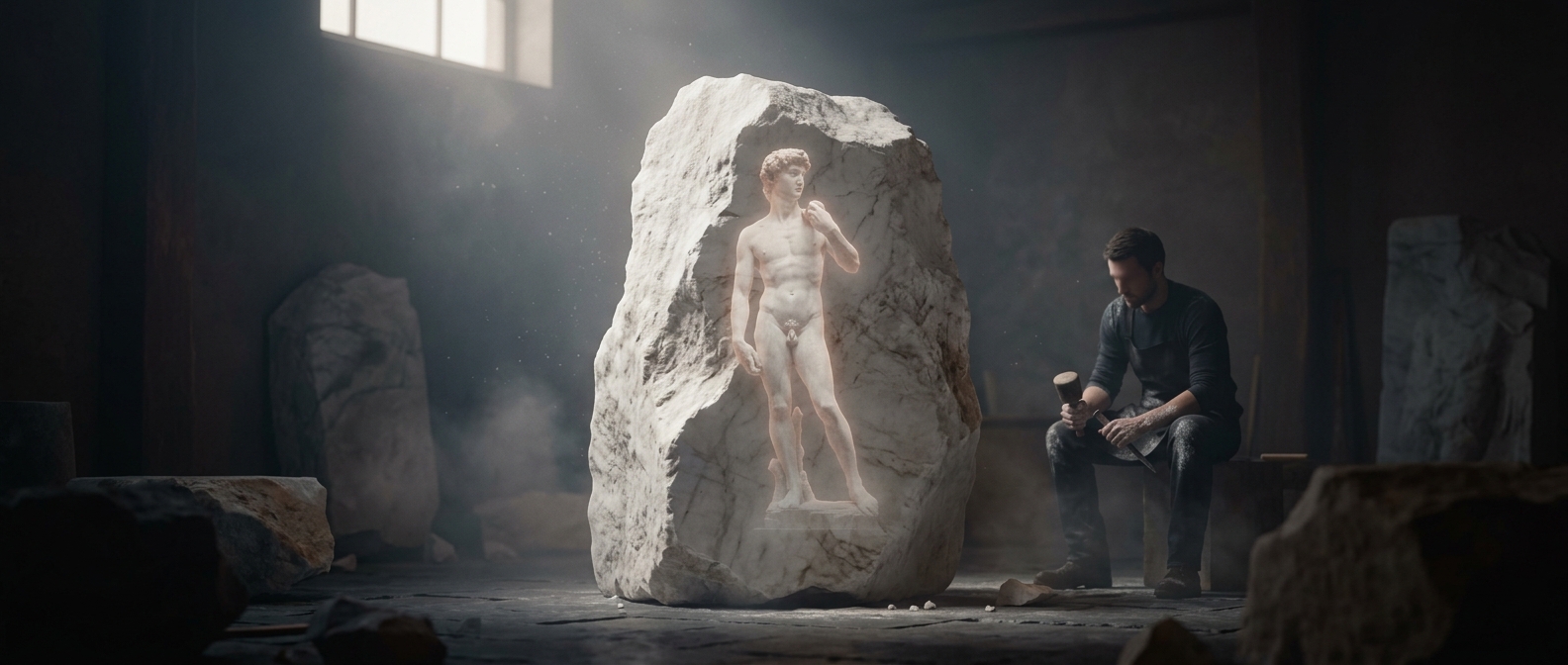
Before Michelangelo took it on, the marble had already been quarried and roughly shaped for a statue intended for Florence Cathedral. An earlier sculptor had begun work and stopped; the large block then sat unused for decades. Its long, narrow proportions and existing cuts left less freedom than a fresh piece of stone would have offered. Starting over was not a simple option: removing too much could leave no sound marble for the figure.
Designing around the limits
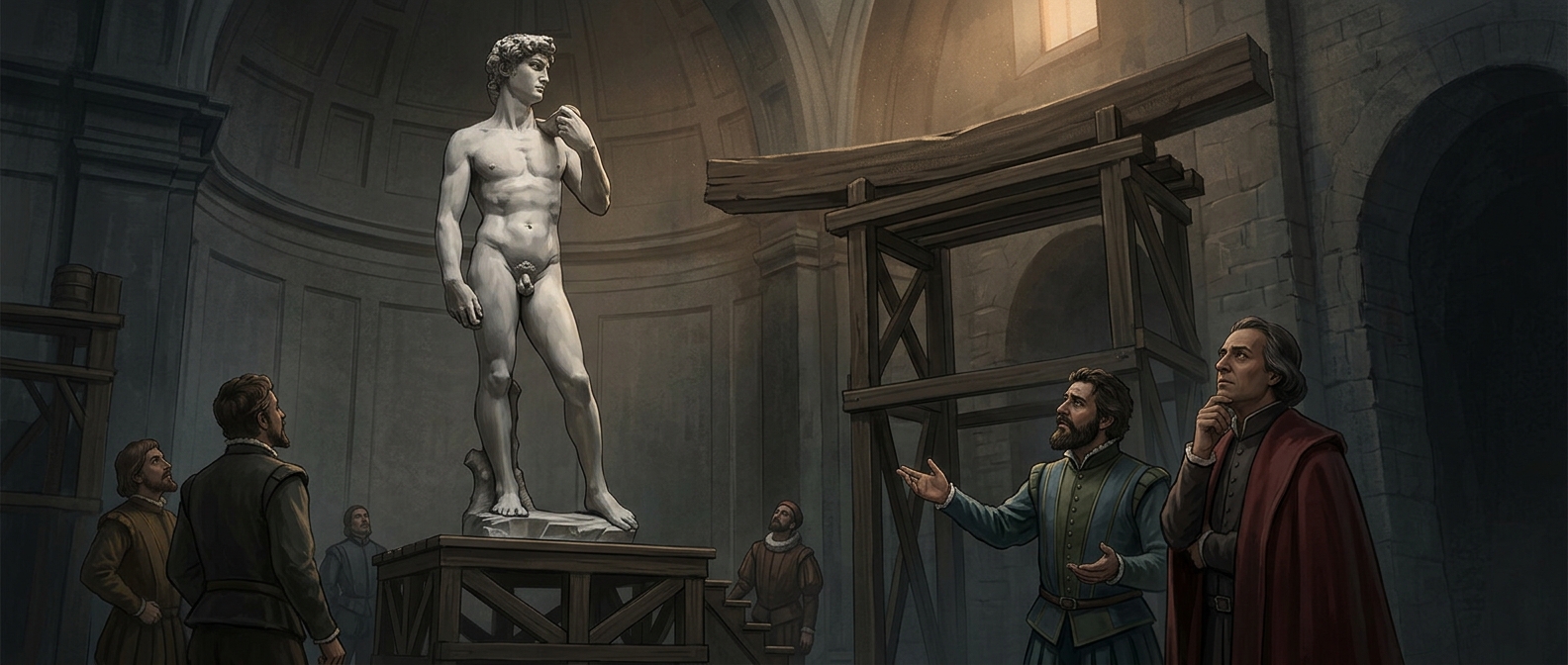
Michelangelo had to make the body fit the stone rather than imagine a figure and choose a block afterward. He carved David standing, with his weight shifted onto one leg, keeping the composition relatively compact in depth. The pose could read clearly from the front without demanding a broad, fully turned body that the narrow marble could not accommodate.
The statue also shows David before his fight with Goliath, not celebrating afterward. His tense gaze and the sling resting across his shoulder turn the still figure into a moment of decision. That choice let Michelangelo suggest action through the face and posture, without needing a large, sprawling pose.
From cathedral project to public landmark
The statue was ultimately judged too impressive—and too heavy—to serve as a high exterior ornament on the cathedral. Florence instead placed it outside the seat of its government, where the biblical shepherd could be read as an image of watchfulness and civic resolve. The block’s earlier failure thus shaped not only the sculpture’s form, but the striking public role it came to play.