A Small Tributary Became a Carefully Shaped Subject
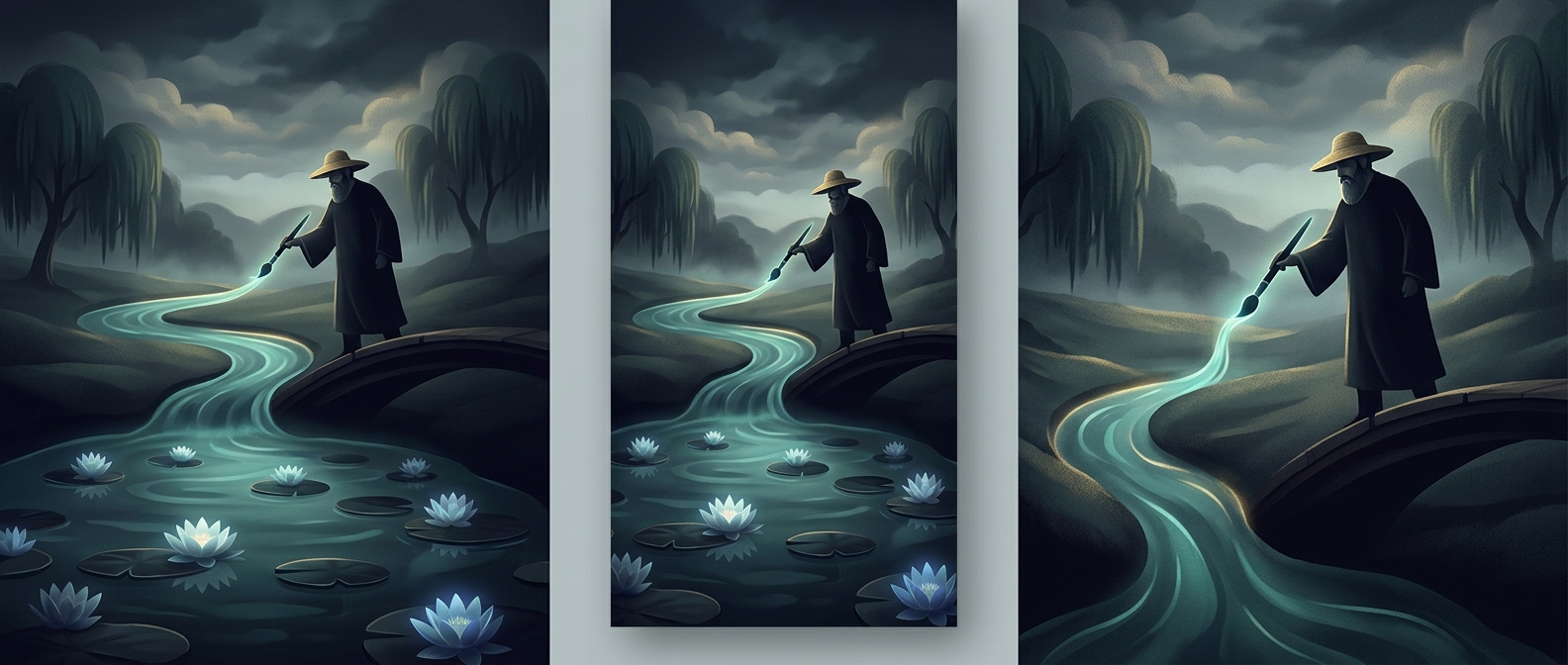
At Giverny, Monet’s water garden did not simply appear where the river happened to run. In 1893, he sought permission to bring a branch of the Epte—a small river in Normandy—onto land he had bought beside his property. The diverted water fed a pond he could shape around the plants and views he wanted to paint.
That distinction matters: Monet did not redirect the entire Epte. He altered a smaller watercourse, turning part of the surrounding landscape into a designed garden. The pond, its banks, and the plants growing in it made a scene he could tend and revisit rather than a view he had to find elsewhere.
The Garden Became Part of the Painting
Monet’s water garden included water lilies and a Japanese-style bridge. These were not just decorative additions. Their reflections made the pond’s surface a shifting composition: flowers and leaves floated above, while sky, trees, and bridge appeared again in the water. A breeze or change in light could rearrange the scene without moving any of its main features.
That gave Monet an unusually controllable subject with endlessly changing effects. He could return to the same pond and paint what it looked like under different conditions, while the garden itself continued to grow and change. The familiar image of Monet painting lilies therefore begins with a practical act of landscape-making: he shaped the water so the view he wanted could exist on his own ground.