How abandoned fields could cool the atmosphere
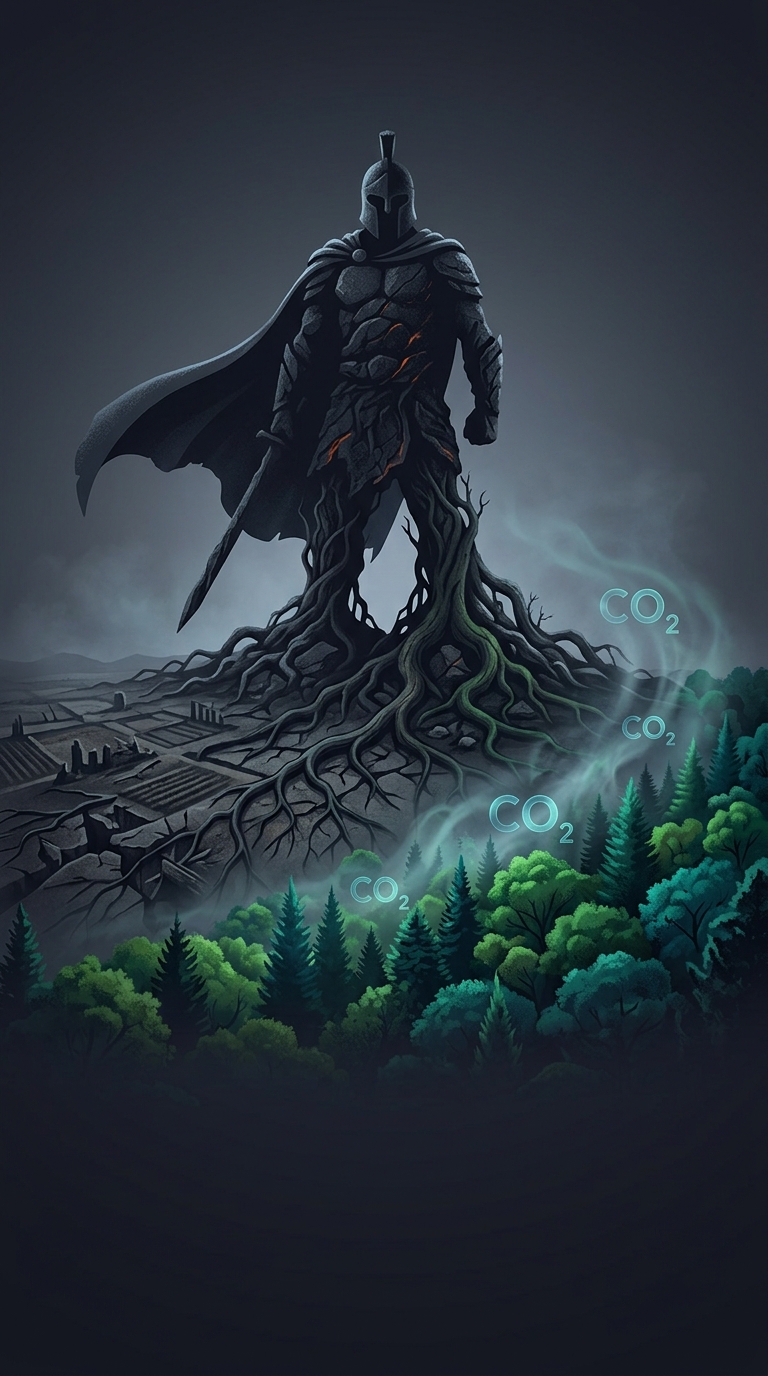
Mongol conquest did not pull carbon directly from the sky. The proposed climate effect began on the ground: when communities were killed or displaced, some cultivated land was no longer planted, grazed, or cleared. Trees and other vegetation could reclaim it, drawing carbon dioxide from the air as they grew and storing the carbon in wood and soil.
That change is called regrowth or reforestation. It takes time: a field does not become mature forest overnight, and the amount of carbon absorbed depends on what grows there and for how long. The estimate of roughly 700 million tons refers to carbon stored through this kind of land recovery, not to an instant drop in atmospheric carbon.
Why the number is an estimate
Researchers reconstructing past land use have tried to calculate how much carbon forests might have absorbed after major population losses. The Mongol conquests are one proposed source of abandoned farmland in that accounting. But the calculation depends on uncertain questions: how much land stopped being farmed, whether it remained uncultivated, and how quickly vegetation returned.
The figure is therefore best understood as a modeled estimate, not a direct measurement of a global atmospheric dip caused solely by Genghis Khan’s campaigns. Other historical crises also left farmland unused, and natural changes in the carbon cycle affected atmospheric levels too. The broader mechanism is plausible; assigning a precise worldwide climate effect to one conquest is harder.
The consequence hidden in the landscape
The claim links mass violence to a delayed environmental change. People’s absence could alter land use for generations, allowing vegetation to store some of the carbon that farming and clearing had kept out of forests. The climate effect, if captured by the estimate, was not a benefit of conquest but an unintended consequence of devastated communities and abandoned fields.