A shock meant to break the enemy’s order
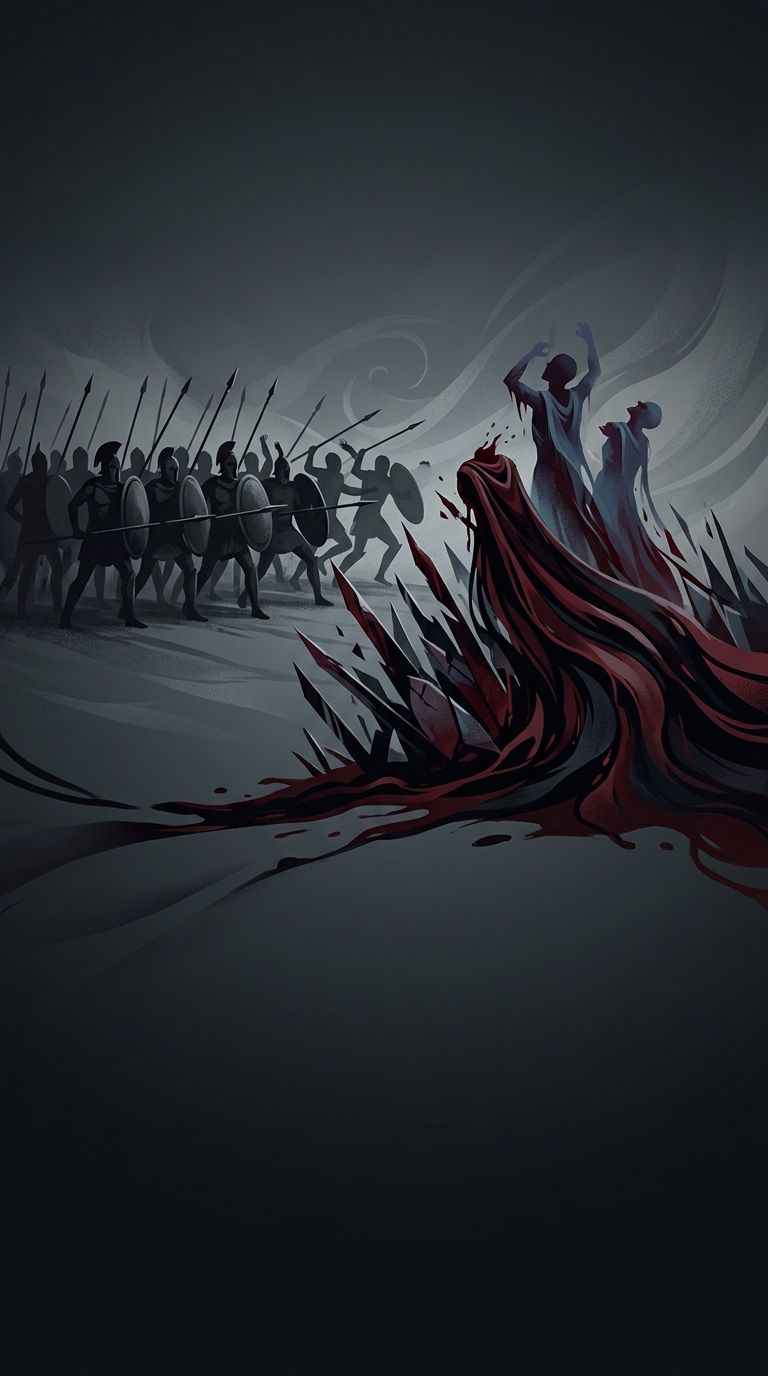
The tactic attributed to King Goujian of Yue treated fear as a weapon. Instead of opening with an ordinary charge, the front rank staged a horrifying spectacle: condemned men killed themselves in view of the opposing army. The intended effect was not simply disgust or pity. It was to make soldiers lose their attention and nerve at the moment they needed to hold formation.
An army in formation depended on men keeping their place and responding together. If soldiers recoiled, turned to look, or began to flee, the ranks could loosen; once that happened, commands became harder to follow and panic could spread. The display aimed to create that break before the armies met.
Why the spectacle mattered
The ploy’s force came from its suddenness and from the apparent willingness of the condemned men to die. That made the opening scene difficult to interpret: the enemy had to absorb a shocking event while also deciding whether an attack was beginning. In battle, even a brief hesitation could matter if it disrupted a unit’s ability to act as one.
It was a gamble, not a substitute for an army. The spectacle could unsettle opponents, but it could not guarantee that they would flee; disciplined troops might keep their ranks. Its memorable lesson is that Goujian’s attributed tactic targeted the enemy’s cohesion before targeting its bodies: the first objective was to make the opposing line stop behaving like a line.