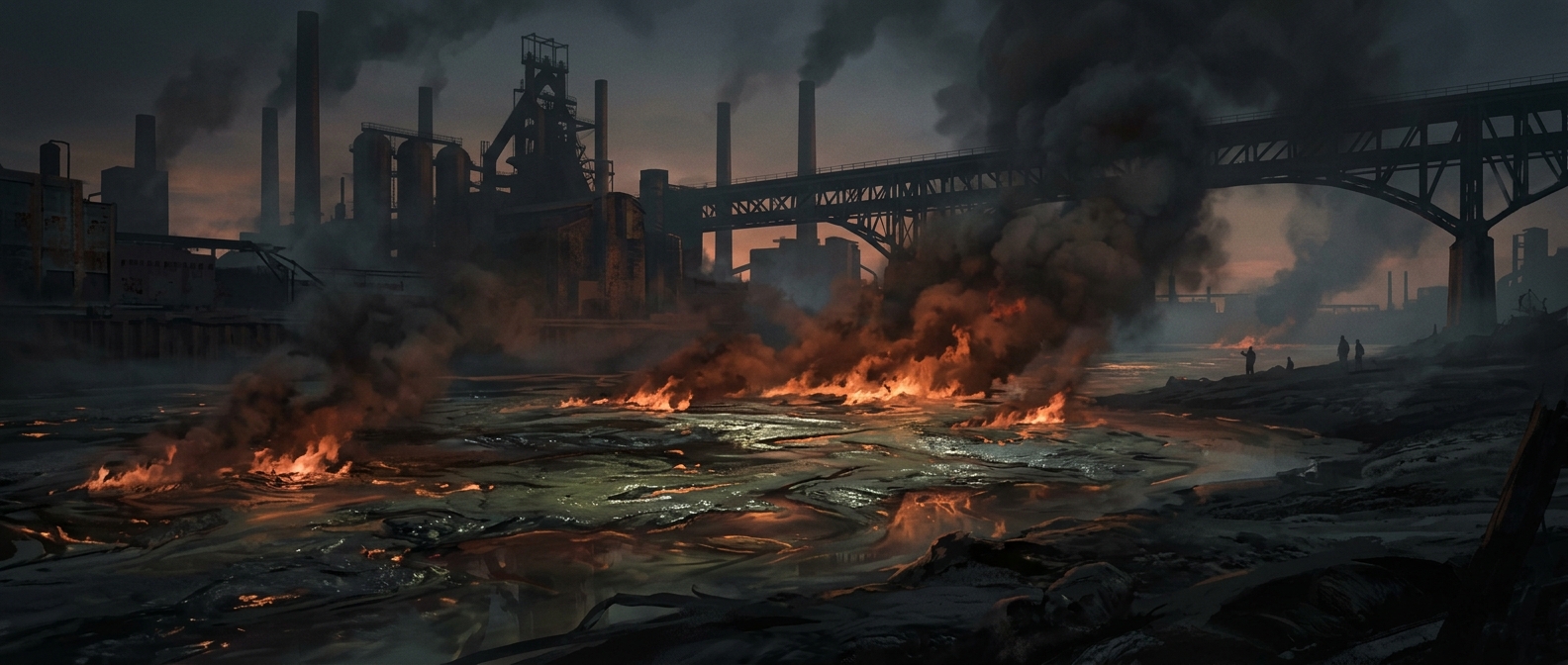
How the Cuyahoga Became Flammable
For decades, factories along Cleveland’s Cuyahoga River released industrial waste into the water. Oil and other combustible materials could collect on the surface, while discarded debris provided more fuel. In that polluted mix, a spark or other ignition source could turn the river itself into a fire hazard.
The fires were not a single freak event. The river had burned more than once before 1969, a sign of how routine industrial dumping had overwhelmed the waterway’s ability to remain healthy.
Why the 1969 Fire Mattered
The 1969 blaze was brief, but it became a vivid public image of pollution that people could otherwise overlook or treat as an abstract problem. A burning river made the consequences of waste disposal immediate: pollution was not only harming aquatic life or making water unpleasant; it had made a major urban waterway catch fire.
That visibility helped strengthen public pressure for cleaner rivers. The Cuyahoga became part of a broader national push that contributed to stronger federal water-pollution controls, including the Clean Water Act of 1972. The fire did not single-handedly create those protections, but it gave the campaign a memorable symbol.
A River as Evidence
The story’s force lies in the chain of cause and consequence: industrial waste accumulated in the river, combustible material gathered at the surface, and the resulting fires made years of neglect impossible to ignore. The 1969 blaze lasted only a short time; the public attention it helped ignite lasted much longer.