How a Tree Can Be the Biggest Without Being the Tallest
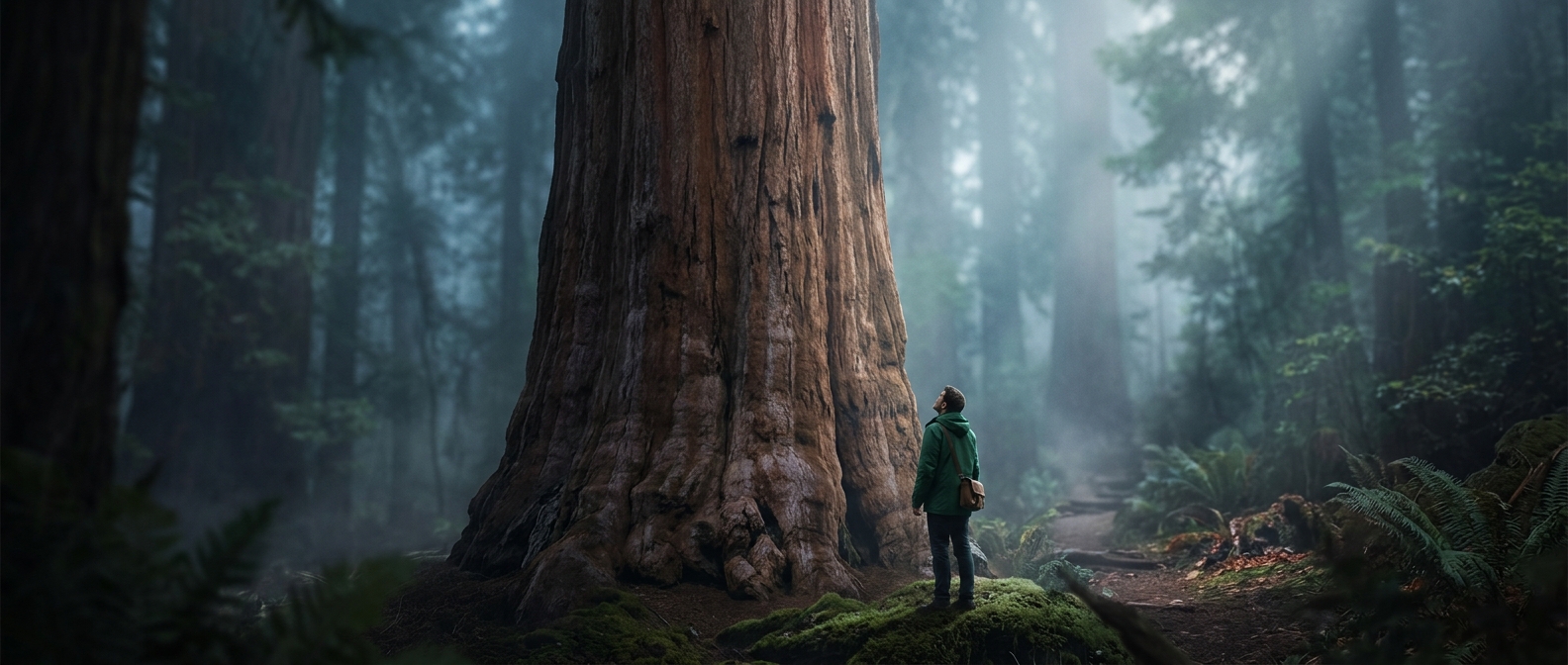
General Sherman is a giant sequoia in Sequoia National Park. Its record comes from the volume of its trunk—the amount of space the trunk occupies—not from its height. A tree can reach higher with a narrower stem, while another holds far more wood in a broad, thick trunk. By that measure, Sherman is the largest known living single-stem tree.
What “Trunk Volume” Measures
To compare trees, measurers estimate the trunk’s shape and calculate how much wood it contains. The trunk narrows as it rises, so the estimate accounts for its changing width rather than treating it like a simple cylinder. Branches and foliage are not what define this record. Nor does trunk volume tell you a tree’s age: height, girth, and age are different measures, and none alone captures every aspect of a tree’s size.
The distinction matters because “largest” can mean several things. A taller tree may win a height contest; a tree with a wider trunk may win by volume. General Sherman’s immense trunk reflects a lifetime of growth that concentrated an extraordinary amount of wood in one living stem. Its record is therefore not just a matter of reaching upward: it is a reminder that the most imposing tree may be the one that has built the most substance, not the one that touches the highest point.**